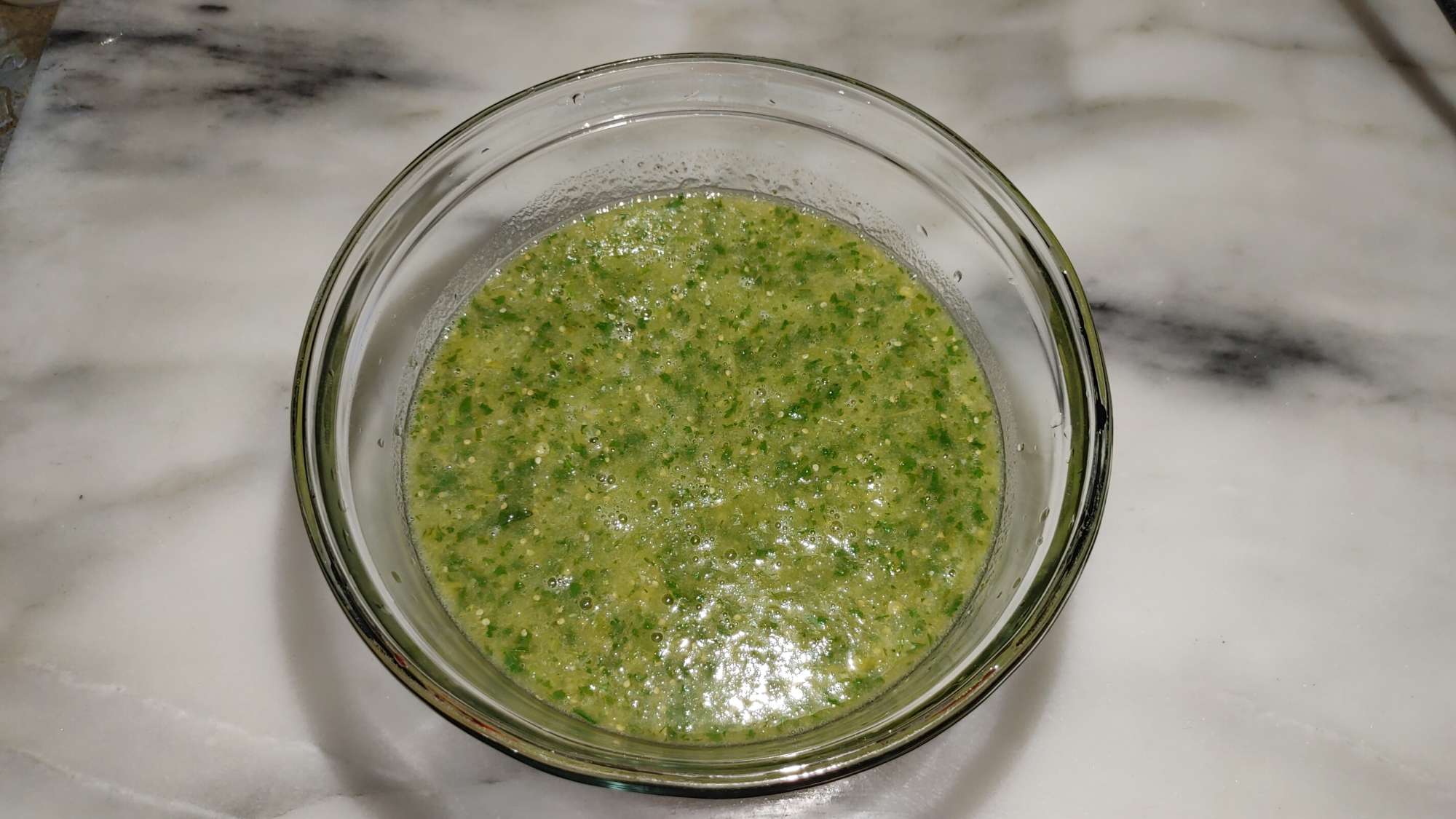
This roasted tomatillo salsa recipe is a delicious and versatile sauce that can be used as a dip, topping, or marinade. It's made with fresh tomatillos, jalapeños, garlic, lime juice, and cilantro and is roasted to bring out its natural sweetness.
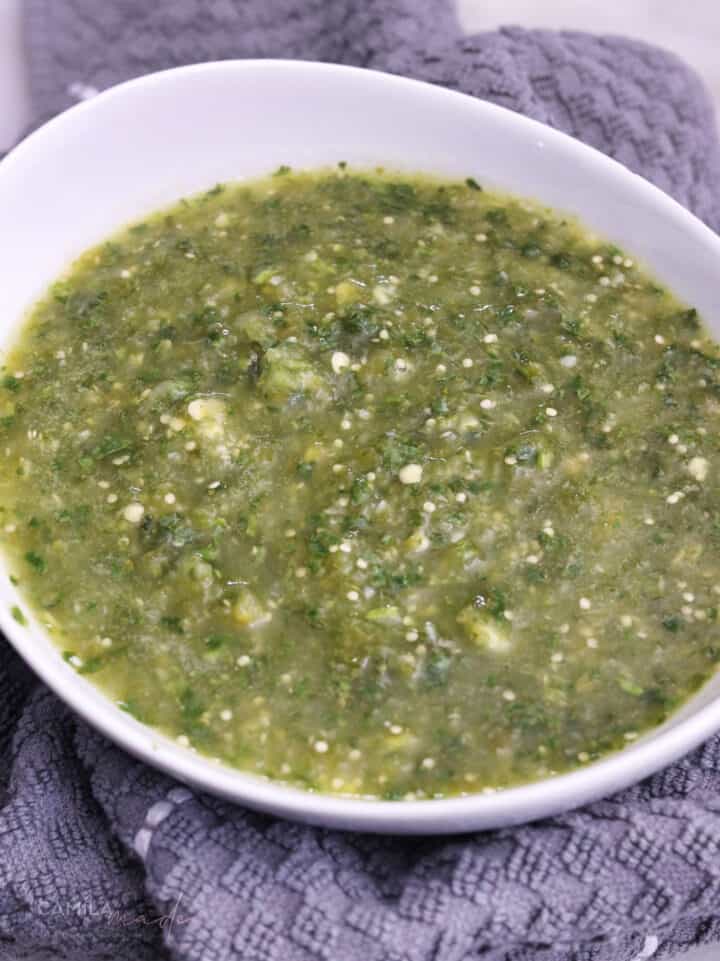
The salsa has a tangy and slightly spicy flavor that pairs well with tacos, burritos, eggs, and more. For more tasty Salsas, check out this Homemade Salsa, 15 Minutes Tomatillo Sauce, and Mexican Cheese Dip.
How to Make Tomatillo Salsa
Note: The full instructions are provided in the recipe card below.
Set a rack about 5 inches beneath the heating element and preheat the broiler; this ensures the vegetables are close enough to the heating element to get a good char and roast properly.
Toss tomatillos, onion, jalapenos, serranos, and unpeeled garlic with oil and place on a foil-lined baking sheet with aluminum foil. Broil, shake pan occasionally until vegetables are softened and lightly charred for 10 to 12 minutes.
After the roasting, place the tomatillo in a large zipper bag and seal it; let sit in the bag for 15 to 20 minutes to "sweat" and release additional juices. Peel off the garlic and set aside along with the onion and jalapeno to cool.
Add the roasted vegetables and the tomatillo liquid from the zipper bag to the bowl of a food processor or blender. Add the cilantro, lime juice, and 1 teaspoon kosher salt, and pulse until chunky, about 5 to 7 pulses or until desired consistency.
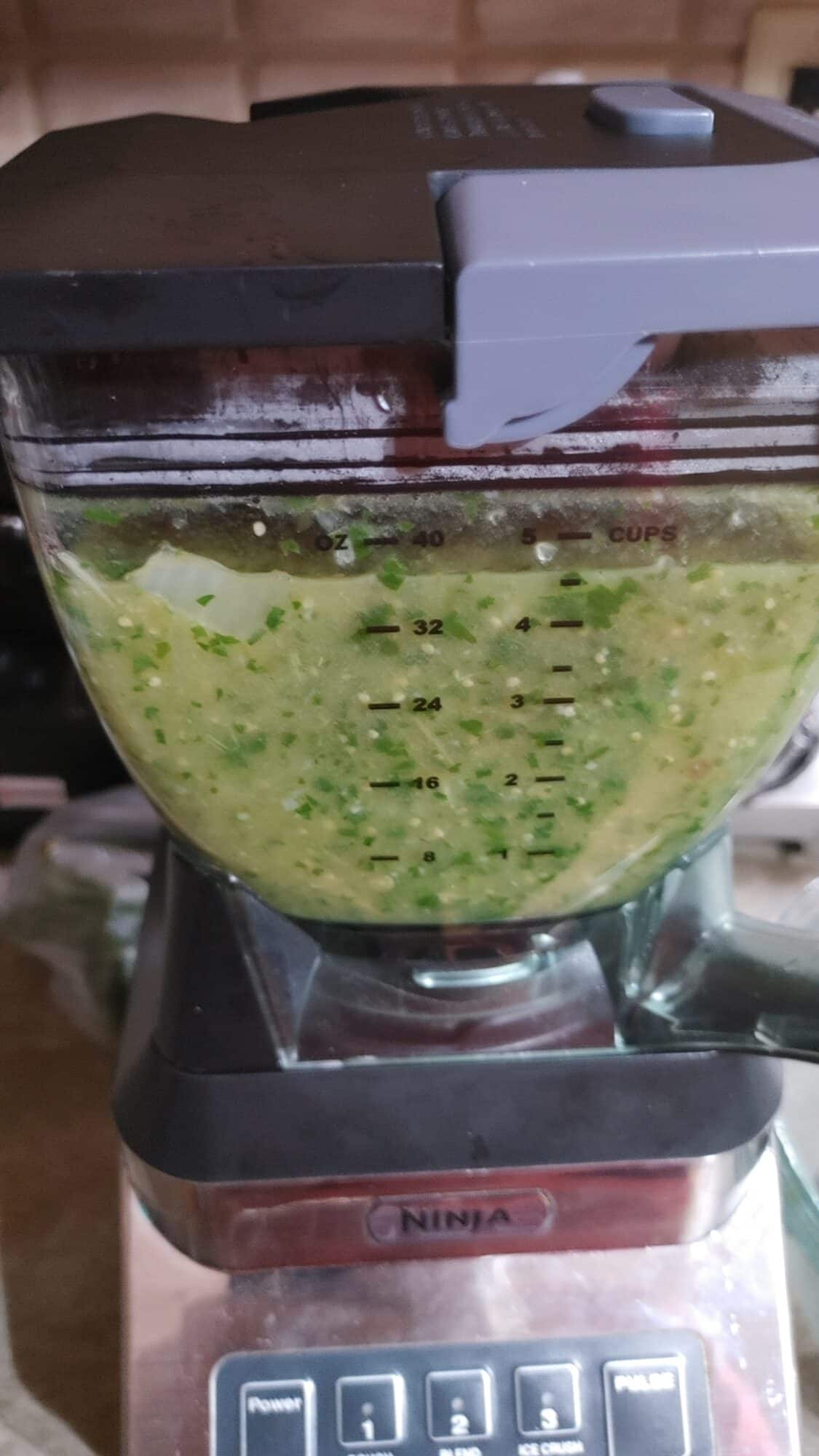
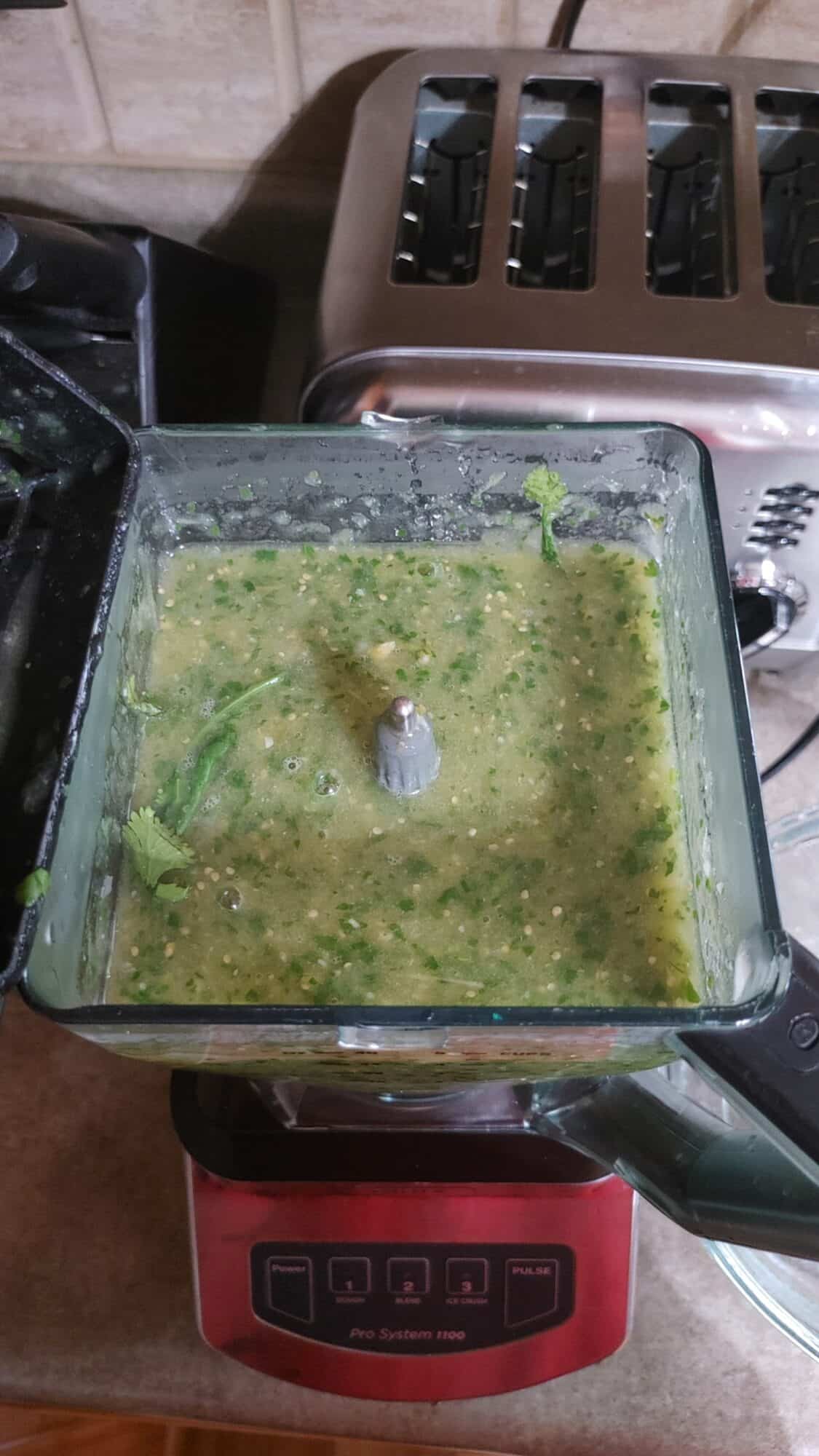
Taste and adjust seasoning with salt if needed. Serve the roasted tomatillo salsa immediately or store it in an airtight container in the refrigerator for up to 3 days.
The tomatillo liquid will help incorporate all the flavors and juices from the vegetables into the salsa and make it more flavorful; it will also help blend the salsa to the desired consistency.
Pair with



You may also like

Recipe
Easy Roasted Tomatillo Salsa
Ingredients
- 1¼ lbs tomatillos , husked, and stems removed, well rinsed, and dried.
- 1 small onion , quartered
- 3 small cloves garlic , unpeeled
- 2 jalapeños pepper , remove the stem
- 2 serrano pepper , remove the steam
- 1 tablespoon extra virgin olive oil or olive oil
- 1 teaspoon kosher salt , to taste
- 1 bunch fresh cilantro leaves , chopped
- juice from ½ lime
Instructions
- Set a rack about 5 inches beneath the heating element and preheat the broiler; this ensures that the vegetables are close enough to the heating element to get a good char and roast properly. Toss tomatillos, onion, jalapenos, serranos, and unpeeled garlic with oil and place on a foil-lined baking sheet with aluminum foil. Broil, shake pan occasionally until vegetables are softened and lightly charred for 10 to 12 minutes.
- After the roasting, place the tomatillo in a large zipper bag and seal it; let sit in the bag for 15 to 20 minutes to "sweat" and release additional juices. Slip the peels off the garlic, and set aside along with the onion and jalapeno to cool.
- Add the roasted vegetables along with the tomatillo liquid from the zipper bag to the bowl of a food processor or blender. Add the cilantro, lime juice, 1 teaspoon kosher salt, and pulse until chunky, about 5 to 7 pulses or until desired consistency.
- Taste and adjust seasoning with salt if needed. Serve the roasted tomatillo salsa immediately or store it in an airtight container in the refrigerator for up to 3 days. The tomatillo liquid will help incorporate all the flavors and juices from the vegetables into the salsa and make it more flavorful; it will also help blend the salsa to the desired consistency.
Notes
- To store: Roasted tomatillo salsa can be stored in an airtight container in the refrigerator for up to 3 days.
- To reheat: transfer the salsa to a saucepan and heat it over medium heat until it reaches your desired temperature. If the salsa has thickened too much in the refrigerator, you can add a small amount of water to loosen it.
Nutrition
Nutrition Disclaimer: The nutritional information provided is an estimate, calculated using standard data sources. Actual values may vary based on ingredient brands, preparation methods, and portion sizes. This information is for general reference only and should not be considered a substitute for professional dietary advice.