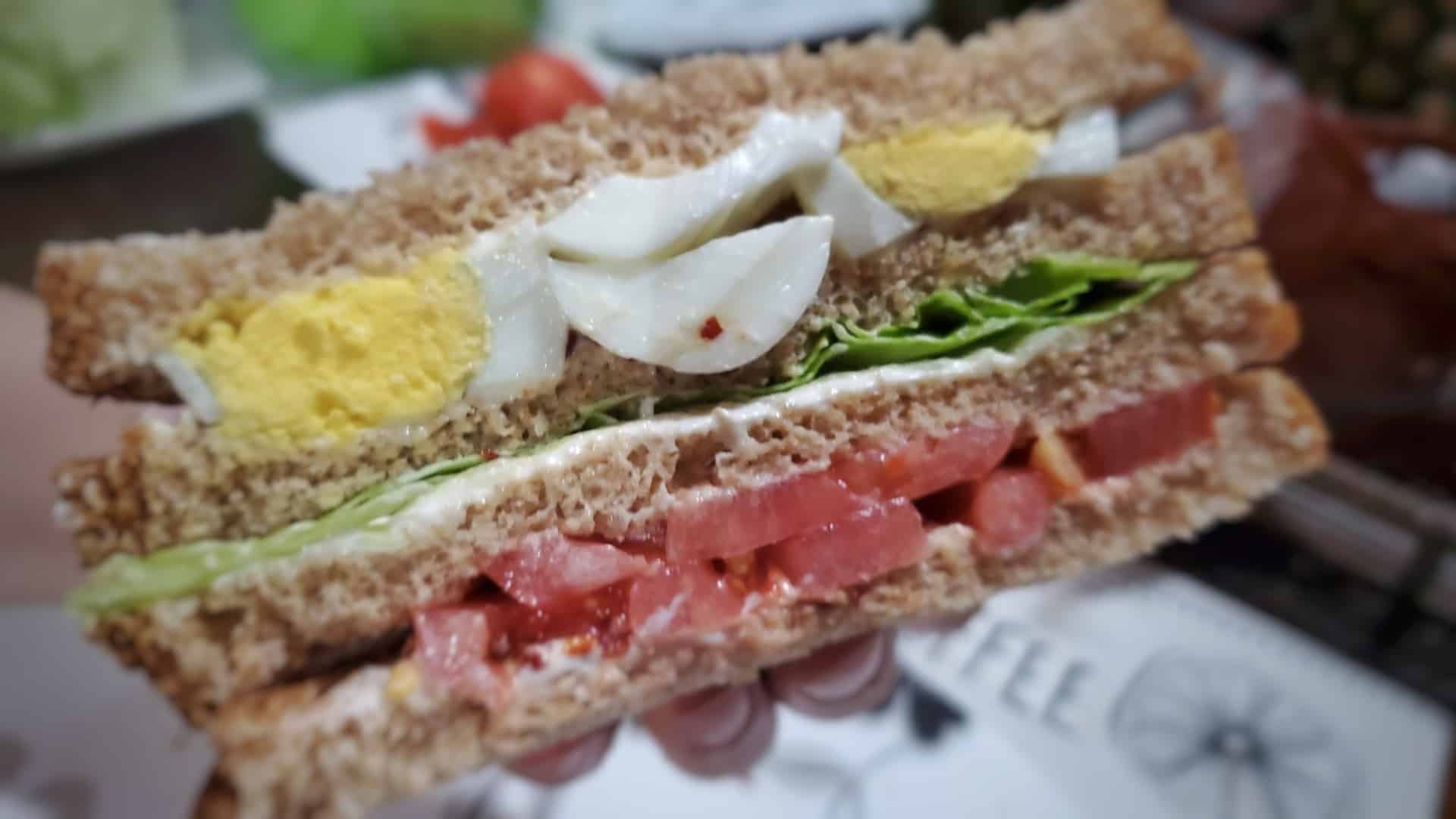
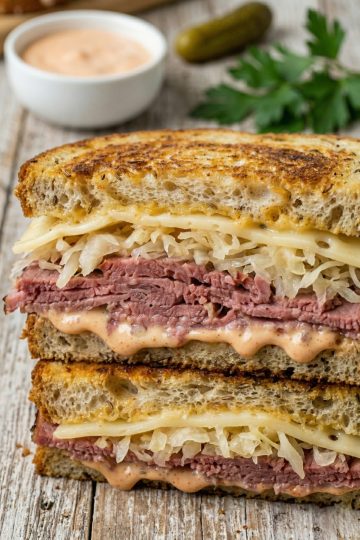
The Reuben sandwich is a North American grilled sandwich made with corned beef, Swiss cheese, sauerkraut, and Russian or Thousand Island dressing, served on rye bread.

Jump to
This classic Reuben sandwich recipe is made using oven-steamed corned beef and crisped rye bread for better texture and flavor.
It uses a simple skillet method to create a Reuben sandwich with a balanced, melty interior and golden crust. Pair it with my Homemade Russian Dressing recipe for a creamy, tangy finish.
Ingredients You'll Need
Note: Full ingredients and amounts are listed in the recipe card below.
- Jewish rye bread: Provides structure and classic flavor; baking it first creates a crisp crust.
- Corned beef: Main protein; use well-marbled meat for better texture and avoid very lean cuts. It can be substituted with pastrami.
- Russian dressing: Adds a creamy, tangy flavor that balances the richness; see my homemade Russian dressing recipe here.
- Sauerkraut: Adds acidity; drain well to prevent soggy sandwiches (see Camila's Tips).
- Swiss cheese: Melts smoothly and helps bind the layers together.
- Butter: Creates a golden, crisp exterior during cooking.
How to Make Classic Reuben
Note: Full instructions are provided in the recipe card below.
- Preheat and steam the meat. Preheat oven to 350°F (175°C). Lightly sprinkle the corned beef with water, wrap tightly in foil, and steam in the oven until heated through.
- Crisp the bread. Place the whole loaf of rye bread directly on the oven rack. Bake until the crust is crisp, about 15 minutes. Let cool for 5 minutes.
- Slice the bread. Transfer to a cutting board and slice into 12 pieces using a bread knife held at a slight angle.
- Assemble the sandwiches. Spread Russian dressing on one side of each slice. On half of the slices, layer corned beef, sauerkraut, and Swiss cheese. Top with the remaining slices, dressing-side down.
- Heat the skillet. Heat two large heavy skillets over medium heat.
- Butter and press. Brush the outsides of the sandwiches with melted butter. Place in the skillet and press down with a lid or weighted heatproof bowl.
- Cook until crisp. Cook until the first side is golden and crisp, about 7 minutes. Flip and cook until the second side is golden and the cheese is melted.
- Serve. Transfer to a cutting board, slice in half diagonally, and serve warm.

Hint:Drain and press the sauerkraut well before using. Excess moisture can make the bread soggy and prevent proper browning.
Storage, Make Ahead, & Freezing
Storage: Store assembled sandwiches wrapped in the refrigerator for up to 2 days.
Make Ahead: Prepare components ahead (meat, dressing, sauerkraut) and assemble just before cooking for best texture.
Freezing: Freezing is not recommended.

Camila's Tips & Variations
- Bread too soft: Toast the loaf in the oven first to create a crisp base.
- Sandwich soggy: Cook the sauerkraut with 2 tablespoons cider vinegar and 1 teaspoon light brown sugar over medium-high heat, stirring occasionally, until the liquid evaporates, about 3 minutes. This concentrates the flavor and removes excess moisture that can make the sandwich soggy.
- Cheese not melting: Lower the heat and cover the skillet to trap heat, allowing the cheese to melt evenly without burning the bread.
- Meat dry: Steam the corned beef in foil with a little water to keep it moist and tender.
- Want more flavor: Use pastrami instead of corned beef for a deeper, smokier flavor.
- Quicker Russian dressing: Whisk together ¼ cup mayonnaise, ¼ cup finely chopped sweet heat pickles plus 1 teaspoon pickle juice, and 2 tablespoons cocktail sauce for a quick, flavorful hybrid of Russian and Thousand Island dressings.

Frequently Asked Questions
What is a Sándwich Reuben made of?
A Reuben sandwich is made with rye bread, corned beef, Swiss cheese, sauerkraut, and Russian dressing, then grilled until crisp.
Can I use pastrami instead of corned beef?
Yes. Pastrami works well and adds a slightly smoky flavor while keeping the same texture.
Why is my Reuben sandwich soggy?
Excess moisture from sauerkraut or dressing can soften the bread. Drain the sauerkraut well and avoid overfilling.
How do I get a crispy crust?
Butter the outside of the bread and cook over medium heat, pressing the sandwich for even browning.
Pair with




You may also like

Recipe
Classic Reuben
Equipment
- Large skillet or cast-iron pan
- Bread Knife
Ingredients
- 1 loaf unseeded , unsliced Jewish rye bread
- 907 g good-quality corned beef , sliced (avoid very lean corned beef), or pastrami
- 340 g Russian dressing
- 340 g sauerkraut , drained and well rinsed
- 12 slices Swiss cheese
- 4 tablespoons butter , melted
Instructions
- Preheat the oven to 350°F (175°C). Lightly sprinkle the corned beef with a little water, then wrap it tightly in aluminum foil and steam it in the oven.
- Meanwhile, place the whole loaf of rye bread directly on the oven rack. Bake until the crust becomes very crunchy, about 15 minutes. Remove from the oven and let it cool for about 5 minutes.
- Once the bread is cool enough to handle, transfer it to a cutting board. Using a bread knife held at a slight angle, slice the loaf into 12 pieces.
- Remove the corned beef from the oven and unwrap it. Spread Russian dressing over each slice of bread.
- On half of the slices, layer the corned beef, sauerkraut, and Swiss cheese. Top with the remaining slices of bread, placing them dressing-side down.
- Heat two large heavy skillets over medium heat. Brush the outsides of the sandwiches with melted butter.
- Place the sandwiches in the pans and press them down using a lid or a heatproof bowl weighted with something heavy.
- Cook until the bottoms are crisp and golden, about 7 minutes, then flip. Continue cooking until the second side is well toasted and the cheese has melted.
- Transfer to a cutting board, slice each sandwich in half diagonally, and serve.
Notes
Nutrition
Nutrition Disclaimer: The nutritional information provided is an estimate, calculated using standard data sources. Actual values may vary based on ingredient brands, preparation methods, and portion sizes. This information is for general reference only and should not be considered a substitute for professional dietary advice.