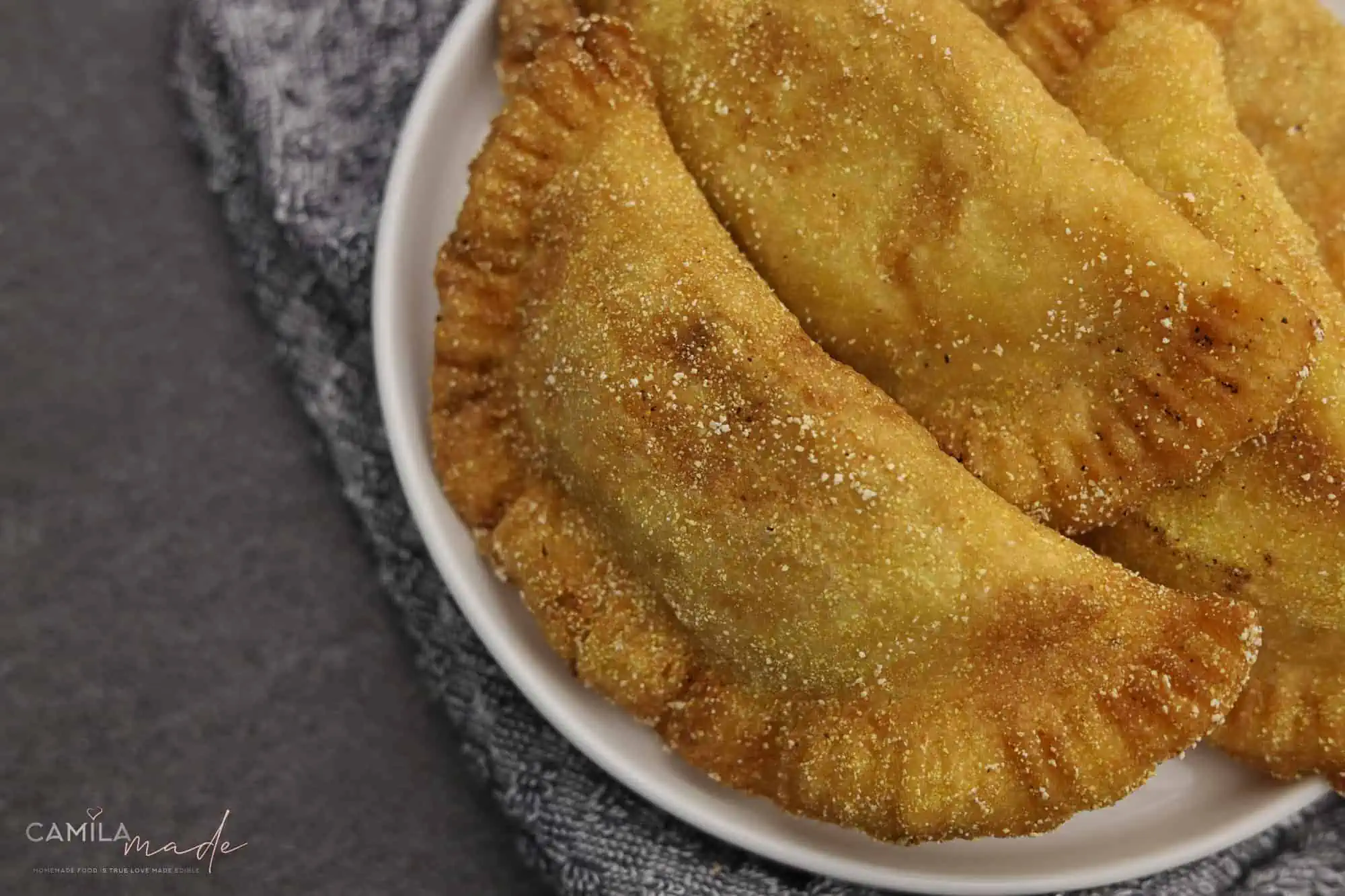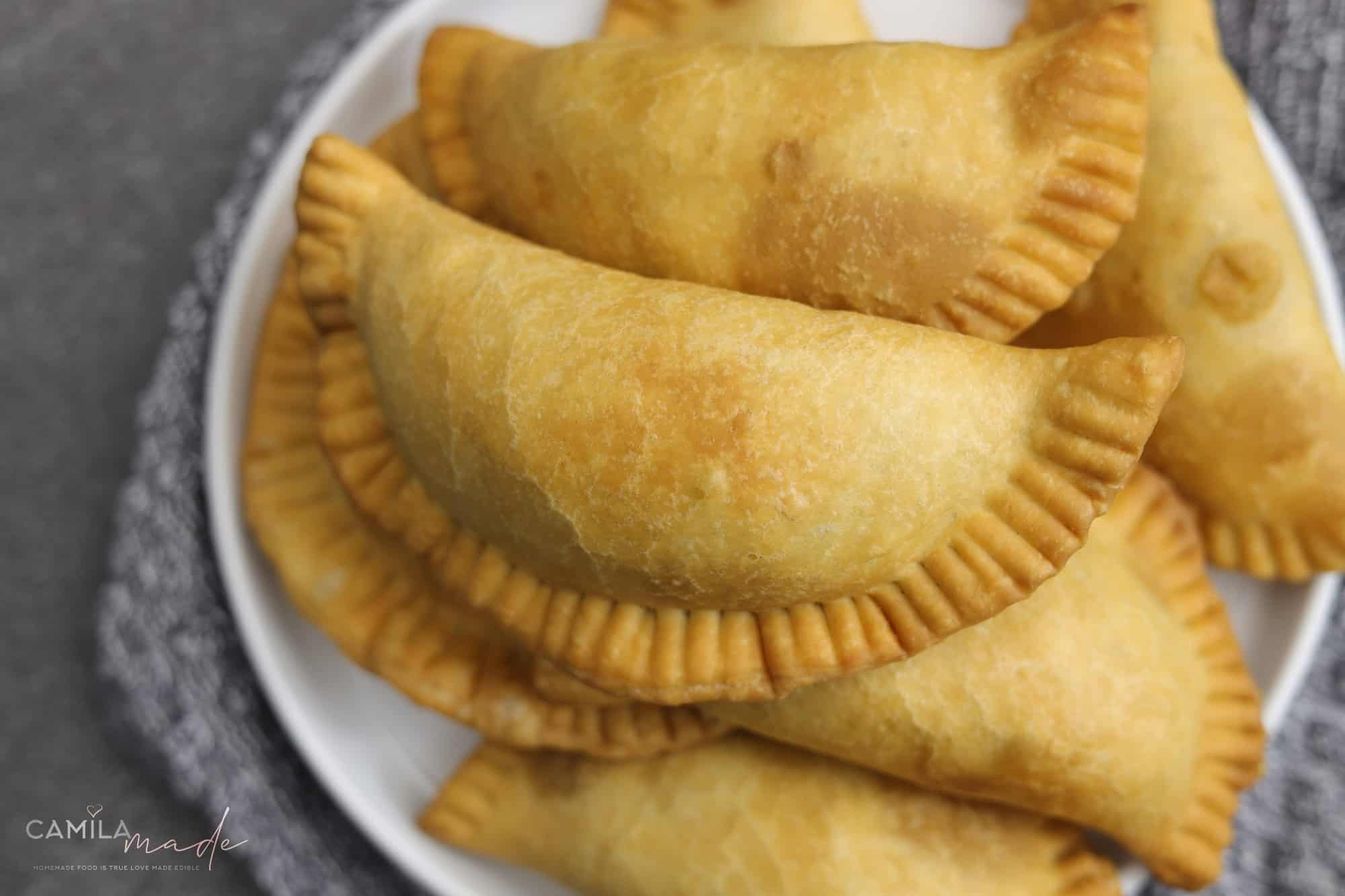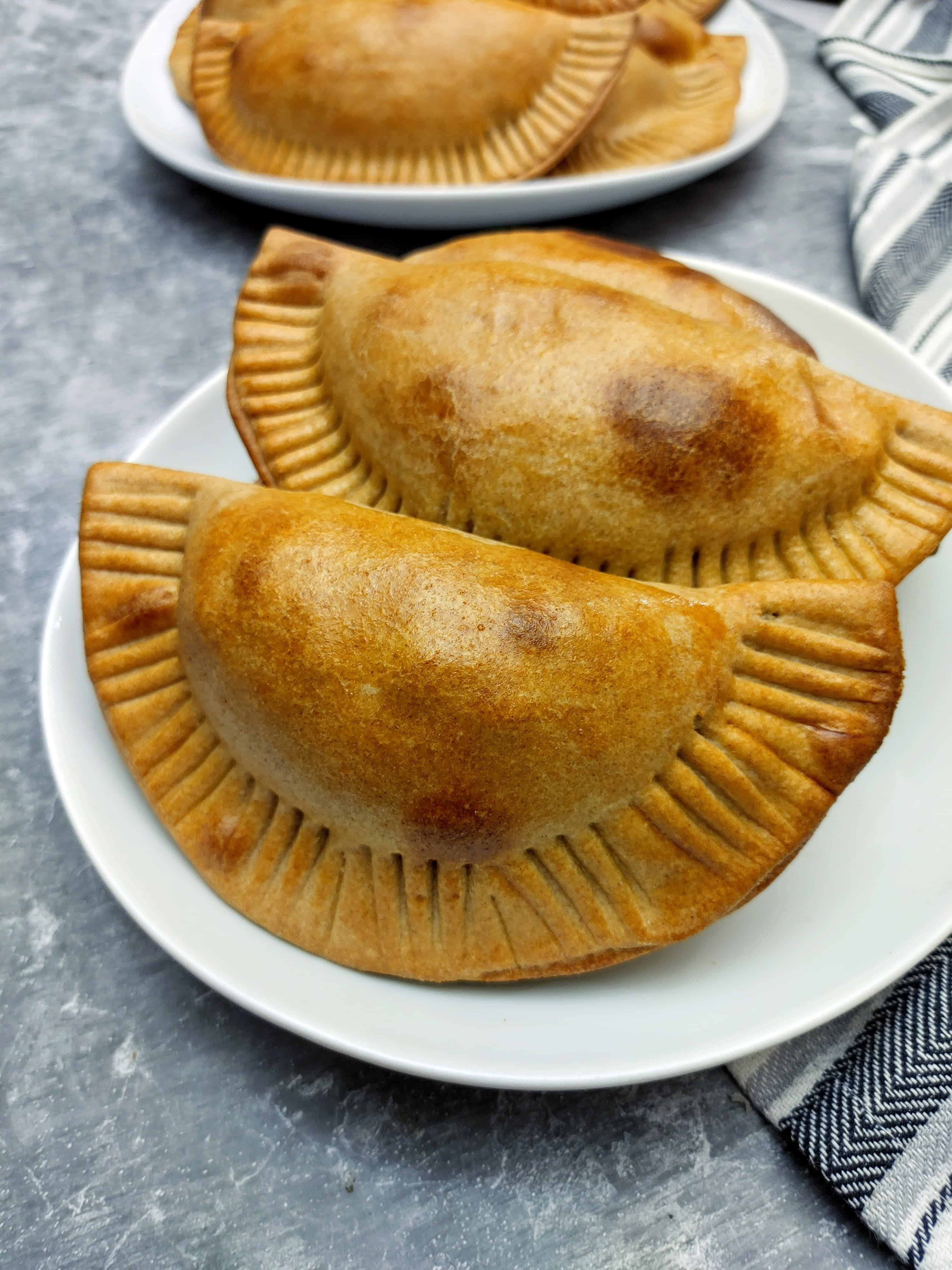
Masa para empanadas (also known as tapas para empanadas) is a thin, versatile pastry used to make Latin American hand pies known as empanadas.

Jump to
Unlike traditional pie crust, this dough is less flaky and more pliable. It's made with just a few simple ingredients: flour, fat, salt, and water.
This Masa para empanadas caseras (homemade empanada dough) comes together quickly and is incredibly easy to make.
You can mix it by hand, in a stand mixer, or in a food processor-whichever method you prefer.
It works well for all types of empanadas and can be either baked or fried.
Looking for a puff pastry-style dough? Check out our buttery, flaky empanada dough recipe-perfect for both sweet and savory empanadas.
Ingredients You'll Need
- All-purpose flour: The base of the empanada dough. It provides structure.
- Fat: I use butter for a rich dough, but you can substitute it with beef tallow, lard, or vegetable shortening, depending on your preference.
- Salt: Balances the flavors.
- Water: Brings the dough together and activates just enough gluten for elasticity.
See the recipe card for quantities.
How to Make Masa Para Empanadas
Note: Full instructions are provided in the recipe card below.
1. Make the Dough: In a stand mixer fitted with a dough hook, combine flour, butter, salt, and optional sugar. With the motor running, slowly add water and mix for 3-5 minutes until a soft, pliable dough forms. Flatten into a 6-inch disc, wrap in plastic, and refrigerate for 15-30 minutes.
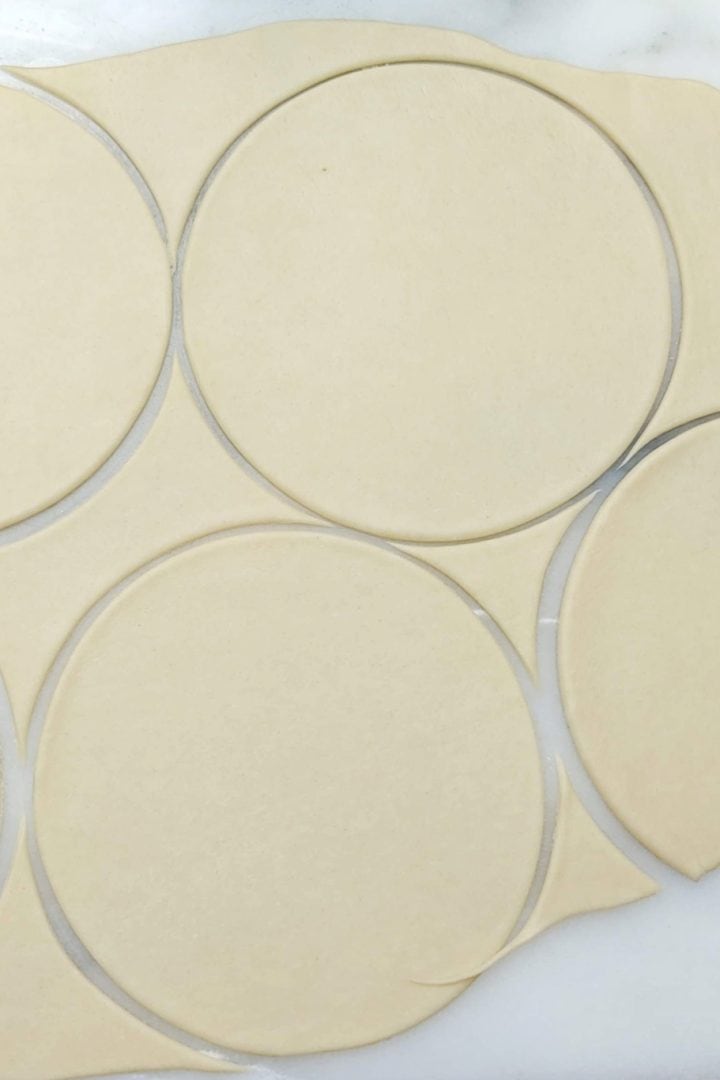
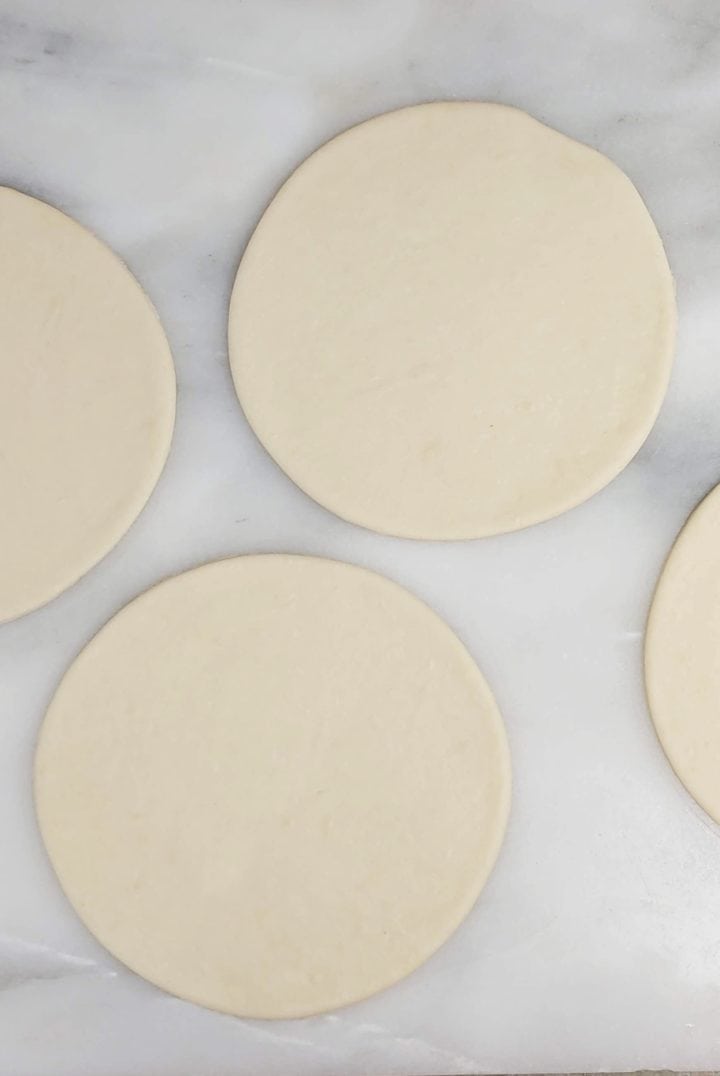
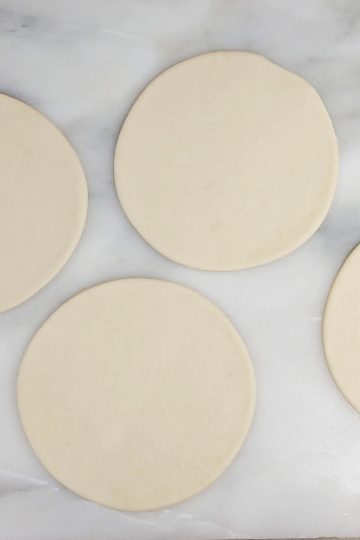
2. Roll & Cut: Roll dough on an un-floured surface to ⅛-inch thickness. Let rest for 10 minutes, then cut into 5-inch rounds-re-roll scraps as needed.
3. To Store: Stack discs with parchment paper between each, wrap tightly, and refrigerate or freeze.
4. To Bake: Preheat oven to 400°F (200°C). Place filled empanadas on a parchment-lined baking sheet, brush with egg wash and bake for 20-25 minutes until golden brown.
5. To Fry: Heat neutral oil to 350°F (175°C). Fry empanadas in batches for 2-3 minutes per side until golden and crisp. Drain on paper towels.
Hint: Add 1 tablespoon of fresh lemon juice, white vinegar, or vodka to the dough. It helps brighten the dough's color and tenderize the texture.
Storage, Make Ahead, & Freezing
Make ahead: You can prepare the Masa para empanadas up to 2 days in advance. Wrap it tightly in plastic wrap and store it in the refrigerator. Let it sit at room temperature for 15-20 minutes before rolling.
Storage: If you have leftover dough, keep it wrapped in plastic or an airtight container in the fridge for up to 3 days.
Freezing: To freeze, roll the dough into discs and separate each with parchment paper. Place the stack in a freezer-safe bag and freeze for up to 2 months. Thaw in the refrigerator overnight, then let rest at room temperature before using.
Camila's Tips & Variations
- Fat: This Tapas para empanadas can be made with butter, vegetable shortening, lard, or beef tallow. Each one adds a slightly different flavor and texture-use what you have or prefer. Learn more about beef tallow and how it's used in cooking: What Is Beef Tallow? - The Spruce Eats
- Stand Mixer vs. Hand Mixing: If using a stand mixer, softened butter works well, but slightly cooled, melted butter also blends easily.
For mixing by hand, I recommend using melted, slightly cooled fat along with cold water to help the dough come together more easily. The dough may feel soft at first-this is completely normal. As it cools, the fat will firm up, and the dough will become easier to handle. - Let the dough rest: Don't skip the resting time! Even 15-20 minutes helps the dough relax, making it easier to roll out and shape.
- Brush with egg wash: If baking, brush the tops with egg wash for a beautiful golden color and a touch of shine.
- Avoid overfilling: It's tempting to pack in the filling, but too much can cause the empanadas to burst while cooking. Less is more!
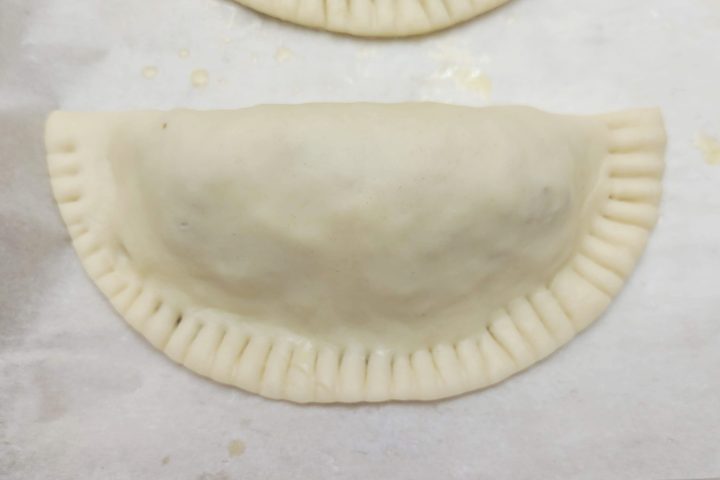
- Seal well: Press the edges firmly and make a neat repulgue or use a fork to seal. A good seal keeps the filling inside, whether you're baking or frying.
- Press out the air: When sealing your empanadas, gently press around the filling to remove any air bubbles. This helps prevent them from opening during baking or frying.
- Baking: If you're baking your empanadas, preheat the oven to 400°F (200°C). Lay them out on a baking tray and bake until they're golden and crisp-about 20 to 25 minutes, depending on your oven. Want a rustic look? You can skip the egg wash. Just pop them in as-is and let them develop a golden color
- Frying: If you're frying, make sure your oil is nice and hot-around 350°F (175°C). A quick test: drop a little piece of dough in. If it starts bubbling right away and floats, you're good to go. Hot oil is key here-it cooks the dough fast and keeps the empanadas from soaking up too much oil.
Frequently Asked Questions
Can I bake empanadas using dough meant for frying?
Yes, but they may turn out slightly drier. To prevent this, brush them with an egg wash before baking.
Why does my empanada dough feel too soft at first?
That's normal, especially if you're using warm, melted fat. As the dough cools, the fat begins to solidify, and the dough firms up. Just give it a few minutes, and it will be much easier to handle.
Do I need to let the dough rest before rolling it out?
Yes. Letting the dough rest for 10-20 minutes helps it relax, making it easier to stretch and shape without shrinking or tearing.
How do I keep my empanadas from bursting while cooking?
Avoid overfilling, seal the edges well, and make sure the dough has rested. If you're baking them, pressing the edges with a fork or doing a tight repulgue (folded edge) helps keep them sealed.
How do I know the oil is hot enough for frying empanadas?
Drop in a small piece of dough-it should immediately bubble and rise to the surface. The oil should be hot enough for a quick fry to avoid greasy, soggy results.
Should I use a rolling pin or my hands to shape the dough?
Either works! If using a rolling pin, roll the dough to 2-3 mm thick (about ⅛ inch).
Pair with
You may also like

Recipe
Masa Para Empanadas
Ingredients
- 500 g all-purpose flour
- 1 tablespoon sugar , optional
- 2 teaspoons kosher salt
- 250 ml warm water
- 50 g butter, vegetable shortening, beef tallow, or lard , softened
Instructions
For the Empanada dough:
- Make the Dough: In the bowl of a stand mixer fitted with the dough hook attachment, combine flour, butter, salt, and sugar (if using) on medium speed until completely blended.
- With the motor running, slowly add in water and continue to mix until a soft and pliable dough forms, 3 to 5 minutes. Flatten the dough into a 6-inch round, then wrap it tightly in plastic wrap. Place in the refrigerator to let rest for 15 to 30 minutes.
- Roll and Cut the Dough: On an un-floured surface, roll the dough into a sheet about ⅛ inches (3 mm) thick. Let it rest for 10 minutes. Then, cut into rounds using a 5-inch (12.7 cm) cutter or saucer lid.
- Gather the scraps, combine them with the remaining dough, cover with cling film, let rest for 10 minutes, and repeat the process until all the dough is used. Your dough is ready to be filled with your favorite empanada filling and baked or fried.
- To Store: If storing for later, stack with parchment or wax paper between each disc, wrap well, and refrigerate or freeze.
How to Cook the Empanadas
- To Bake: Preheat the oven to 400°F (200°C). Place the filled empanadas on a parchment-lined baking sheet. Brush the tops with egg wash for a golden finish, if desired. Bake for 20-25 minutes or until golden brown and crisp.
- To Fry: Heat neutral oil (like vegetable or canola) in a deep pan to 350°F (175°C). Carefully add the empanadas and fry in batches for 2-3 minutes per side or until golden and crisp. Drain on paper towels and let cool slightly before serving.
Notes
Nutrition
Nutrition Disclaimer: The nutritional information provided is an estimate, calculated using standard data sources. Actual values may vary based on ingredient brands, preparation methods, and portion sizes. This information is for general reference only and should not be considered a substitute for professional dietary advice.