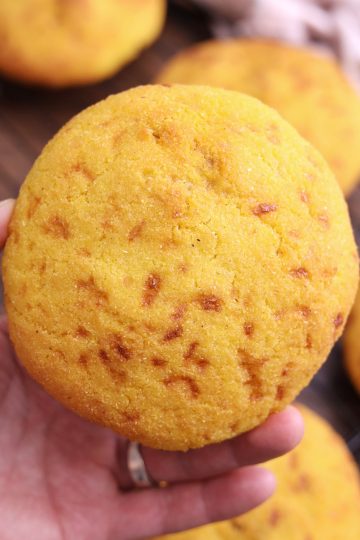
Chipa So'o is a stuffed roll made with cornmeal and filled with seasoned meat, traditionally enriched with eggs for structure and richness.

Jump to
In this egg-free version, I skip the egg in the dough without sacrificing texture or flavor. If you prefer the traditional version, be sure to try my Chipa So'o recipe made with eggs for extra richness.
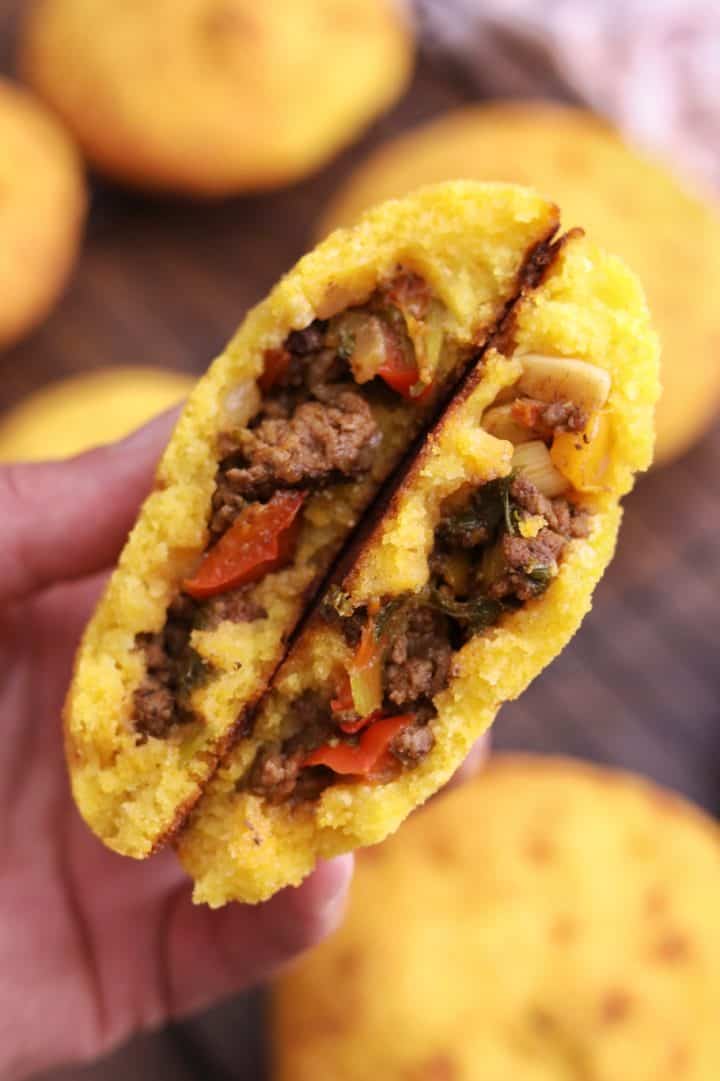
The dough is made with Quaker yellow cornmeal, queso blanco, butter, and milk to bring everything together. The filling features sautéed beef, vegetables, and herbs, making it rich, aromatic, and satisfying.
It's a hearty, naturally gluten-free dish that's perfect for lunch, dinner, or merienda.
Ingredients You'll Need
- Fine Yellow Cornmeal: Adds structure and a rustic, slightly coarse texture with a subtle corn flavor. You can use any fine cornmeal. I personally like to use Quaker Yellow Cornmeal or Bob's Red Mill Golden Masa Harina Corn Flour.
- Queso Blanco: Adds mild flavor throughout the dough.
- Butter: Provides moisture and tenderness to the dough. It can be substituted with pork lard, beef tallow, or shortening.
- Milk: Adds moisture and helps bring the dough together. You can substitute it with beef broth, stock, or even water.
- Ground Beef: The main protein in the filling. I used 90/10 ground beef, but you can use any kind. Just be sure to drain the excess fat if using a fattier blend, leaving about 2 tablespoons to cook the vegetables.
- Onions, Peppers, Scallions, Garlic: Build a savory flavor base for the beef filling.
- Spices & Bouillon: Enhance the flavor.
How to Make Chipa So'o Sin Huevo
Note: Full instructions are provided in the recipe card below.
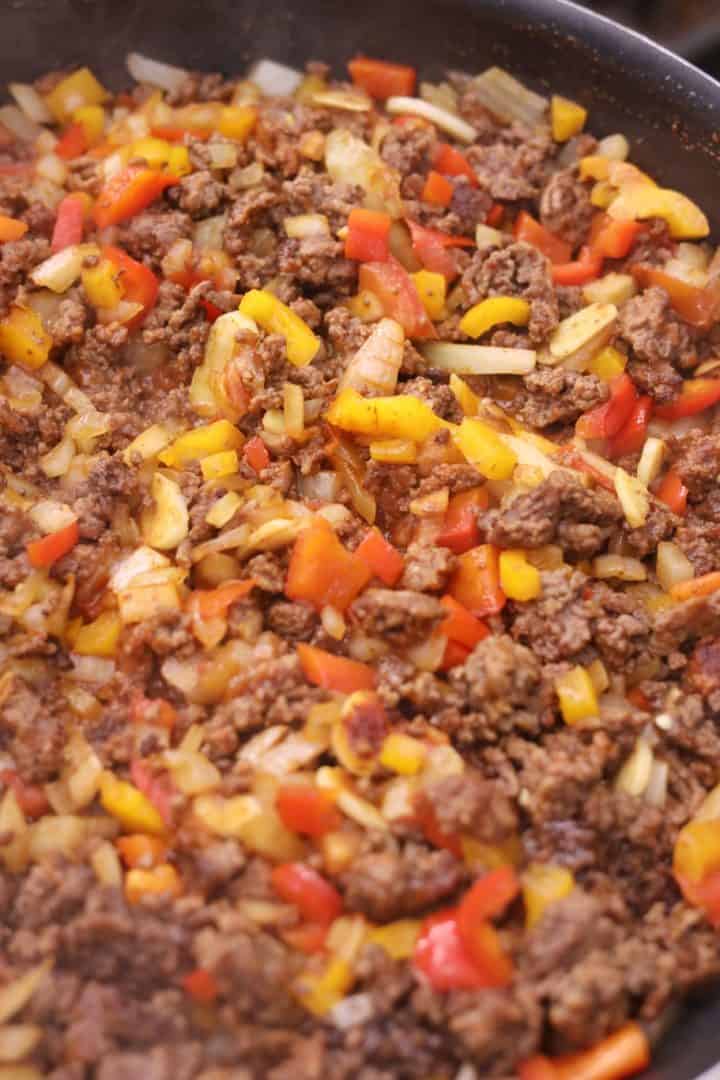
1. Make the Beef Filling: Sauté ground beef with bouillon and spices until browned. Add vegetables and cook until softened. Stir in parsley and scallion greens. Cool and refrigerate.
3. Prepare the Dough: Mix cornmeal, salt, butter, cheese, and milk until a smooth dough forms. Refrigerate until ready to use.
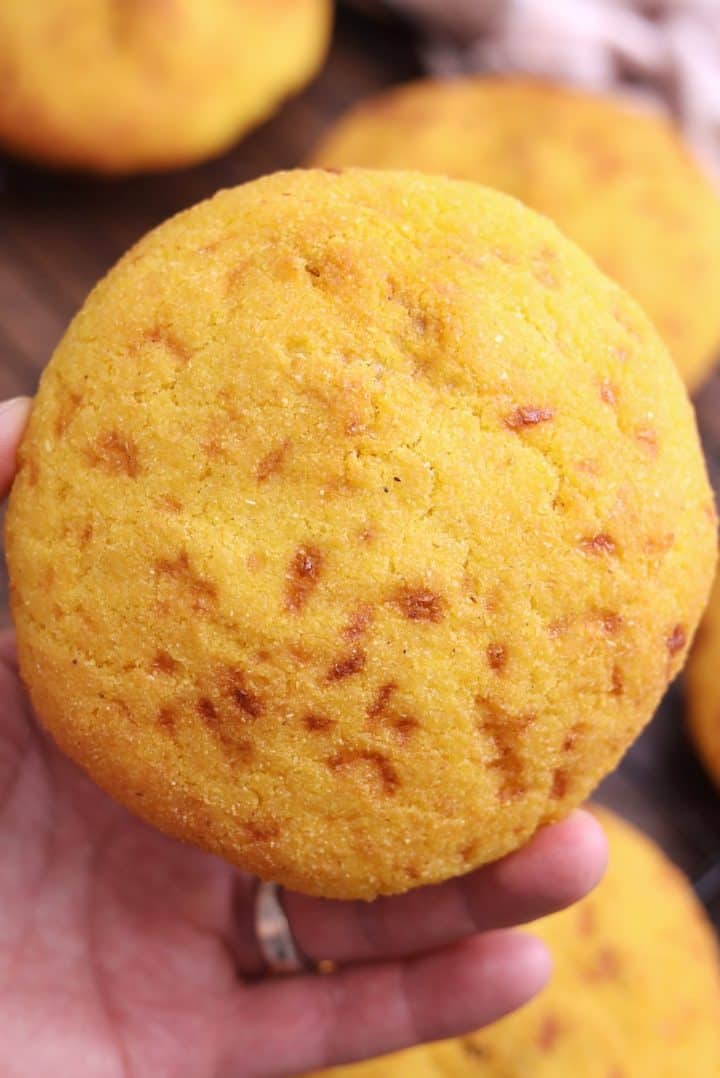
4. Assemble & Bake: Shape dough into balls, flatten, and fill with the beef mixture. Seal and reshape into domes. Bake at 260°C (500°F) for 20 to 25 minutes until golden and cracked on top.

Tip: The dough should feel soft and slightly moist-not dry or sticky. If it's too dry, it can crack. If it's too wet, it's hard to shape. I like to keep it just moist enough so that if cracks appear, I can easily press and smooth them out with my fingers.
Storage, Make Ahead, & Freezing
Storage: Store cooled chipa so'o in an airtight container at room temperature for up to 2 days or in the refrigerator for up to 5 days. Reheat in a 350°F (175°C) oven for 5-8 minutes until warmed through.
Make Ahead: Both the dough and the cooked filling can be prepared a day in advance. Store them separately in the refrigerator, then assemble and bake the next day.
Freezing: I don't recommend it as the ideal option-chipa so'o is best enjoyed fresh.
However, once baked and thoroughly cooled, they can be frozen in a single layer and then transferred to a freezer-safe bag or container for up to 2 months.
Reheat straight from frozen in a 350°F (175°C) oven for 10-15 minutes or until heated through.
Camila's Tips & Variations
- Use room-temperature ingredients for better dough texture and easier mixing.
- Chipa so'o is traditionally made with salted, boiled meat that's ground and mixed with vegetables. However, you can use any cooked meat-like ground beef, shredded chicken, or even leftovers such as asado (grilled steak).
If the meat is too dry, wrap it in foil with a splash of broth or water and warm it in a low oven (250-325°F) until heated through. You can also reheat it in a skillet with a bit of liquid or in the microwave-just be careful not to overcook. - Don't overprocess the filling-you want it chopped, not pureed, to keep a nice texture.
- Make sure the filling is completely cooled before assembling.
- Make sure the dough is soft enough to shape easily. If it cracks while shaping, gently press and smooth it out with your fingers.
- Let the dough rest in the fridge before shaping. It firms up slightly and is easier to handle.
- Adjust salt to taste, especially if your cheese is salty. Start light-you can always add more.
- Bake until golden and lightly cracked for that perfect texture and look.
- Serve warm for the best flavor-just out of the oven or lightly reheated.
Check out my version of classic chipa so'o, made with sautéed chopped steak, vegetables, and egg-enriched dough for a richer flavor.
Frequently Asked Questions
Can I use masa harina, such as Harina P.A.N. or Maseca?
Yes! Masa harina, like Harina P.A.N. or Maseca, works well in this recipe. It adds moisture and structure to the dough, especially when combined with cornmeal for a more balanced texture.
Is this recipe gluten-free?
Yes! All the ingredients used in the dough and the filling are naturally gluten-free.
Learn More About Paraguayan Cuisine
Curious about the origins of Chipa So'o and other traditional dishes? Visit Wikipedia's article on Paraguayan cuisine to explore the rich culinary history behind recipes like chipa, sopa paraguaya, and more.
Pair with
You may also like
Recipe
Chipa So'o Sin Huevo
Equipment
Ingredients
For the Dough
- 1 kg Quaker yellow cornmeal
- 250 g butter , pork lard, beef tallow, or shortening, cut into cubes
- 300 g queso blanco, queso fresco or queso panela
- 1 tablespoon kosher salt , to taste
- 946 ml (about 4 cups) buttermilk, whole milk, or beef broth/stock , adjust as needed to form a moldable dough
For the Filling
- 1 kg 90 /10 lean ground beef
- 2 medium yellow onion , chopped
- 3 Roma tomatoes , chopped (optional)
- 2 green bell peppers (any color) , chopped
- 4 scallions, (green onions), white and green parts separated , chopped
- 4 garlic cloves , chopped
- 5 tablespoons extra virgin olive oil , divided
- ¼ teaspoon ground black pepper , adjust to taste
- 1 teaspoon red pepper flakes , adjust to taste
- 1 tablespoon sweet paprika
- 1 tablespoon plus 2 teaspoons Knorr beef-flavor bouillon
- 1 teaspoon ground cumin , to taste (optional)
- Kosher salt , to taste
- 1 bunch fresh Italian parsley or cilantro , stems removed, chopped
Instructions
- Prepare the Beef Filling: Heat 1 tablespoon of oil in a 12-inch nonstick skillet over medium-high heat until just smoking. Add the ground beef, then season with bouillon (or salt to taste), black pepper, red pepper flakes, paprika, and cumin. Cook until browned on all sides.
- Add the onions, bell peppers, tomatoes, and the white parts of the scallions. Sauté, stirring occasionally, until softened, about 5-7 minutes. Add the garlic and cook for 30 seconds.
- Continue cooking for a few more minutes to eliminate excess moisture. Stir in the parsley and the green parts of the scallions. Remove from heat and let cool slightly.
- Transfer the mixture to a large bowl, and let it cool to room temperature. Cover and refrigerate until ready to assemble.
- Prepare the Dough: In a large mixing bowl, whisk together the cornmeal and salt. Add the butter, cheese, and milk. Mix until a homogeneous dough forms-not too dry, not too wet, but just enough to bring everything together. If needed, add more milk, one tablespoon at a time. Cover the bowl and refrigerate until ready to use..
- Assembly & Baking: Take a portion of the dough and roll it into a ball. Gently flatten it in your hand, then use your thumb to press an indentation in the center, like forming a small basket.
- Spoon a heaping tablespoon of the meat filling into the center. Carefully bring the edges of the dough up and around the filling, sealing it completely. Shape it back into a smooth ball.
- Flatten the base slightly and round the top to form a dome. Place each assembled chipa so'o on a nonstick baking sheet or a greased baking tray. Repeat with the remaining dough and filling. You may need to bake in two batches, depending on the size of your tray.
- Bake in a preheated oven at 260°C (500°F) for 25-30 minutes or until golden and lightly cracked on top.
Notes
Nutrition
Nutrition Disclaimer: The nutritional information provided is an estimate, calculated using standard data sources. Actual values may vary based on ingredient brands, preparation methods, and portion sizes. This information is for general reference only and should not be considered a substitute for professional dietary advice.