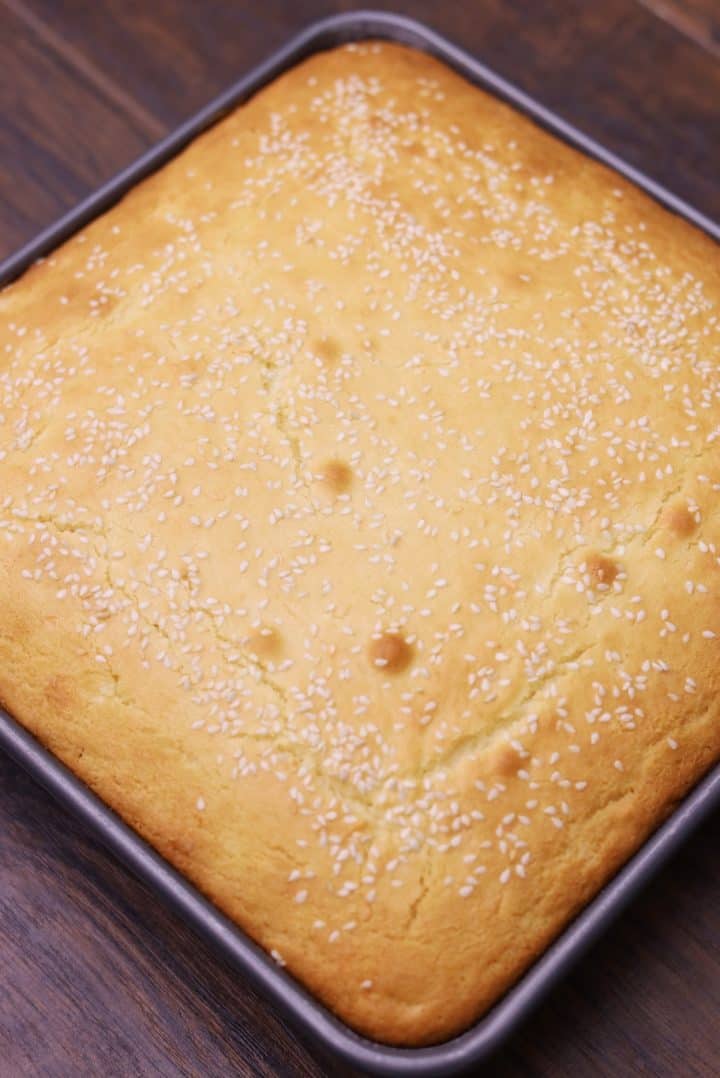
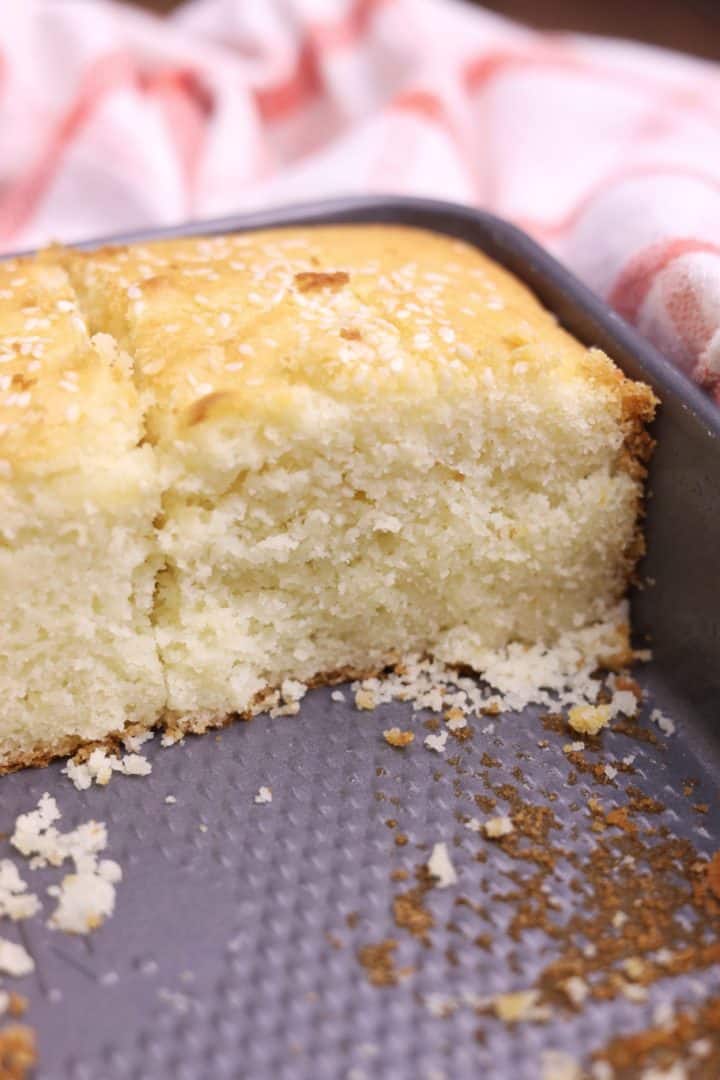
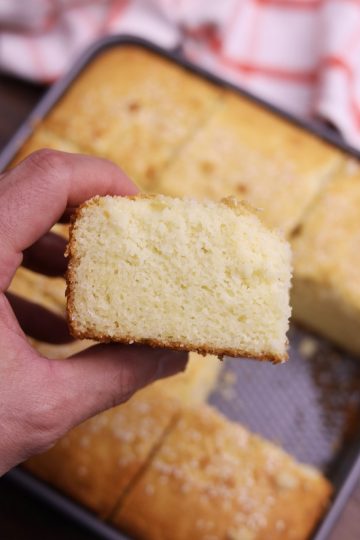
Quesadilla Salvadoreña (also known as Quesadilla de Arroz) is a traditional gluten-free sweet bread that tastes like a cross between pound cake and cornbread, with a subtle cheesy flavor.
Jump to
Unlike the Mexican quesadilla, which is made with a tortilla (corn or flour) folded and filled with cheese, the Quesadilla Salvadoreña is a sweet, cake-like bread.
It comes in different forms-loaves, squares, rounds, or even cupcake-style portions. It's rich in flavor with a slightly drier texture, similar to light cornbread.
It's made with rice flour, queso duro blando, crema salvadoreña, eggs, unsalted butter, and topped with sesame seeds. Depending on the recipe, the cheese can be tangy and pronounced, or remain a subtle background note.
Traditionally baked in clay ovens in rural kitchens, it remains a staple in Salvadoran breakfasts, family gatherings, and celebrations.
My recipe for Quesadilla Salvadoreña is quick to prepare and bake, using ingredients that are easy to find in most grocery stores, with simple substitutions available.
Aside from rice flour, you probably already have everything in your pantry.
If you keep Parmesan cheese and sour cream on hand, you have everything you need to make this quesadilla de arroz salvadoreña in your own kitchen-and I guarantee it will taste much better than any store-bought version.
Ingredients You'll Need
- Rice flour (such as Goya): Traditionally, Quesadilla Salvadoreña is made with rice flour, which gives the cake its cornbread-like texture and subtle flavor. Some variations use all-purpose flour, a blend of both, or even pancake mix as a shortcut, but this recipe uses only rice flour, making it naturally gluten-free.
- Granulated sugar: Adds sweetness and balances the cheese's saltiness.
- Baking powder & Baking Soda: Helps the cake rise and stay light.
- Powdered milk (such as Nido whole dry milk, optional): Enhances richness and gives a slightly creamy depth to the crumb.
- Eggs: Bind the ingredients together, adding structure and richness.
- Vanilla extract: Adds flavor.
- Grated dry cheese: Traditionally, queso duro blando is used in Quesadilla Salvadoreña, providing the subtle cheesy flavor that sets this cake apart.Since queso duro blando can be difficult to find in the United States, it may be substituted with Parmesan or Cotija cheese.
- Unsalted butter: Adds moisture, flavor, and a tender crumb.
- Avocado oil: Keeps the cake moist and helps balance texture with the butter. It can be substituted with any neutral-flavored oil.
- Whole milk: Adds moisture and ensures a smooth, even batter.
- Crema Salvadoreña: Adds tang, richness, and moisture. It can be substituted with crema mexicana, crema hondureña, sour cream, crème fraîche, or even Greek yogurt.
- Sesame seeds: Give the cake its signature look and a nutty, toasty flavor.
See the recipe card for quantities.
How to Make Quesadilla Salvadoreña
Note: Full instructions are provided in the recipe card below.
- Preheat oven: Set to 350°F (175°C). Line a 9-inch square pan with parchment paper or grease and flour it, removing any excess flour.
- Cream butter & sugar: Beat softened butter and sugar until pale and fluffy, about 3 minutes. Mix in vanilla.
- Add eggs: Reduce the speed to low and add the eggs one at a time, mixing well after each addition. (Batter may look curdled.)
- Mix dry ingredients: In a bowl, whisk together rice flour, baking powder, and dry milk (if using).
- Combine wet & dry: Add dry mixture in 2 parts, alternating with milk. Mix just until combined. Stir in sour cream briefly.
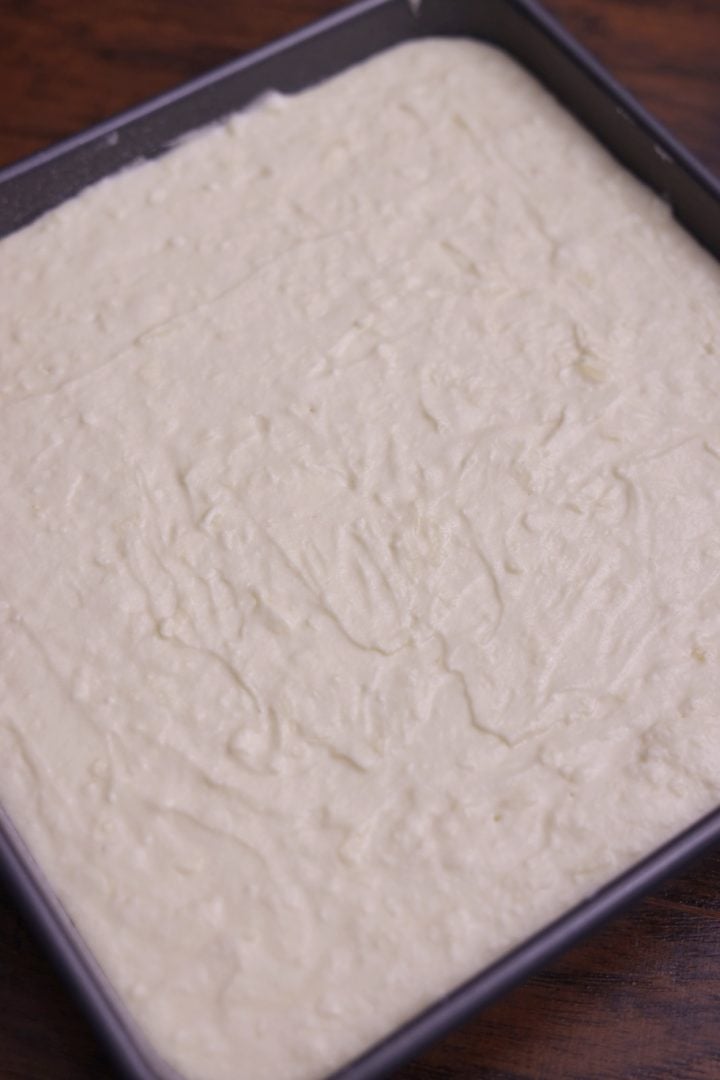
- Fill pan: Spread batter evenly in the pan. Tap to release air bubbles.
- Bake: Bake for 40 minutes, rotating the dish halfway through. Test with a skewer-add 5 minutes if needed.
- Cool: Let the cake cool for 10 minutes in the pan, then invert it onto a wire rack to cool completely.
Hint: For the best flavor, use freshly grated parmesan cheese instead of pre-shredded, and don't skip the sesame seeds-they add the authentic Salvadoran touch.
Storage, Make Ahead, & Freezing
Storage: Keep the cake covered at room temperature for up to 5 days, though it will gradually dry out the longer it sits.
Make Ahead: The cake can be baked a day ahead; once cooled, keep it covered until ready to serve.
Freezing: Slice the cooled cake, wrap each piece in plastic wrap, and place it in an airtight container or freezer bag. Store in the freezer for up to 2-3 months. Thaw at room temperature or warm briefly in the oven before serving.
Camila's Tips & Variations
- Pan Size: Traditional Salvadoran quesadillas are typically on the thinner side, but in our home, we enjoy them a little thicker. For this recipe, I baked mine in a 9x9-inch square pan. If you'd like a thinner version, simply use a 9x13 pan instead.
- Cheese substitutions: If you can't find queso duro blando, use Parmesan or Cotija cheese for a similar flavor.
- Dairy swaps: Crema Salvadoreña can be substituted with Mexican crema, sour cream, or crème fraîche.
- Skip the Salt: No need to add extra salt-queso duro blando, Parmesan, or Cotija are already naturally salty and will balance the cake perfectly.
- Leavening: If you prefer, you can use just 1 tablespoon of baking powder instead of combining it with baking soda.
- Extra flavor: Add the zest of 1 orange or 1 lemon, or 1-2 teaspoons of cinnamon, to the batter.
- Topping variation: Try mixing sesame seeds with a bit of sugar before sprinkling on top for extra crunch and sweetness.
Frequently Asked Questions
What is Quesadilla Salvadoreña?
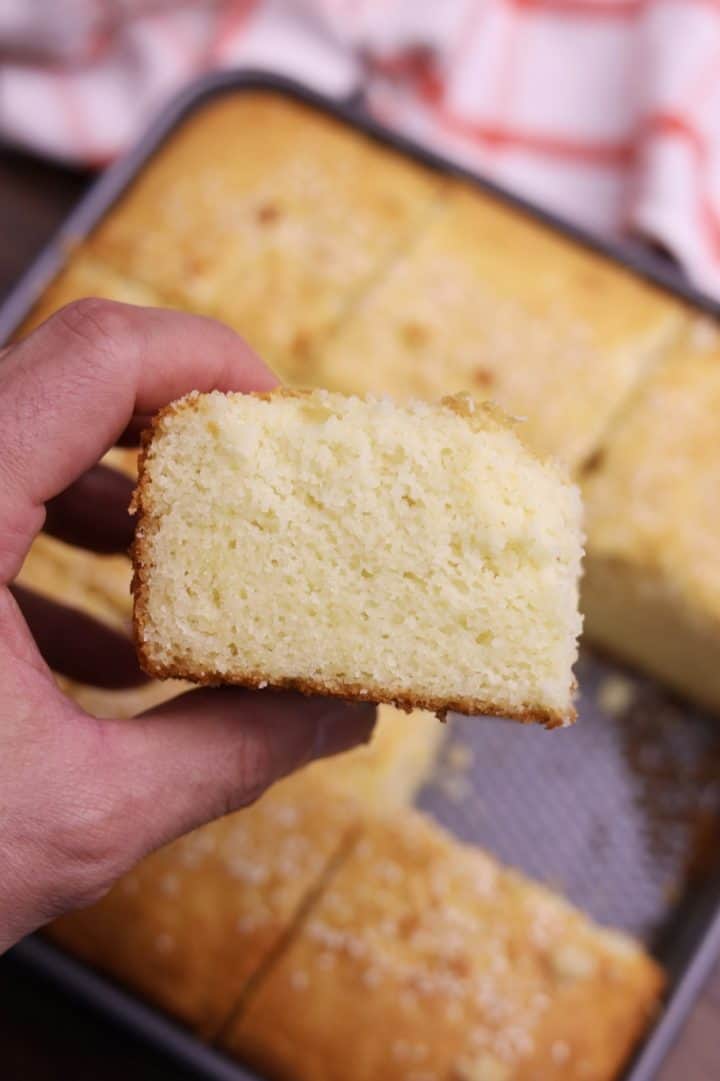
Quesadilla Salvadoreña is a traditional Salvadoran sweet bread, similar to a cross between pound cake and cornbread, with a subtle cheesy flavor and sesame seed topping.
Quesadilla Salvadoreña vs. Mexican Quesadilla
Quesadilla Salvadoreña is a sweet, cake-like bread made with rice flour, cheese, and sesame seeds, while the Mexican quesadilla is a savory tortilla filled with cheese or other fillings.
Is Quesadilla Salvadoreña gluten-free?
Yes! The traditional Quesadilla Salvadoreña is naturally gluten-free, as it's made with rice flour instead of wheat flour. However, some modern variations may use wheat flour or a combination of rice and wheat flour, so it's always best to check the recipe.
Did you know?
In Los Angeles, the Salvadoran quesadilla was virtually unknown just 15 years before the 1990s. With the arrival of Salvadoran immigrants in the 1980s, this sweet, cheesy bread began appearing in neighborhood bakeries, sold alongside other Central American pastries, such as semitas, salpores, and tortas. Today, Quesadilla Salvadoreña is as easy to find in LA as bagels and doughnuts. Read more in the Los Angeles Times.
Pair with


You may also like
Recipe
Quesadilla Salvadoreña
Equipment
- Whisk & spatula
- 9-inch square baking pan (or loaf/round pan)
Ingredients
- 454 g rice flour (1 lb) (such as Goya)
- 200 g (1 cup) granulated sugar
- 1 tablespoon baking powder
- ¾ teaspoon baking soda
- 20 g (≈ 3 tablespoons) powdered milk (such as Nido whole dry milk)
- 3 large eggs
- 1 tablespoon vanilla extract
- 113 g (4 oz) grated dry cheese (such as Parmesan)
- 112 g (1 stick / 4 oz) unsalted butter, room temperature
- 60 ml (¼ cup) avocado oil (or any neutral-flavored oil)
- 240 ml (1 cup) whole milk
- 45 g (≈ 3 tablespoons) crema Salvadoreña (or sour cream)
- Sesame seeds (to garnish)
Instructions
- Preheat the oven to 350°F (175°C). Line a 9-inch square pan with parchment paper or grease and flour it, removing any excess flour.
- Using a stand mixer fitted with a paddle, beat the sugar and softened butter on medium-high speed until pale and fluffy, about 3 minutes. Add the vanilla extract, and mix briefly.
- Reduce the speed to low and add the eggs, one at a time, mixing well between each addition until they are incorporated (the batter may look slightly curdled).
- In a separate bowl, whisk together the rice flour, baking powder, baking soda, and dry milk (if using).
- Gradually add the dry ingredients to the wet mixture in two additions, alternating with 2 additions of milk, and mix on low speed until just combined. Scrape down the sides of the bowl as needed and avoid overmixing the batter. Add 3 tablespoons of sour cream and mix briefly until smooth and even, then finish by giving the batter a final gentle stir by hand.
- Spoon the batter into the prepared pan, spreading it evenly with a spatula or palette knife. Gently tap the pan on the counter to release air bubbles.
- Place the Bundt pan in the preheated oven and bake for 40 minutes, rotating the pan halfway through baking. Test with a skewer inserted in the center-if it comes out clean, the cake is ready. If not, bake for an additional 5 minutes and test again.
- Allow the cake to cool in the pan for about 10 minutes, then gently invert it onto a wire rack to cool completely.
Notes
Nutrition
Nutrition Disclaimer: The nutritional information provided is an estimate, calculated using standard data sources. Actual values may vary based on ingredient brands, preparation methods, and portion sizes. This information is for general reference only and should not be considered a substitute for professional dietary advice.