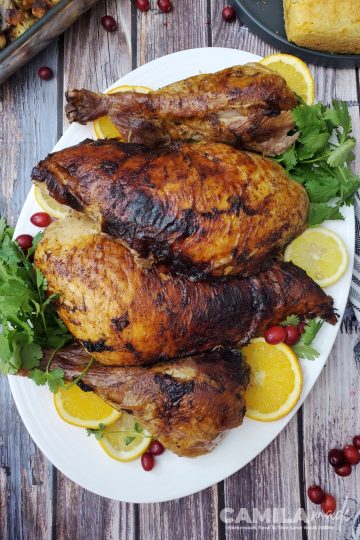
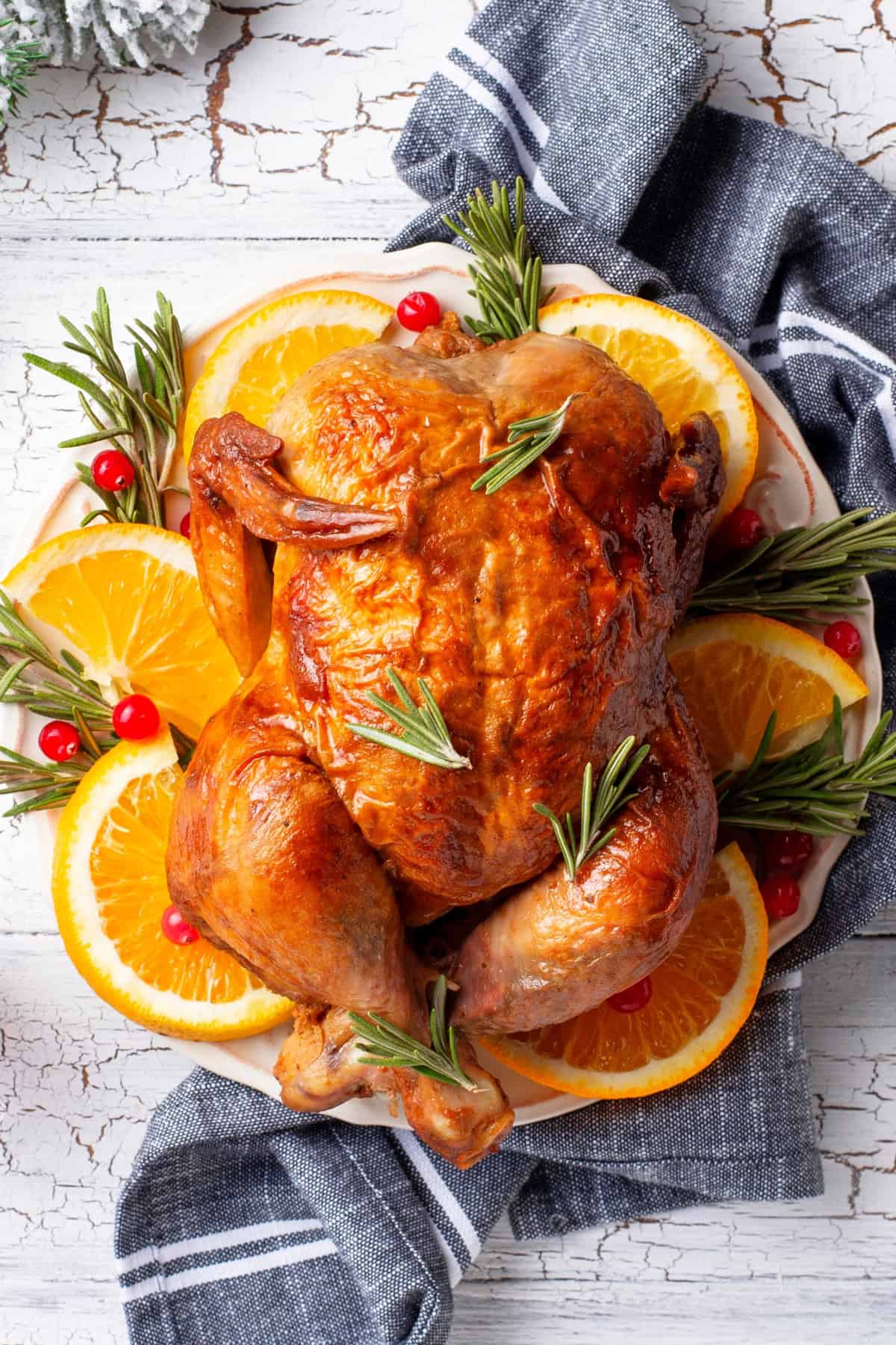
Pavo en Salmuera (brined turkey) is a turkey that has been soaked in a liquid mixture of water, salt, and other ingredients such as sugar and spices before cooking.

Jump to
This process helps the meat stay juicier, more tender, and more flavorful by retaining moisture during cooking.
Our Pavo en Salmuera recipe is very easy and yields a delicious, moist turkey. The bird is soaked in a simple brine made with fresh herbs, lemon, garlic, and kosher salt to build deep, aromatic flavor.
Softened butter under the skin keeps the turkey extra moist as it roasts. This super-easy brined turkey recipe delivers juicy, delicious results your family will love.🦃
Ingredients You'll Need
Note: See the recipe card for quantities.
- Turkey: The base of the recipe. Brining helps the meat absorb moisture and flavor so it stays juicy during roasting.
- Water: Forms the liquid base of the brine, allowing the salt, sugar, and aromatics to penetrate the turkey.
- Sugar: Adds subtle sweetness, balances the salt, and helps the skin brown well.
- Kosher salt: The key brining ingredient; keeps the meat tender, juicy, and well-seasoned.
- Peppercorns or crushed red pepper flakes: Add gentle heat and depth of flavor to the brine.
- Allspice berries: Provide warm, aromatic notes that enhance the turkey's overall flavor.
- Garlic: Adds savory richness and depth as it infuses the brine.
- Fresh herbs (rosemary, sage, thyme): Classic poultry herbs that add earthy aroma and flavor.
- Bay leaves: Add subtle herbal bitterness that balances the sweetness and richness.
- Lemons (or orange peel): Add bright citrus oils that lift and balance the savory flavors.
- Unsalted butter: Helps the skin brown evenly and keeps the turkey breast moist while roasting.
How to Make Pavo en Salmuera
Note: Full instructions are provided in the recipe card below.
- Combine all brine ingredients in a container or pot large enough to hold the turkey. Make sure all the sugar and salt have been fully dissolved. Add the turkey and refrigerate for about 6 hours or overnight.
- Preheat oven to 350 degrees F. Remove the turkey from the brine (discard the brine) and transfer it to a roasting pan with a rack and pat it dry with paper towels. Take care to wipe inside the cavity as well. Stuff the turkey with the lemon halves, rosemary, sage, thyme, garlic, and bay leaves used in the brine.
- Whisk together the butter and the lemon zest. Gently lift the skin covering 1 breast of the turkey and spread half of the butter right on the meat under the skin. Repeat with the other breast. Then spread whatever is left in your hand all over the bird. Tie the legs together over the breast to protect it during cooking and help keep it moist and juicy.
- Cook turkey for about 3 ½ hours, basting every 40 minutes or so. If any part of the turkey gets too brown towards the end of cooking, shield it with pieces of tin foil.
- Remove the turkey from the oven when an instant-read thermometer registers 165 degrees F when inserted into the thickest part of the thigh. (Be sure the thermometer is not touching a bone.) Remove from the heat and let rest for 20 to 30 minutes before carving.

Hint: Dry the turkey thoroughly after brining-inside and out. Excess moisture prevents browning and will keep the skin from turning crisp and golden.
Storage, Make Ahead, & Freezing
Make Ahead: You can brine the turkey 6 hours or up to overnight for the best flavor and juiciness. After removing it from the brine, pat it completely dry, season, and refrigerate, uncovered, for up to 12 hours before roasting-this helps the skin crisp.
Storage: Once cooked, store leftover roasted turkey in an airtight container in the refrigerator for 3-4 days. Make sure it has cooled for at least 20-30 minutes after roasting before storing.
Freezing: Cooked turkey freezes very well. For the best texture, remove the meat from the bones and freeze it in airtight bags or containers for up to 3 months. Freeze with a little cooking juice or broth to keep it moist. Thaw overnight in the refrigerator and reheat gently so it stays tender.

Camila's Tips & Variations
- Dry the turkey very well: Pat the turkey dry inside and out after brining. Removing all surface moisture is the secret to crisp, golden skin.
- Lift the skin gently: Loosen the skin over the breasts with your fingers so the lemon-zest butter can sit directly on the meat and keep it moist.
- Use softened butter: Room-temperature butter spreads easily under the skin and melts slowly, adding richness and helping with browning.
- Tie the legs: Keeping the legs tied over the breast helps the turkey roast more evenly and protects the white meat from overcooking.
- Baste regularly: Basting every 40 minutes adds flavor and helps the skin brown beautifully.
- Use foil for hot spots: If any area browns too quickly, loosely tent it with foil to prevent burning while the turkey finishes cooking.
- Citrus variation: Replace the lemons with orange peel or use both for a brighter, more aromatic flavor.
- Heat variation: Use crushed red pepper flakes instead of peppercorns for a subtle spicy note.
- Herb flexibility: Add extra rosemary, sage, or thyme depending on your preference-they all complement turkey well.
Frequently Asked Questions
Do I have to brine the turkey overnight?:
No, but overnight brining gives the best flavor and juiciness. A minimum of 6 hours still works very well.
Should I rinse the turkey after brining?:
No. Simply remove it from the brine and pat it completely dry. Rinsing adds unnecessary moisture and can prevent browning.
Can I add more herbs or aromatics to the brine?
Yes. This brine is flexible-add more or less rosemary, sage, thyme, garlic, or citrus to match your taste. You can also add celery, carrots, and onion for extra flavor.
Do I need to use butter?
No, you don't have to, but butter helps keep the turkey breast extra moist and adds rich flavor. Without it, the turkey will still be juicy from the brine, but the butter gives the skin better browning and a more flavorful finish.
❤️ Love this easy Brined Turkey recipe?
Then check out my dry brined turkey recipe-you're sure to love it too!
Pair with


You may also like
Recipe
Pavo en Salmuera
Equipment
- Large stockpot or container
- Roasting pan with rack
- Kitchen twine
Ingredients
- 1 (12 to 15-pound) turkey , neck and giblets discarded
For the brine:
- 2 gallons water
- ½ cup packed light sugar, dark or granulated sugar If you like it on the sweeter side, add 1 cup of sugar
- 1 cup Morton kosher salt
- 4 tablespoons peppercorns or 1 tablespoon crushed red pepper flakes
- 1½ teaspoons allspice berries
- 1 whole garlic bulb, cut in half equatorially
- 1 small bunch sprigs rosemary
- 4 small bunch sage sprigs
- 2 small sprigs thyme
- 4 bay leaves
- 2 large lemons, sliced in ½ or peel of three large oranges, removed in large strips
Butter:
- ½ pound (2 sticks) unsalted butter, at room temperature
Instructions
- Combine all brine ingredients in a container or pot large enough to hold the turkey. Make sure all the sugar and salt have been fully dissolved. Add the turkey and refrigerate for about 6 hours or overnight.
- Preheat oven to 350 degrees F. Remove the turkey from the brine (discard the brine) and transfer it to a roasting pan with a rack and pat it dry with paper towels.
- Take care to wipe inside the cavity as well. Stuff the turkey with the lemon halves, rosemary, sage, thyme, garlic, and bay leaves used in the brine.
- Whisk together the butter and the lemon zest. Gently lift the skin covering 1 breast of the turkey and spread half of the butter right on the meat under the skin. Repeat with the other breast.
- Then spread whatever is left in your hand all over the bird. Tie the legs together over the breast to protect it during cooking and help keep it moist and juicy.
- Cook turkey for about 3 ½ hours, basting every 40 minutes or so. If any part of the turkey gets too brown towards the end of cooking, shield it with pieces of tin foil.
- Remove the turkey from the oven when an instant-read thermometer registers 165 degrees F when inserted into the thickest part of the thigh. (Be sure the thermometer is not touching a bone.) Remove from the heat and let rest for 20 to 30 minutes before carving.
Notes
Nutrition
Nutrition Disclaimer: The nutritional information provided is an estimate, calculated using standard data sources. Actual values may vary based on ingredient brands, preparation methods, and portion sizes. This information is for general reference only and should not be considered a substitute for professional dietary advice.