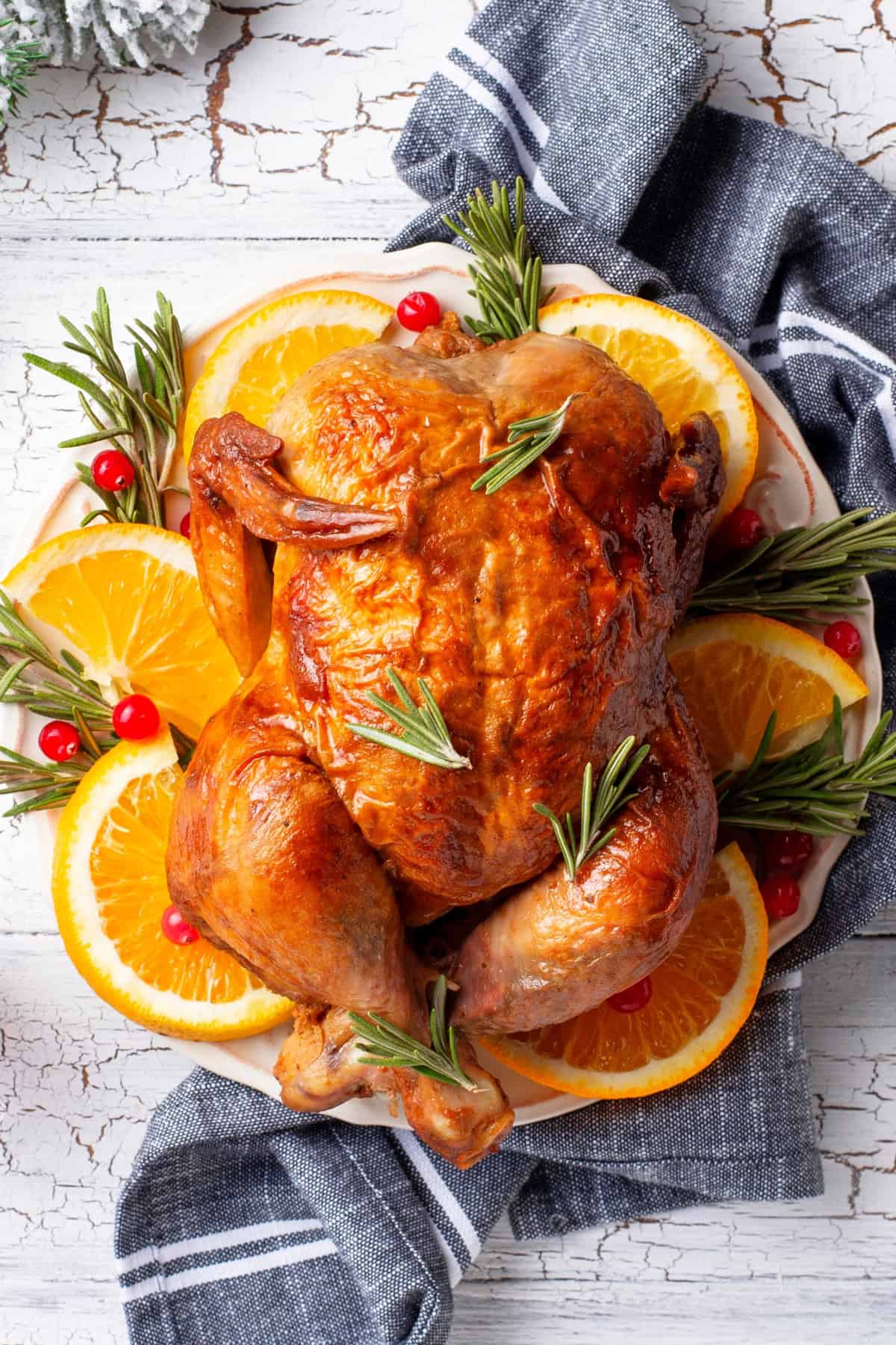
Pavo al Horno "oven-roasted turkey" is a traditional and festive dish popular across Latin American and Caribbean cultures, especially during Christmas and holiday celebrations.

Jump to
In this Pavo al Horno recipe, the turkey is dry-brined for deep flavor and tenderness, then roasted with butter and aromatics until golden.
It's an easy, simple, and flavorful oven-roasted turkey recipe that's perfect for Christmas, Thanksgiving, or any holiday celebration.
Ingredients You'll Need
Note: See the recipe card for quantities.
- Whole Turkey: The main protein of the dish. You'll need 1 (5 to 7-kg) bird.
- Salt, Sugar, Thyme, Sage, and Pepper: Combined as a dry brine to deeply season the turkey, lock in moisture, and enhance its natural flavor.
- Butter: Helps the skin brown evenly while adding richness and flavor to the meat.
- Onion, Carrot, and Celery: Classic aromatics that infuse the turkey and pan drippings with depth and a subtle sweetness.
- Water or Stock: Prevents the drippings from burning and forms the flavorful base for the gravy.
How to Make Pavo al Horno
Note: Full instructions are provided in the recipe card below.
- Line a large rimmed baking sheet with aluminum foil for easy cleanup, and place a wire rack on top.
- Remove and discard the truss that ties the turkey legs together if they are connected by a flap of skin; carefully cut through it to release the legs. Trim away any visible fat around the neck or inside the cavity. Take out the giblets and neck-save them for making stock or discard them. Pat the entire turkey dry with paper towels.
- In a small bowl, combine the sugar, salt, thyme, sage, rosemary, and pepper to make the dry brine. Set the turkey on the prepared rack and rub the mixture all over the bird, including inside the cavity. Refrigerate the turkey uncovered for at least 24 hours, or up to 48 hours. (Keep it refrigerated at or below 4°C for food safety. If brining for more than 24 hours, loosely cover the turkey with plastic wrap during the first stage, then uncover for the final 24 hours so the skin can dry.)
- When ready to cook, preheat the oven to 375°F (190°C) and position a rack in the lower third of the oven. Wipe the brine from the turkey's exterior with a slightly damp paper towel, leaving the brine inside the cavity.
- Spread the chopped onion, carrots, and celery evenly across the bottom of a large roasting pan. Place a roasting rack on top of the vegetables and set the turkey on the rack. Tuck the wing tips under the bird, then use your hands to coat the entire turkey with softened butter.
- Roast until the skin is a deep golden brown and the internal temperature reaches 165°F (74°C) in the thickest part of the breast and 175°F (80°C) in the thigh-about 1¾ to 2½ hours. Check after 1½ hours; if the skin is browning too quickly, tent the bird loosely with foil.
- Using clean oven mitts, carefully tilt the turkey so any juices from the cavity drain into the roasting pan. Transfer the turkey to a cutting board or platter, then loosely tent it with foil and let it rest for 20-30 minutes. Remove and discard the vegetables (or save them if they're still intact for garnish), and keep the pan drippings to prepare the gravy.
- While the turkey rests, prepare the gravy.
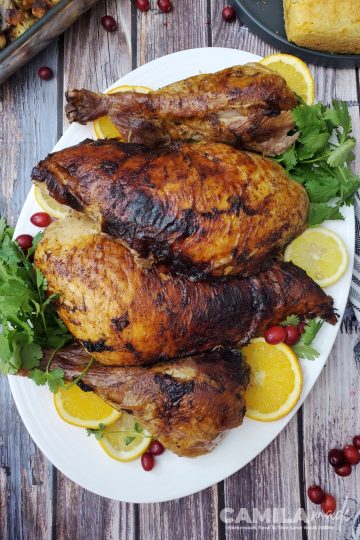
- Carve the turkey and serve it warm, accompanied by the gravy on the side.
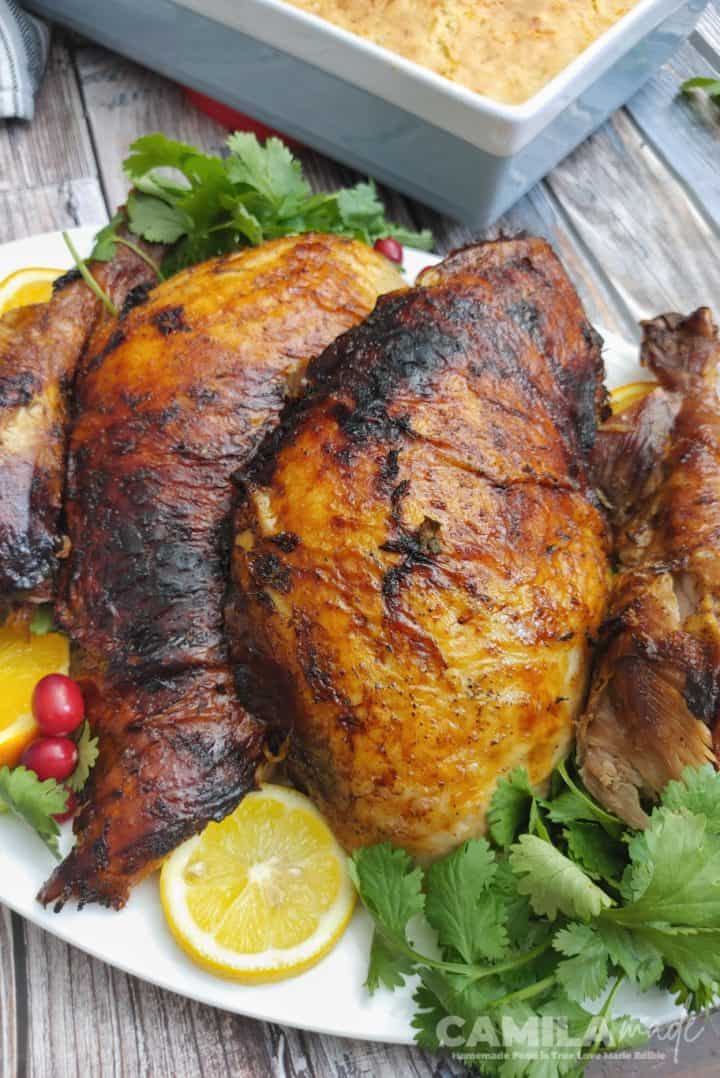
Hint: Roast until the turkey reaches 165°F (74°C) in the breast and 175°F (80°C) in the thigh for perfectly cooked, juicy meat.
Storage, Make Ahead, & Freezing
Storage: Keep leftover turkey in an airtight container and refrigerate for up to 3 days. Reheat gently in the oven or microwave with a splash of broth to help retain moisture.
Make Ahead: The turkey can be roasted and carved up to two days ahead, although you'll lose the crispy skin. Pour a thin layer of gravy into an ovenproof dish, arrange the carved turkey over it, cover tightly with plastic wrap, and refrigerate. Store the remaining gravy separately. When ready to serve, remove the plastic wrap, cover the dish with foil, and warm in a 165°C oven for 20-30 minutes, until hot. Reheat the gravy on the stovetop or in the microwave.
Freezing: I don't recommend freezing, as this turkey tastes best when freshly roasted. However, if needed, cooked and carved turkey can be frozen for up to 3 months. Wrap it tightly in freezer-safe bags or containers, removing as much air as possible. Thaw overnight in the refrigerator and reheat before serving.
Camila's Tips & Variations
- Selecting Your Turkey: For the best results with this dry-brining method, choose a turkey that hasn't been injected, pre-brined, or labeled as "self-basting," since those already contain added salt or a brining solution. If that's the only kind available, don't worry-you can still make this recipe. Simply reduce the amount of salt in the dry brine by half to maintain balanced seasoning.
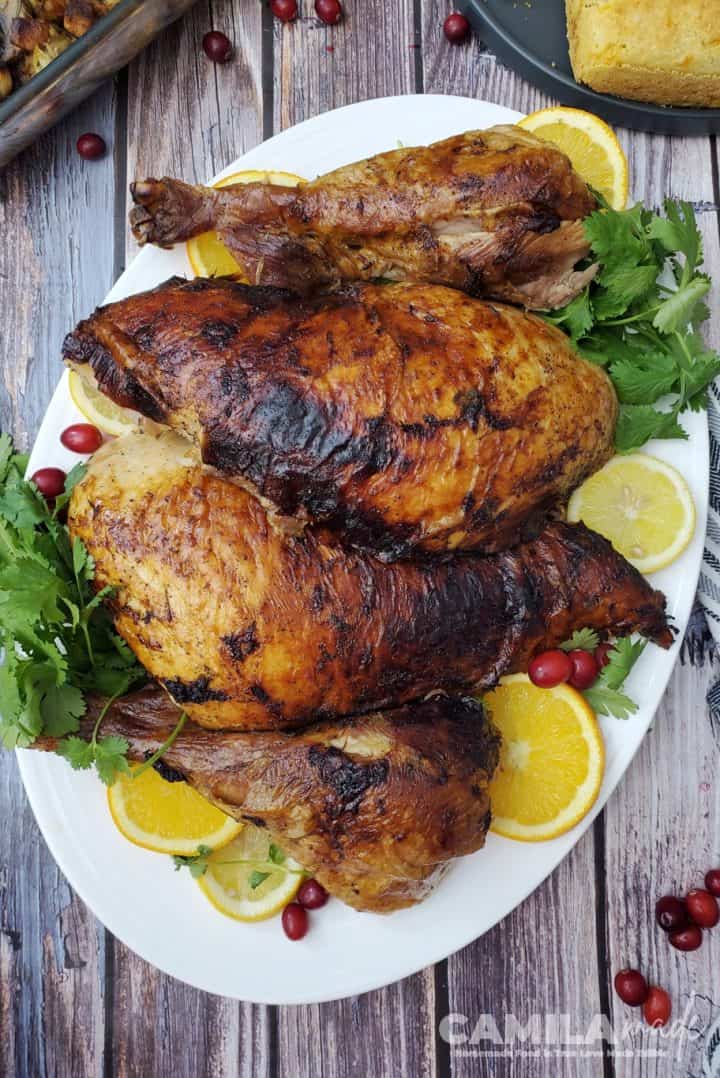
- For Crispy Skin: Let the turkey air-dry uncovered in the refrigerator for the last 24 hours of the dry-brining process-this helps the skin roast up beautifully golden and crisp.
- Butter Under the Skin: For extra flavor and moisture, carefully loosen the skin over the breast and spread a few tablespoons of softened butter mixed with herbs directly underneath before roasting.
- Aromatic Twist: Add halved garlic heads and fresh thyme, rosemary, and sage to the cavity.
- Rest Before Carving: Always let the turkey rest for at least 20-30 minutes after roasting; this allows the juices to redistribute for tender, juicy meat.
- Flavor Boost for Gravy: Use the roasted vegetables and pan drippings to make a rich, flavorful gravy-don't skip straining and deglazing the pan for the best results.
Frequently Asked Questions
How long should I dry-brine the turkey?
Dry brine the turkey for at least 24 hours and up to 48 hours. This allows the salt to penetrate deeply, seasoning the meat and keeping it juicy.
Can I use a frozen turkey?
Yes, but make sure it's completely thawed before applying the dry brine. A good rule of thumb is to allow 24 hours of thawing time in the refrigerator for every 2 kg of turkey.
Do I need to rinse off the brine before roasting?
No, rinsing can make the skin soggy. Instead, use a damp paper towel to gently wipe away excess salt from the exterior, leaving the seasoning inside the cavity.
How do I know when my turkey is done?
Use a meat thermometer. The breast should register 165°F (74°C), and the thighs should reach 175°F (80°C). Always check in the thickest part without touching the bone.
What if I don't have a roasting rack?
You can place the turkey directly on a bed of vegetables (like onions, carrots, and celery). They'll elevate the bird and flavor the drippings at the same time.
❤️ Love this Pavo al Horno recipe?
Don't miss our Mexican-inspired Pavo Relleno al Horno recipe.
Pair with
You may also like
Recipe
Pavo al Horno
Equipment
- Roasting pan with rack
- Kitchen shears or sharp knife
- Aluminum foil and plastic wrap
- Basting brush or spoon
- Cutting board and carving knife
Ingredients
- 1 (5 to 7-kg) turkey, patted dry
- 54 g light brown sugar
- 3 tablespoons Morton kosher salt (or ¼ cup Diamond kosher salt)
- 1 tablespoon dried thyme
- 1 tablespoon dried sage leaves or ground sage
- 1 tablespoon dried rosemary
- 1 teaspoon freshly ground black pepper
- 85 g unsalted butter , at room temperature
- 1 large yellow onion , cut into wedges
- 2 carrots , cut into 5-cm pieces
- 2 stalks celery , cut into 5-cm pieces
Instructions
- Line a large rimmed baking sheet with aluminum foil for easy cleanup, and place a wire rack on top.
- Remove and discard the truss that ties the turkey legs together if they are connected by a flap of skin; carefully cut through it to release the legs. Trim away any visible fat around the neck or inside the cavity. Take out the giblets and neck-save them for making stock or discard them. Pat the entire turkey dry with paper towels.
- In a small bowl, combine the sugar, salt, thyme, sage, rosemary, and pepper to make the dry brine. Set the turkey on the prepared rack and rub the mixture all over the bird, including inside the cavity.
- Refrigerate the turkey uncovered for at least 24 hours, or up to 48 hours. (Keep it refrigerated at or below 4°C for food safety. If brining for more than 24 hours, loosely cover the turkey with plastic wrap during the first stage, then uncover for the final 24 hours so the skin can dry.)
- When ready to cook, preheat the oven to 375°F (190°C) and position a rack in the lower third of the oven. Wipe the brine from the turkey's exterior with a slightly damp paper towel, leaving the brine inside the cavity.
- Spread the chopped onion, carrots, and celery evenly across the bottom of a large roasting pan. Place a roasting rack on top of the vegetables and set the turkey on the rack. Tuck the wing tips under the bird, then use your hands to coat the entire turkey with softened butter.
- Roast until the skin is a deep golden brown and the internal temperature reaches 165°F (74°C) in the thickest part of the breast and 175°F (80°C) in the thigh-about 1¾ to 2½ hours. Check after 1½ hours; if the skin is browning too quickly, tent the bird loosely with foil.
- Using clean oven mitts, carefully tilt the turkey so any juices from the cavity drain into the roasting pan. Transfer the turkey to a cutting board or platter, then loosely tent it with foil and let it rest for 20-30 minutes.
- Remove and discard the vegetables (or save them if they're still intact for garnish), and keep the pan drippings to prepare the gravy.
- While the turkey rests, prepare the gravy.
- Carve the turkey and serve it warm, accompanied by the gravy on the side.
Notes
Nutrition
Nutrition Disclaimer: The nutritional information provided is an estimate, calculated using standard data sources. Actual values may vary based on ingredient brands, preparation methods, and portion sizes. This information is for general reference only and should not be considered a substitute for professional dietary advice.