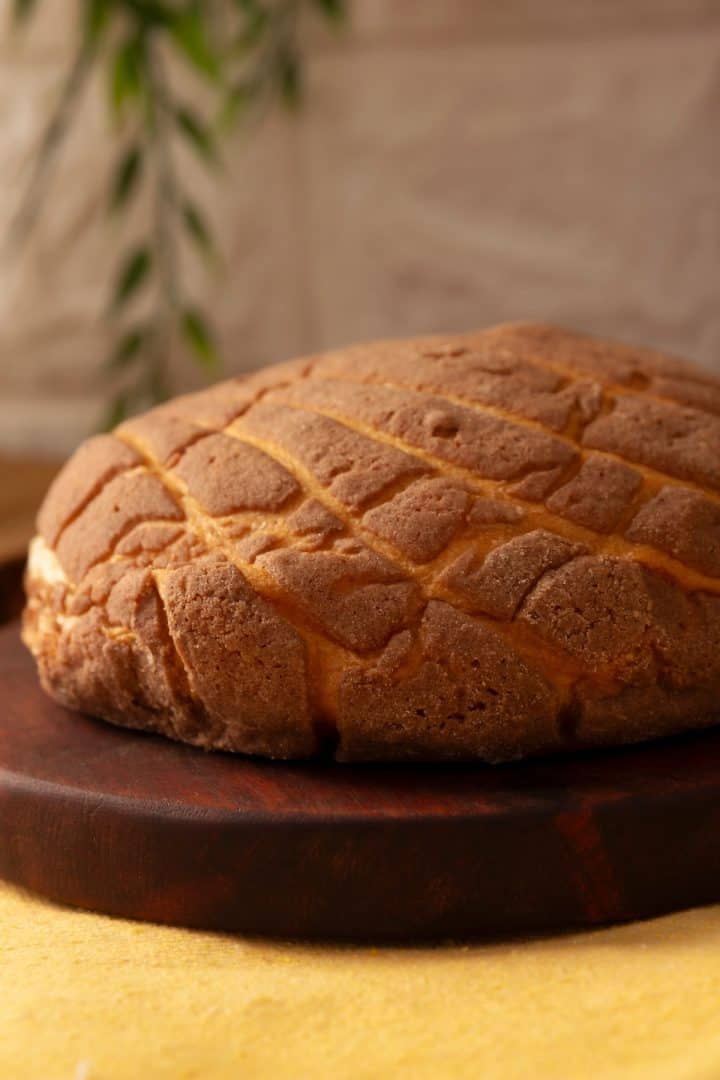
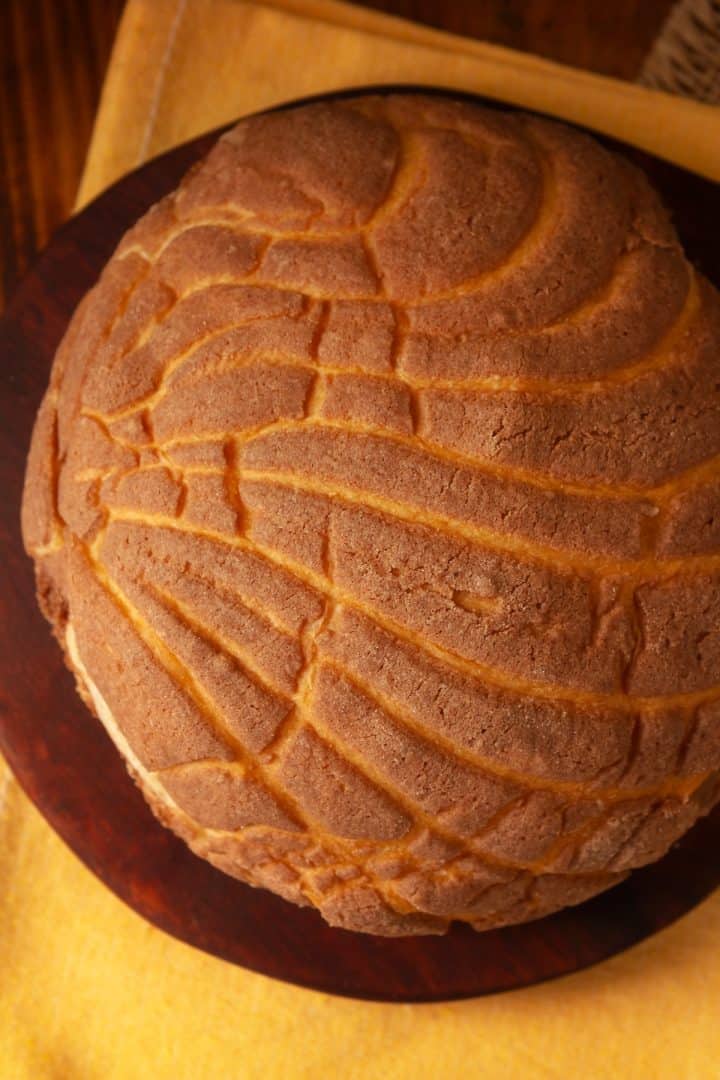
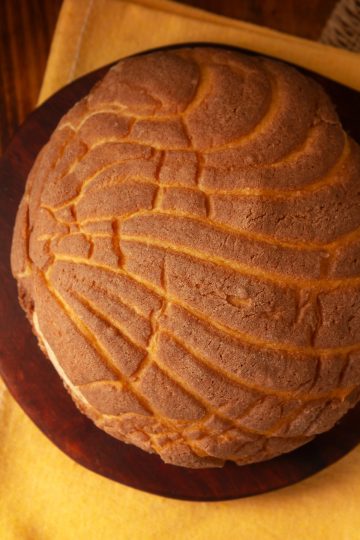
Conchas de Chocolate are a classic Mexican pan dulce made with a soft, brioche-style sweet bread and a cocoa sugar crust, scored in a traditional seashell pattern.
Jump to
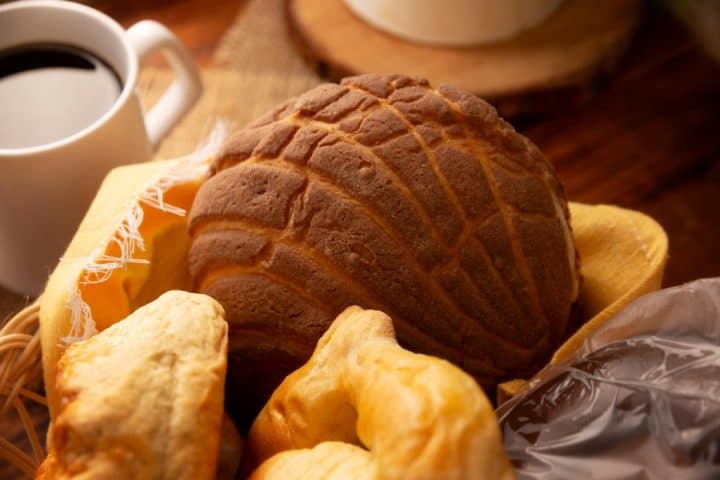
This popular Mexican sweet bread is known for its fluffy crumb and lightly crisp topping, and is commonly enjoyed with coffee or hot chocolate.
This Conchas de Chocolate recipe uses an easy brioche-style dough for a light, bakery-style texture and a chocolate sugar topping that bakes up crisp.
The simple method makes it easy to make authentic chocolate conchas at home with a soft center and a crunchy topping.
Ingredients You'll Need
Note: Full ingredients and amounts are listed in the recipe card below.
- Bread flour: provides the strength and structure needed for a tall, fluffy concha with a soft crumb and sturdy sugar crust; it can be substituted with all-purpose flour.
- Sugar: sweetens the bread and helps keep it soft and tender.
- Instant or rapid-rise yeast: helps the dough rise, creating a light, fluffy texture.
- Milk: adds moisture and richness, helping the bread stay soft after baking.
- Eggs: add structure, color, and richness, giving conchas their brioche-like texture.
- Unsalted Butter: adds flavor and creates a tender, soft crumb.
- Salt: balances the sweetness and strengthens the dough.
- Vanilla extract: Enhances the bread's overall flavor.
- Vegetable shortening: Its higher melting point helps the seashell design stay sharp during baking.
- Cocoa powder: used to make chocolate-flavored conchas.
How to Make Conchas de Chocolate
Note: Full instructions are provided in the recipe card below.
- Place the milk and 1 tablespoon of the granulated sugar in a microwave-safe bowl. Heat in 15-20-second intervals, stirring between each, until the sugar dissolves and the milk reaches 110°F / 43°C. Do not overheat. Stir in the yeast and let it bloom until frothy and bubbly, about 10 minutes.
- In the bowl of a stand mixer fitted with the whisk attachment, combine the bread flour, remaining sugar, and salt until evenly mixed. Switch to the dough hook attachment.
- In a small bowl, whisk together the vanilla and eggs until combined. With the mixer on low speed, slowly add the yeast mixture to the flour, followed by the eggs.
- Mix until well combined, 3 to 5 minutes. Increase the speed to medium and begin adding the softened butter, one piece at a time, allowing each to incorporate before adding the next. About 4 to 6 minutes total. Scrape down the bowl and dough hook as needed.
- Continue kneading until the dough becomes smooth, elastic, and pulls cleanly away from the sides of the bowl, about 10 minutes.
- Transfer the dough to a lightly greased large bowl. Cover with greased plastic wrap and let rise until doubled in volume, about 1 hour.
- While the dough rises, prepare the topping. Sift together the powdered sugar, bread flour, cocoa powder, and cinnamon. In a separate bowl, combine the vegetable shortening, vanilla, and the sifted dry ingredients.
- Using clean hands, mix until homogeneous with a playdough-like consistency.
- Lightly dust the work surface with flour and knead the topping dough briefly. Divide into 12 portions, roll into balls, and keep covered until ready to use. Line two rimmed baking sheets with parchment paper and set aside.
- After the dough has doubled in size, turn it out onto the lightly oiled or floured work surface. Pull the dough toward the center and press it inward. Repeat from all sides to degas and strengthen the dough.
- Divide it into 12 equal portions. Cover loosely with greased plastic wrap.
- Working with one piece at a time, shape the dough by pulling the edges inward and pinching to seal, creating a smooth top.
- Place seam-side down and roll gently against the counter with a cupped hand until round and slightly taut. Repeat with the remaining pieces.
- Place 6 dough balls on each prepared baking sheet, spacing them evenly apart. Gently press around the edges of each one so the center remains slightly domed. Rub a small amount of vegetable shortening between your palms and lightly coat the top of each dough ball.
- Lightly flour your hands. Flatten each topping portion into a thin, round disk large enough to cover the dough ball. Alternatively, place one portion between two pieces of plastic in a tortilla press and press it into a disk slightly larger than the diameter of the dough ball.
- Place the topping disk on top and press gently. Using a concha cutter or a knife dusted with flour or powdered sugar, score the shell pattern.
- Place the prepared sheets in a warm area and let the conchas rise again until doubled in size, 1 to 1½ hours.
- Adjust the oven racks to the upper-middle and lower-middle positions and preheat the oven to 350°F (175°C).
- Bake for 20 to 25 minutes, switching and rotating the baking sheets halfway through, until the conchas are golden brown and the internal temperature reaches at least 205°F.
- Transfer the baking sheets to wire racks and let cool for 15 minutes before serving.
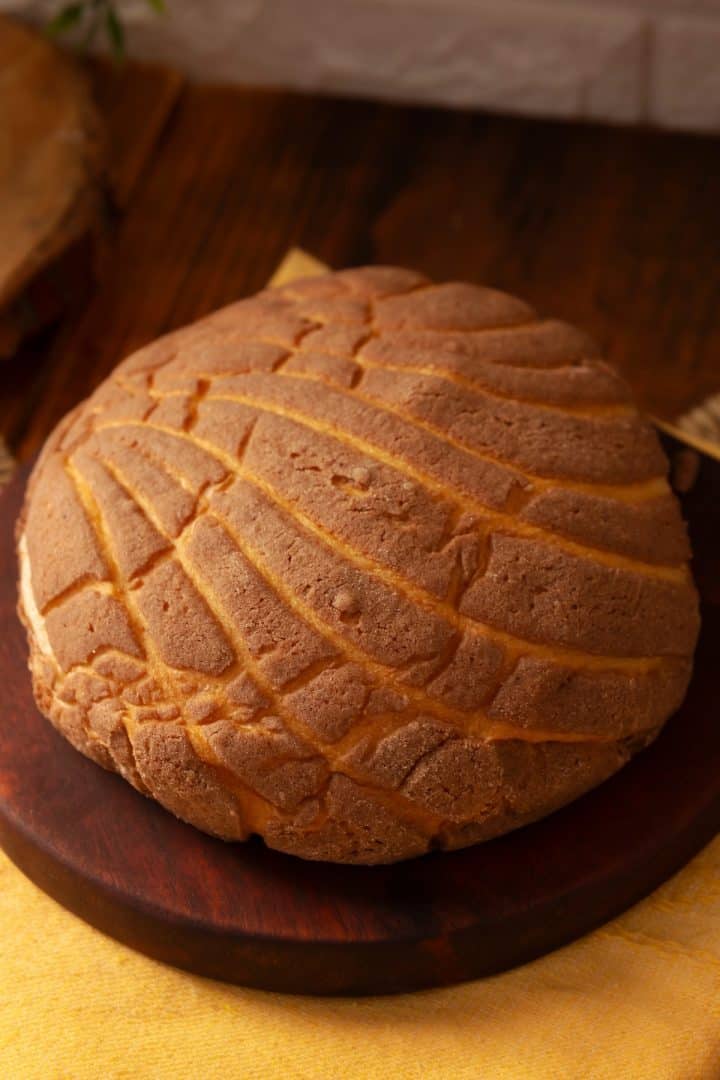
Hint: Rub a small amount of vegetable shortening on each dough ball before adding the topping to help it adhere.
Storage, Make Ahead, & Freezing
Storage: Store conchas in an airtight container at room temperature for up to 2 days. Refrigerate for up to 5 days for longer freshness. Warm slightly before serving. Microwave briefly for a few seconds to soften.
Make Ahead: The dough can be made ahead and refrigerated overnight after the first rise. Let it come to room temperature before shaping.
Freezing: Best enjoyed fresh, but baked conchas can be frozen for up to 2 months. Thaw at room temperature and warm before serving.
Camila's Tips & Variations
- By hand option: This dough can be made by hand if you don't have a stand mixer, but it will take longer. Expect about 25-30 minutes of kneading to develop a smooth, elastic dough.
- Knead until elastic. The dough is ready when it pulls away from the table and passes the windowpane test.
- Fermentation time depends on temperature. The dough is ready when it doubles in size, not based strictly on time.
- Weigh each portion equally. Equal weight ensures even baking.
- Proper shaping is essential. Tight shaping helps the dough rise evenly and prevents misshapen bread.
- Cracked shell: Add a little vanilla extract to the chocolate topping to prevent cracking during baking.
- Shell pattern: Dust the concha cutter with flour before scoring to keep the design clean and defined. If you don't have a cutter, you can score the pattern using a small knife.
- Don't overbake: Oven temperatures vary, so bake the conchas until they are lightly golden on top and lightly browned on the bottom. When gently tapped underneath, they should sound slightly hollow, indicating they are baked through. Avoid excessive browning, as it will make them dry rather than soft.
- Serving idea: Conchas taste best when fresh and pair well with coffee, milk, or hot chocolate.
Frequently Asked Questions
Why did my chocolate concha topping crack or fall off?
This usually happens if the topping dough is too dry or rolled too thin. The topping should be soft and pliable, similar to cookie dough, and pressed gently onto the dough without stretching.
Can I make conchas de chocolate without a stand mixer?
Yes. You can knead the dough by hand, but it will require more time and effort. Expect about 15-20 minutes of kneading to achieve a smooth, elastic dough.
What type of cocoa powder is best for conchas de chocolate?
Unsweetened cocoa powder works best. Natural or Dutch-process cocoa both work, but Dutch-process gives a deeper chocolate color and milder bitterness.
How do I keep conchas de chocolate soft?
Avoid adding extra flour and do not overbake. Lightly warming conchas before serving also helps keep them soft.
❤️ Love this Conchas de Chocolate recipe?
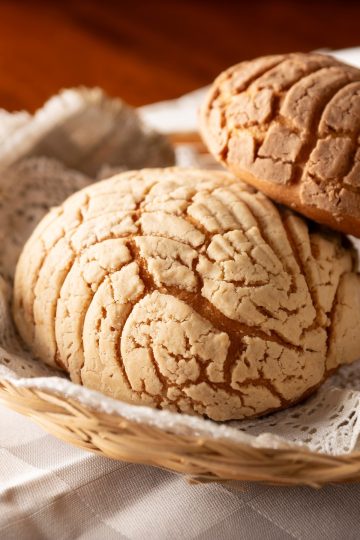
Make sure to check out our Vanilla Concha recipe for another classic Mexican pan dulce.
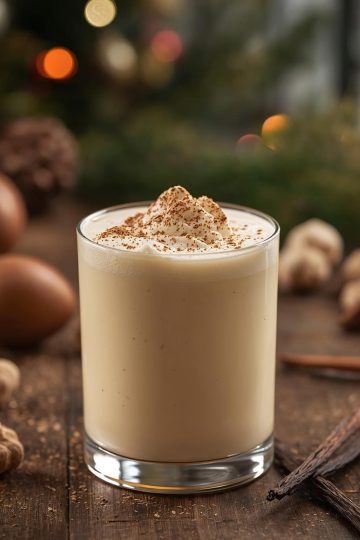
Pair with


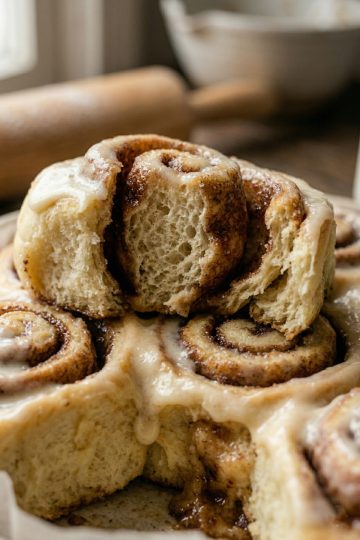
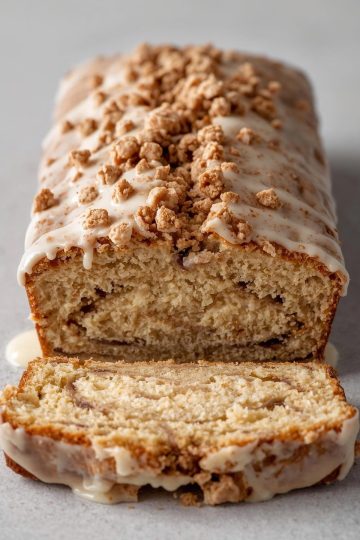
You may also like
Recipe
Conchas de Chocolate
Equipment
- Stand mixer with whisk, dough hook, and paddle attachments
- Rimmed baking sheets
- Tortilla press (or flat plate for pressing topping)
- Plastic sheets or zip-top bags
- Concha cutter (or butter knife as alternative)
- Bench scraper (optional but helpful)
Ingredients
- 571 grams bread flour or all-purpose flour
- 1 teaspoon kosher salt
- 11 g instant or rapid-rise yeast
- 1 ¼ cups milk or water (110°F / 43°C)
- 2 large eggs , room temperature
- 100 grams granulated sugar , plus 1 tablespoon
- 1 tablespoon vanilla extract
- 13 tablespoons unsalted butter , cut into 13 pieces and softened
Chocolate Sugar Crust
- 100 grams confectioners' sugar
- 100 grams bread flour or all-purpose flour
- 30 g unsweetened cocoa powder
- ⅛ teaspoon ground cinnamon
- 100 grams vegetable shortening such as Crisco
- 2 teaspoons vanilla extract
Instructions
- Place the milk and 1 tablespoon of the granulated sugar in a microwave-safe bowl. Heat in 15-20-second intervals, stirring between each, until the sugar dissolves and the milk reaches 110°F / 43°C. Do not overheat. Stir in the yeast and let it bloom until frothy and bubbly, about 10 minutes.
- In the bowl of a stand mixer fitted with the whisk attachment, combine the bread flour, remaining sugar, and salt until evenly mixed. Switch to the dough hook attachment.
- In a small bowl, whisk together the vanilla and eggs until combined. With the mixer on low speed, slowly add the yeast mixture to the flour, followed by the eggs.
- Mix until well combined, 3 to 5 minutes. Increase the speed to medium and begin adding the softened butter, one piece at a time, allowing each to incorporate before adding the next. About 4 to 6 minutes total. Scrape down the bowl and dough hook as needed.
- Continue kneading until the dough becomes smooth, elastic, and pulls cleanly away from the sides of the bowl, about 10 minutes.
- Transfer the dough to a lightly greased large bowl. Cover with greased plastic wrap and let rise until doubled in volume, about 1 hour.
- While the dough rises, prepare the topping. Sift together the powdered sugar, bread flour, cocoa powder, and cinnamon. In a separate bowl, combine the vegetable shortening, vanilla, and the sifted dry ingredients.
- Using clean hands, mix until homogeneous with a playdough-like consistency.
- Lightly dust the work surface with flour and knead the topping dough briefly. Divide into 12 portions, roll into balls, and keep covered until ready to use. Line two rimmed baking sheets with parchment paper and set aside.
- After the dough has doubled in size, turn it out onto the lightly oiled or floured work surface. Pull the dough toward the center and press it inward. Repeat from all sides to degas and strengthen the dough.
- Divide it into 12 equal portions. Cover loosely with greased plastic wrap.
- Working with one piece at a time, shape the dough by pulling the edges inward and pinching to seal, creating a smooth top.
- Place seam-side down and roll gently against the counter with a cupped hand until round and slightly taut. Repeat with the remaining pieces.
- Place 6 dough balls on each prepared baking sheet, spacing them evenly apart. Gently press around the edges of each one so the center remains slightly domed. Rub a small amount of vegetable shortening between your palms and lightly coat the top of each dough ball.
- Lightly flour your hands. Flatten each topping portion into a thin, round disk large enough to cover the dough ball. Alternatively, place one portion between two pieces of plastic in a tortilla press and press it into a disk slightly larger than the diameter of the dough ball.
- Place the topping disk on top and press gently. Using a concha cutter or a knife dusted with flour or powdered sugar, score the shell pattern.
- Place the prepared sheets in a warm area and let the conchas rise again until doubled in size, 1 to 1½ hours.
- Adjust the oven racks to the upper-middle and lower-middle positions and preheat the oven to 350°F (175°C).
- Bake for 20 to 25 minutes, switching and rotating the baking sheets halfway through, until the conchas are golden brown and the internal temperature reaches at least 205°F.
- Transfer the baking sheets to wire racks and let cool for 15 minutes before serving.
Notes
Nutrition
Nutrition Disclaimer: The nutritional information provided is an estimate, calculated using standard data sources. Actual values may vary based on ingredient brands, preparation methods, and portion sizes. This information is for general reference only and should not be considered a substitute for professional dietary advice.