Refrigerator pickling, also known as quick pickling, is a fast, non-fermented method that preserves vegetables in vinegar, water, salt, and sugar. The vegetables are sliced, covered with hot brine, refrigerated, and ready to eat within 24 hours.

Jump to
This refrigerator pickling recipe is quick, simple, and made with everyday ingredients.
It uses white vinegar for a clean flavor and works well with a variety of vegetables and fruits, including onions, carrots, cucumbers, jalapeños, strawberries, and pineapple.
Ingredients You'll Need
Note: Full ingredients and amounts are listed in the recipe card below.
- Vegetables: The base of the recipe. Use onions, carrots, cucumbers, radishes, cabbage, or any firm vegetable.
- Vinegar: Provides acidity and preserves the vegetables.
- Water: Balances the sharpness of the vinegar.
- Sugar: Softens acidity and improves flavor.
- Salt: Enhances taste and helps draw moisture from the vegetables.
- Spices (optional): Add flavor using peppercorns, mustard seeds, garlic, or herbs.
How to Make Refrigerator Pickling
Note: Full instructions are provided in the recipe card below.
- In a medium pot over medium-high heat, combine the vinegar, water, sugar, salt, and seasonings. Bring the mixture to a boil, stirring until the sugar is completely dissolved, then remove from the heat.
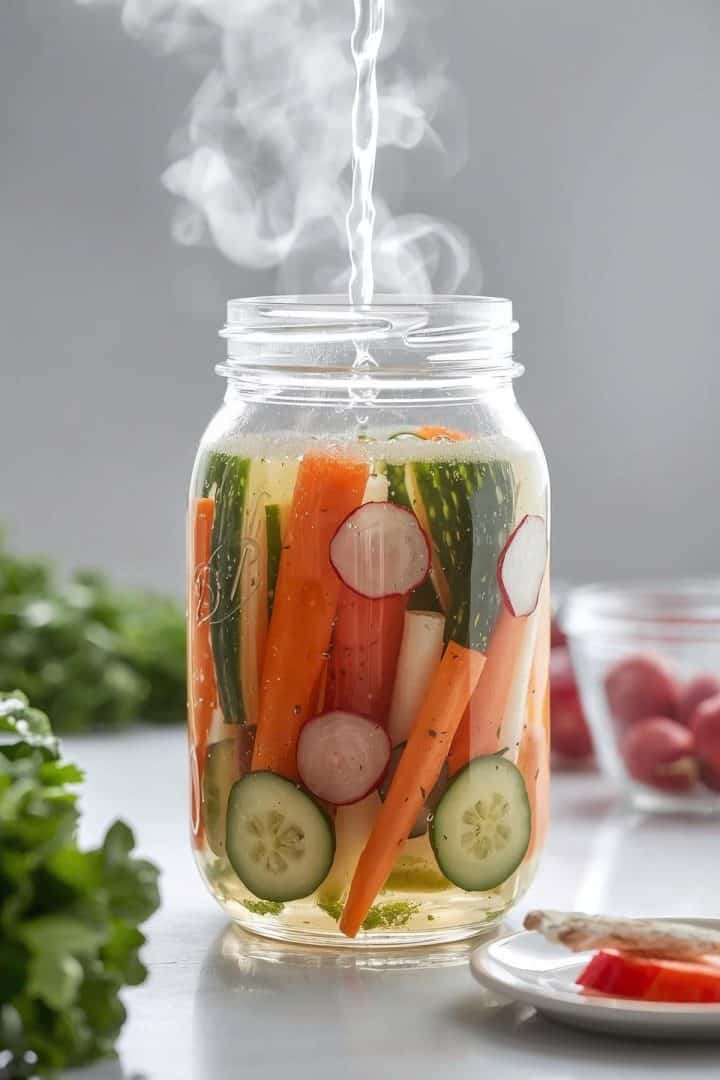
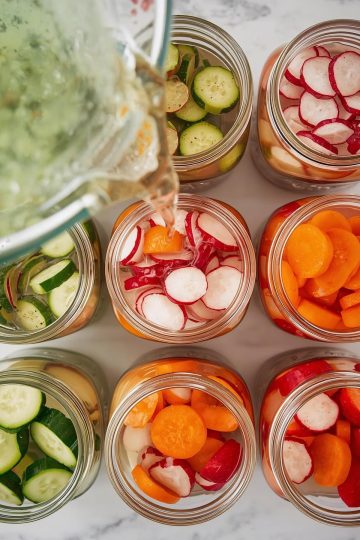
- Place the vegetables or fruit into clean pint-size Mason jars, and carefully pour the hot brine over them, making sure everything is fully covered. Let the jars cool to room temperature.
- Secure the lids and refrigerate until the flavor develops to your liking. Some produce, such as thinly sliced onions, is ready as soon as it cools, while firmer vegetables may require more time. Most quick pickles will keep refrigerated for up to 2 months.
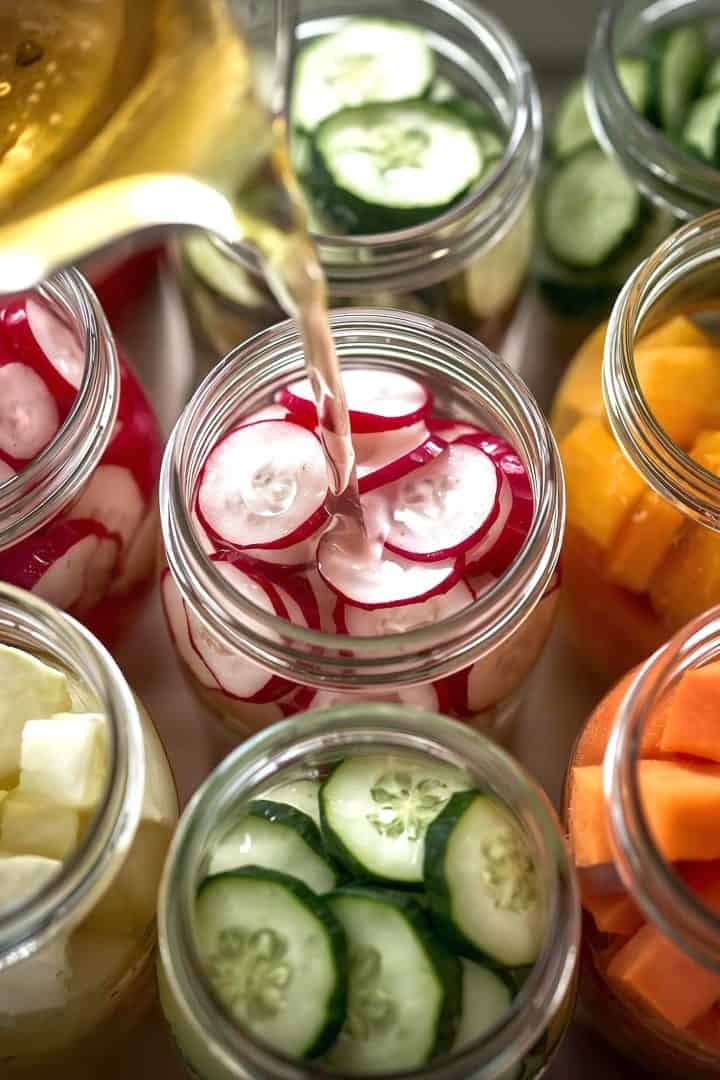
Hint: Always use hot brine over fresh, cold vegetables to help them stay crisp and absorb flavor faster.
Storage, Make Ahead, & Freezing
Storage: Keep quick pickles in an airtight container in the refrigerator for up to 2 months.
Make Ahead: These can be prepared in advance and refrigerated until ready to use.
Freezing: Not recommended.

Camila's Tips & Variations
- Slice vegetables thinly for faster pickling and stronger flavor.
- Use white vinegar for a clean taste or apple cider vinegar for a milder flavor.
- Add sugar to balance the sharp acidity if the pickles taste too strong.
- Let the pickles rest for at least 30 minutes to improve flavor before serving.
- Try different spices like garlic, peppercorns, bay leaves, or chili flakes for variation.
Frequently Asked Questions
How long do refrigerator pickles last?
Up to two months when stored in airtight containers in the fridge.
Do refrigerator pickles need to be refrigerated?
Yes. They are not shelf-stable and must stay cold.
Can I reuse the brine?
No. Reusing brine weakens acidity and affects food safety.
Why are my pickles soft?
The vegetables were not fresh or were sliced too thick.
Pair with


Recipe
Refrigerator Pickling
Equipment
- Glass jars
Ingredients
- 360 ml (1½ cups) white vinegar
- 360 ml (1½ cups) water
- 3 tablespoons granulated sugar
- 2 tablespoons kosher salt
- seasonings of choice The seasonings depend on what you're pickling, but common options include peppercorns, mustard seeds, lemon zest, and fresh dill.
- 454 g (1lb)vegetables or fruits
Instructions
- In a medium pot over medium-high heat, combine the vinegar, water, sugar, salt, and seasonings.
- Bring the mixture to a boil, stirring until the sugar is completely dissolved, then remove from the heat.
- Place the vegetables or fruit into clean pint-size Mason jars, and carefully pour the hot brine over them, making sure everything is fully covered.
- Let the jars cool to room temperature.
- Secure the lids and refrigerate until the flavor develops to your liking. Some produce, like thinly sliced onions, is ready as soon as it cools, while firmer vegetables may need more time.
- Most quick pickles will keep refrigerated for up to 2 months.
Notes
Nutrition
Nutrition Disclaimer: The nutritional information provided is an estimate, calculated using standard data sources. Actual values may vary based on ingredient brands, preparation methods, and portion sizes. This information is for general reference only and should not be considered a substitute for professional dietary advice.