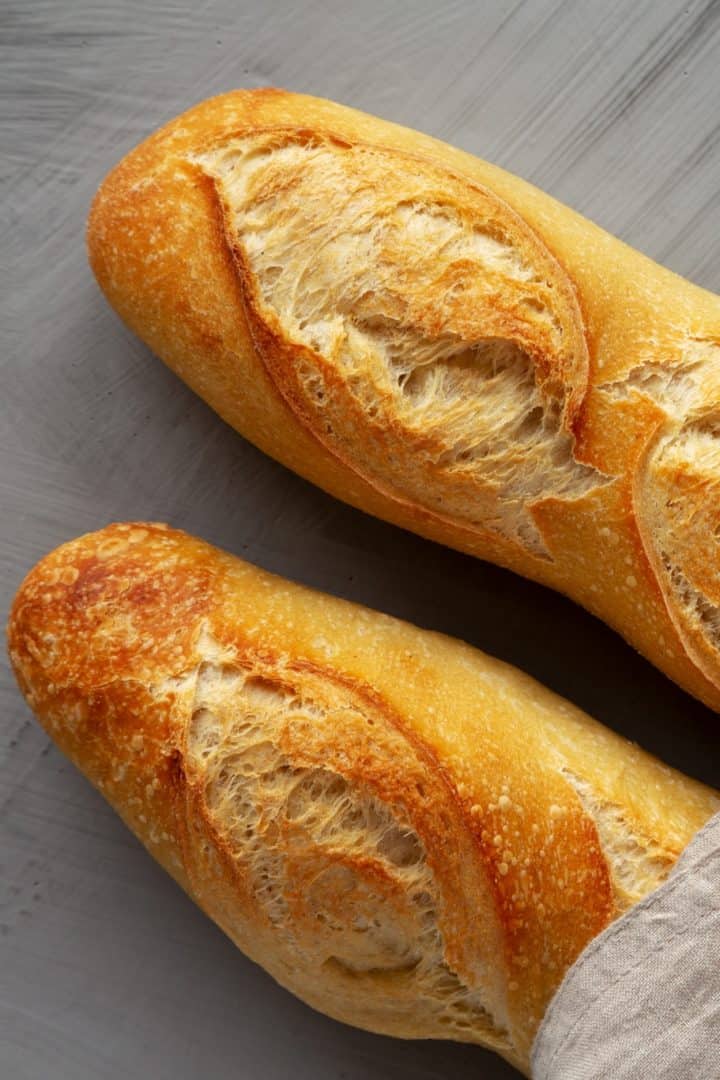
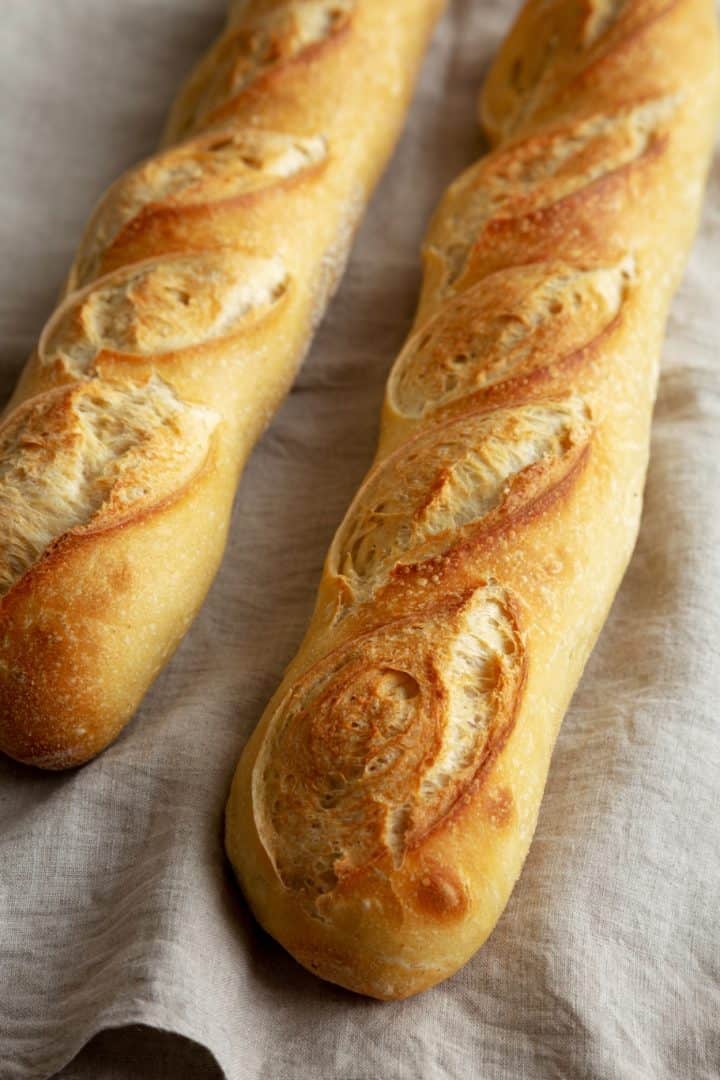
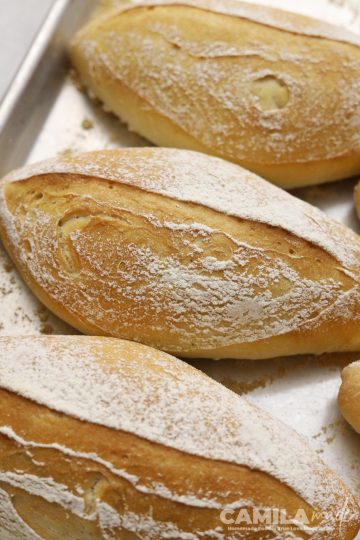
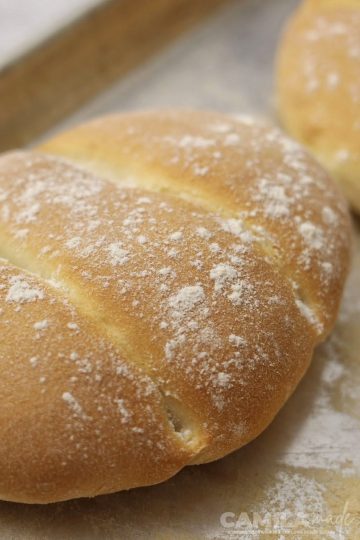
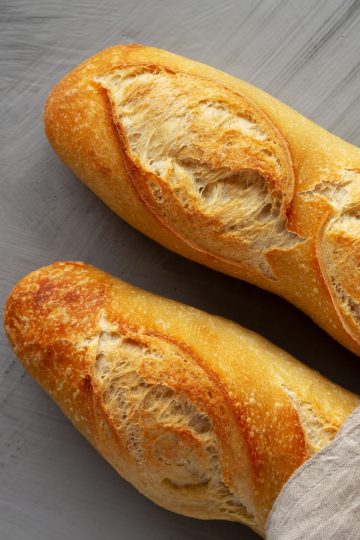
Pane Francese is Italy's take on the French baguette - a long, rustic loaf with a thin, crisp crust and a soft, airy interior.
Jump to
It's slightly flatter and more elastic than a baguette due to higher hydration.
Though inspired by French baking, it's distinctly Italian and often used for sandwiches, bruschetta, or dipping in olive oil.
This Pane Francese recipe is an easy Italian bread inspired by the classic French baguette.
It uses a sponge (pre-ferment) to create a rich flavor, a chewy texture, and a crisp, golden crust.
Perfect for panini, bruschetta, or serving warm with olive oil, this homemade bread is simple and delicious.
Ingredients You'll Need
Note: See the recipe card for quantities.
- Bread flour: Provides strength and structure.
- Water: Activates the yeast and hydrates the flour.
- Instant or rapid-rise yeast: Helps the dough rise quickly.
- Extra-virgin olive oil: Adds richness and flavor, improves dough elasticity, and enhances crust color.
- Kosher salt: Strengthens the gluten network and balances flavor for a well-rounded, even rise.
How to Make Pane Francese
Note: Full instructions are provided in the recipe card below.
- Mix the sponge ingredients in a measuring cup until smooth, cover, and let rest at room temperature for about 6 hours or up to 24 hours if needed.
- In a stand mixer, combine flour and yeast, then add the sponge and mix until a dough forms. Rest for 20 minutes.
- Add oil and salt, then knead until the dough is smooth and elastic, about 5 minutes.
- Let the dough rise for 30 minutes, then perform a set of folds. Rest for 30 minutes, then repeat the folding process. Let the dough rise until it has doubled in size, about 1 to 1½ hours.
- Shape into two long loaves, place on a floured couche or towel, cover, and proof 30-60 minutes.
- Preheat oven to 450°F (230°C) with steam setup.
- Transfer the loaves to parchment paper, score, and bake for 20-25 minutes, until golden brown and crisp.
- Cool completely on a wire rack before slicing.
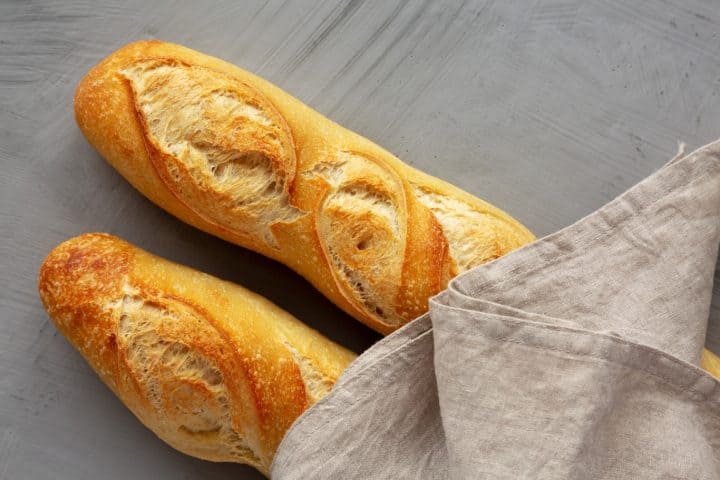
Hint: For the best flavor and texture, let the sponge ferment the full 6 hours (or overnight if you have time).
Storage, Make Ahead, & Freezing
Storage: Keep the cooled Pane Francese at room temperature in a paper bag or bread box for up to 2 days. Avoid airtight containers, as they can soften the crust.
Make Ahead: The sponge can be prepared up to 24 hours in advance and kept covered at room temperature. You can also refrigerate the shaped loaves for up to 12 hours before baking; let them come to room temperature before baking.
Freezing: Wrap the fully cooled loaves tightly in plastic wrap and then in foil. Freeze for up to 2 months. To serve, thaw at room temperature and re-crisp in a 350°F (175°C) oven for about 10 minutes.
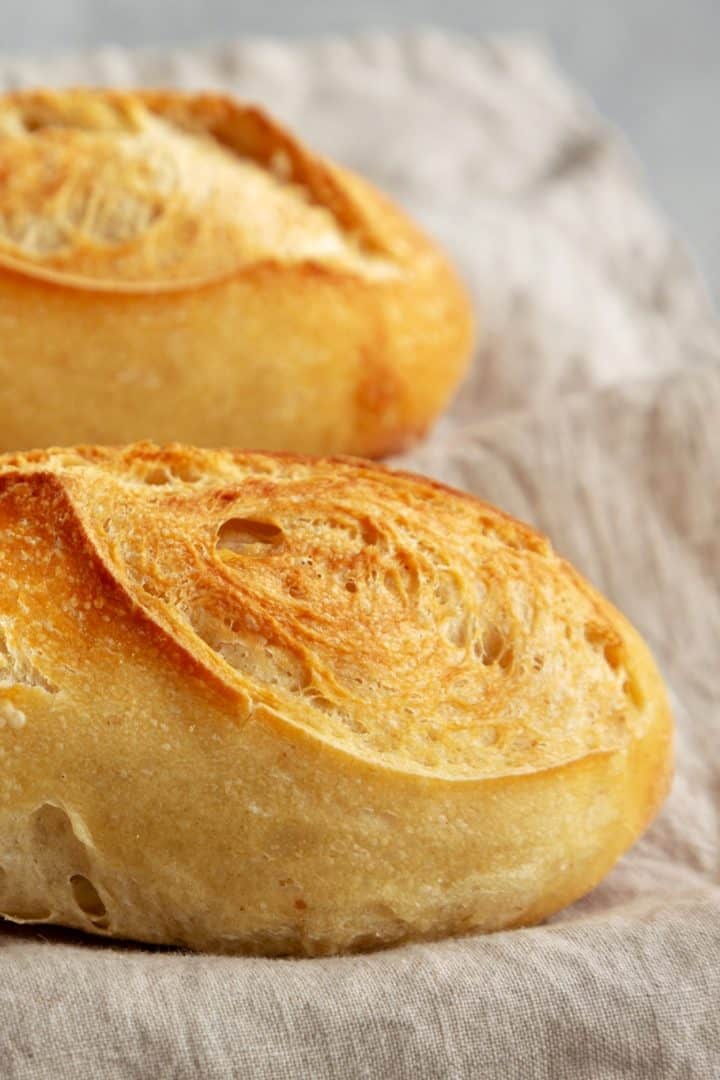
Camila's Tips & Variations
- Plan ahead: Let the sponge ferment overnight for a deeper, more complex flavor.
- Handle gently: When shaping, avoid pressing out too much air-this keeps the crumb light and open.
- Steam for crust: Adding water to the oven creates that classic, thin, crispy crust.
- Serving idea: Perfect for sandwiches, bruschetta, or simply with olive oil and cheese.
Frequently Asked Questions
Why is my crust soft instead of crisp?
The oven may not have enough steam or heat. Make sure to preheat your baking stone thoroughly and add boiling water to create steam during the first few minutes of baking.
My bread didn't rise much-what went wrong?
The yeast might be old, the water too hot or too cold, or the dough was underproofed. Always check yeast freshness, keep water lukewarm, and allow enough time for fermentation.
The dough is sticky and hard to handle. What should I do?
This is normal for high-hydration doughs like Pan francés. Lightly oil or flour your hands and work surface, or use a bench scraper to handle the dough instead of adding excess flour.
Did you know?
Pane francese may sound French, but it's actually Italian! Italian bakers created it after being inspired by the French baguette, adapting the recipe with more hydration for a softer crumb and a slightly different shape.
Pair with


You may also like
Recipe
Pane Francese
Equipment
- Stand mixer with dough hook attachment
- 4-cup measuring cup
- Wooden spoon or bowl scraper
- Flexible dough scraper
- Baking stone or steel
- Couche or clean kitchen towel
- Pizza peel or flat baking sheet
- Lame or sharp knife for scoring
- Disposable pie pans with lava rocks (for steam)
Ingredients
Sponge
- 104 grams bread flour
- 113 ml water , room temperature
- ⅛ teaspoon instant or rapid-rise yeast
Dough
- 416 grams bread flour
- 1½ teaspoons instant or rapid-rise yeast
- 283 ml water , room temperature
- 1 tablespoon extra-virgin olive oil
- 2¼ teaspoon kosher salt
Instructions
For the Sponge:
- In a 4-cup measuring cup, mix together all the sponge ingredients with a wooden spoon until fully combined. Cover tightly with plastic wrap and let it rest at room temperature until it rises and begins to collapse, about 6 hours. (It can stay at room temperature for up to 24 hours if needed.)
For the Dough:
- In the bowl of a stand mixer, whisk together the flour and yeast. Stir the prepared sponge with a wooden spoon until smooth, then, using the dough hook on low speed, gradually mix it into the flour mixture until a cohesive dough forms and no dry bits remain, about 2 minutes. Scrape down the sides of the bowl as needed. Cover tightly with plastic wrap and let the dough rest for 20 minutes.
- Add the olive oil and salt to the dough, then knead on medium-low speed until smooth, elastic, and pulling away from the bowl, about 5 minutes. Transfer the dough to a lightly greased large bowl, cover tightly with plastic, and let it rise for 30 minutes.
- Using lightly oiled fingertips or a bowl scraper, perform a set of folds: gently lift and fold the dough over itself toward the center. Rotate the bowl 45 degrees and repeat until you've made 8 total folds.
- Cover and let the dough rise for an additional 30 minutes. Repeat the folding process one more time, then cover and let rise until nearly doubled in size, about 1 to 1½ hours.
- Dust a couche or clean kitchen towel evenly with flour and place it over an inverted baking sheet. Turn the dough out onto a lightly floured surface and press it into a 12x6-inch rectangle, deflating any large air pockets as you go. Cut it in half crosswise and cover loosely with greased plastic wrap.
- Working with one piece at a time (keep the other covered), gently stretch it into a 7-inch square. Fold the top corners diagonally toward the center and press to seal. Fold the upper third toward the center and press again.
- Then, fold the piece in half toward you to create a long, tapered loaf. Pinch the seam closed and roll the loaf seam-side down. Roll gently from the center outward to shape a 15-inch-long loaf with slightly pointed ends.
- Carefully transfer the shaped loaf seam-side up onto the prepared couche. Pinch the cloth into folds along each side to maintain its shape, then loosely cover it with a large plastic bag. Repeat with the second loaf, placing it on the opposite side of the pleat.
- Fold the edges of the cloth over the loaves, cover them with the bag, and let them rise until the dough has increased by about 50% and springs back slightly when pressed, 30-60 minutes.
To Bake:
- About 1 hour before baking, place a baking stone on the lower-middle oven rack and two disposable pie pans filled with lava rocks on the lowest rack. Preheat the oven to 450°F (230°C). Line a pizza peel with parchment paper and bring 1 cup of water to a boil.
- Uncover the risen loaves and gently unfold the couche. Dust the tops with flour and pinch any open seams closed. Using a flipping board, carefully turn each loaf seam-side down onto the prepared parchment, spacing them at least 3 inches apart. Straighten and reshape as needed.
- Pour ½ cup of boiling water into one of the preheated pans to create steam, then quickly close the oven door. Using a lame held at a 30° angle, make a single, swift ½-inch-deep slash along the top of each loaf.
- Slide the loaves onto the baking stone, then pour the remaining ½ cup of boiling water into the second pan of hot rocks. Bake for 20-25 minutes, rotating the pan halfway through, until the crust is deep golden brown and the internal temperature reaches 205-210°F (96-99°C).
- Transfer to a wire rack, discard the parchment, and cool completely-about 3 hours-before slicing or serving.
Notes
Nutrition
Nutrition Disclaimer: The nutritional information provided is an estimate, calculated using standard data sources. Actual values may vary based on ingredient brands, preparation methods, and portion sizes. This information is for general reference only and should not be considered a substitute for professional dietary advice.