Pan de Muerto (Bread of the Dead) is a traditional Mexican sweet bread made to celebrate Día de los Muertos (Day of the Dead).

Jump to
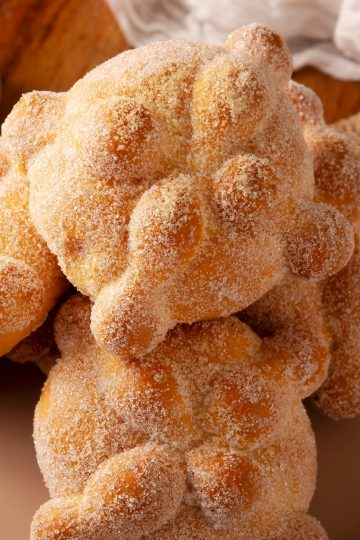
It's flavored with orange zest, cinnamon, and sometimes anise seeds. Its distinctive design features dough "bones" and a small round piece on top, symbolizing the cycle of life and death.
During the celebration, Pan de Muerto is placed on altars (ofrendas) and shared with family to honor and remember loved ones who have passed away.
In this Pan de Muerto recipe, I stay true to its traditional flavors while keeping the process simple and approachable.
This soft, brioche-style bread is infused with orange zest and a hint of cinnamon, then finished with melted butter and sugar for a classic, sweet touch.
Ingredients You'll Need
Note: See the recipe card for quantities.
- Flour: forms the structure of the dough.
- Yeast: helps the bread rise and become fluffy.
- Eggs and butter: add richness, softness, and color.
- Sugar: sweetens and aids in browning.
- Orange zest and orange blossom water: give the traditional aroma and flavor.
How to Make Pan de Muerto
Note: Full instructions are provided in the recipe card below.
- Prepare the sponge: Mix flour, sugar, yeast, and warm milk. Cover and let rise for 10 minutes until bubbly.
- Grate the orange peel, avoiding the white part, and set aside.
- Add remaining flour, eggs, yolks, salt, vanilla, and one-third of the butter. Mix on low, then high speed.
- Add half of the remaining butter, then the sugar, orange zest, cinnamon, and orange blossom water in two additions.
- Add the remaining butter and mix until smooth and elastic.
- Lightly oil your hands and check the dough with the windowpane test.
- Place in an oiled bowl, cover, and let rise 1-2 hours until doubled.
- Punch down the dough and divide into 4 parts (3 loaves + 1 for decorations).
- Shape loaves into smooth rounds, seam side down, and place on parchment-lined trays. Place the last one on a separate tray.
- Knead a little flour into the reserved dough, form bones and heads, and decorate loaves.
- Let it rise again for 1 hour.
- Bake at 340°F (170°C) for 25-30 minutes until golden brown.
- Cool slightly, brush with melted butter, and coat with sugar before serving.
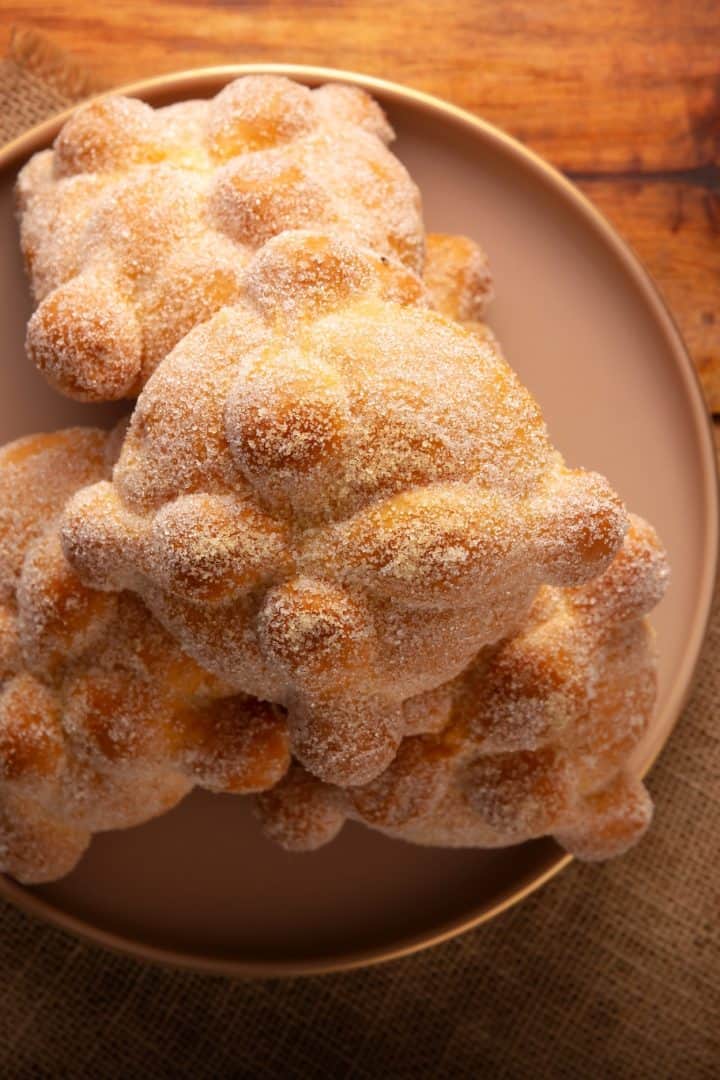
Hint: Knead the dough well without adding extra flour; it will smooth out as the gluten develops. Lightly oil your hands to handle and transfer the dough without sticking.
Storage, Make Ahead, & Freezing
Storage: Keep the bread in an airtight container at room temperature for up to 3 days.
Make Ahead: You can prepare the dough a day in advance and refrigerate it overnight. Let it come to room temperature before shaping and baking.
Freezing: Once baked and cooled, wrap tightly in plastic wrap and freeze for up to 2 months. Thaw at room temperature and warm briefly in the oven before serving.
Camila's Tips & Variations
- Don't add extra flour: The dough will feel sticky at first, but as you keep kneading, it will become smooth and elastic. Adding more flour will make the bread dense and dry.
- Anise variation: Add 2 teaspoons of anise seeds or ground anise to the dough for a deeper, more traditional flavor.
- For extra softness: Brush the baked bread with melted butter twice-once right out of the oven and again after a few minutes-before coating it with sugar.
- Festive finish: Use colored sugar (orange or purple) for a more traditional Día de los Muertos look or cinnamon sugar.

Frequently Asked Questions
Why did my "bones" disappear while baking?
This happens when the dough for the decorations is too soft. Add a bit more flour to the dough you use for the "bones" so they hold their shape during baking.
Can I make Pan de Muerto without orange blossom water?
Yes, you can substitute it with orange extract. The flavor will be slightly different but still delicious.
Why is my dough too sticky?
Pan de Muerto dough should be soft and slightly sticky. Keep kneading until it becomes smooth and elastic-avoid adding extra flour, or the bread will turn out dry.
Why didn't my dough rise?
Your yeast may be old or inactive. Always check the expiration date and store yeast in a cool, dry place. If it doesn't foam during proofing, it's no longer fresh.
Do I need orange blossom water?
Yes, it gives Pan de Muerto its signature flavor. If you can't find it, use a small amount of orange or vanilla extract as a substitute. Avoid non-culinary orange blossom water from pharmacies or perfume shops.
Why did my dough turn out dense or dry?
Adding too much flour or using too little fat or egg yolk can make the dough heavy. Pan de Muerto should be soft and slightly sticky before kneading.
Can I knead by hand instead of using a mixer?
Yes. It takes longer-about 30 minutes-but it works just as well. The dough is ready when it no longer sticks to your hands or the surface. When kneading by hand, keep the salt away from the yeast at first, since salt can slow down or kill the yeast. Place it on the outer edge of the flour to protect the yeast as the dough develops.
What's the best temperature and time for baking?
Bake large loaves at 170°C (340°F) for 25-30 minutes. For smaller ones, bake at 165°C (330°F) for 16-18 minutes
Did you know?
According to Wikipedia, 🕯️Día de los Muertos (Day of the Dead) is a Mexican holiday celebrated on November 1 and 2 to honor and remember loved ones who have passed away. Families build altars (ofrendas) with photos, marigold flowers, candles, and favorite foods of the deceased-often including Pan de Muerto.
Pair with


You may also like


Recipe
Pan de Muerto
Equipment
- Microplane
Ingredients
- 500 g all-purpose flour
- 1½-2 teaspoon ground cinnamon , optional
- 150 g granulated sugar , For a less sweet bread, you can reduce the sugar to 90 g
- 118 ml warm milk (at 43°C / 110°F)
- 11 g instant or active dry yeast
- 3 large eggs
- 3 large egg yolks
- 150 g unsalted butter , cut into cubes and softened
- 15 g vanilla extract
- Zest of 2 oranges , only the orange part (avoid the white pith)
- 1 teaspoon kosher salt
- 1 teaspoon orange blossom water (agua de azahar)
For finishing:
- 113 g unsalted butter, melted , for brushing
- 100 - 200 g granulated sugar , for dusting
Instructions
- To prepare the sponge, combine 3 tablespoons of flour, 1 tablespoon of sugar, yeast, and warm milk (110°F / 43°C) in the bowl of a stand mixer.
- Cover the bowl with plastic wrap and place it in a warm spot for about 10 minutes, or until the mixture becomes bubbly.
- While the yeast is fermenting, grate the orange peel, being careful not to include the white part, as it will make the bread bitter. Set the zest aside.
- After 20 minutes in the warm spot, the sponge should be ready. Add the remaining flour, eggs, egg yolks, salt, vanilla, and one-third of the butter to the bowl with the sponge. Mix with the paddle attachment on low speed for 4 minutes, then increase to high speed for another 4 minutes.
- Add half of the remaining butter, keeping the dough on the paddle and scraping down the sides of the bowl as needed. Gradually add the remaining sugar, orange zest, vanilla, cinnamon, and orange blossom water in two additions.
- Add the remaining butter and mix until fully incorporated. The dough will feel soft, and you may be tempted to add more flour, but avoid doing so-otherwise, the bread will turn out dry.
- Lightly oil your hands, and check if the dough is ready by performing the "windowpane test": stretch a small piece of dough until it's thin; if it doesn't tear, it's ready.
- Lightly oil a large bowl and place the dough inside. Brush the top with oil, cover with plastic wrap, and let it rest in a warm place away from drafts until doubled in size, about 1 to 2 hours.
- Once the dough has risen, about 1 hour and 15 minutes, lightly flour the work surface and gently punch down the dough to release the air. Divide the dough into 4 equal parts. This will make 3 loaves in total, reserving one part to make the bone decorations ("bones" and "heads").
- Sprinkle a little flour over the main dough pieces and shape them into tight, smooth rounds, keeping the seam side down. Place them on baking sheets lined with parchment paper and gently flatten the tops slightly. Make sure to place the last one on a separate baking sheet so it has room to rise and bake evenly.
- For the decorations, knead about 1 to 2 tablespoons of extra flour into the reserved dough by hand until it's firmer and no longer sticky. Divide it into small portions for the bones and heads.
- To make the bones, first roll a cylinder, moving it back and forth with your finger until it divides into two parts. Once it's divided in two, use your other fingers to continue rolling back and forth, stretching it gently until the bones are formed.
- For the heads, roll them the same way as the loaves, but smaller, until perfectly round. Lightly brush the tops of the loaves with water where you'll attach the decorations. Place the bones in a cross pattern and press one small ball (head) on top.
- Let the loaves rise in a warm place until doubled in size again, about 1 hour. Preheat the oven to 340°F (170°C). Bake for 25 to 30 minutes, or until golden brown.
- Remove from the oven and place the loaves on a wire rack to cool slightly. While still warm, brush with melted butter and sprinkle generously with sugar. Shake off any excess before serving.
Notes
Nutrition
Nutrition Disclaimer: The nutritional information provided is an estimate, calculated using standard data sources. Actual values may vary based on ingredient brands, preparation methods, and portion sizes. This information is for general reference only and should not be considered a substitute for professional dietary advice.