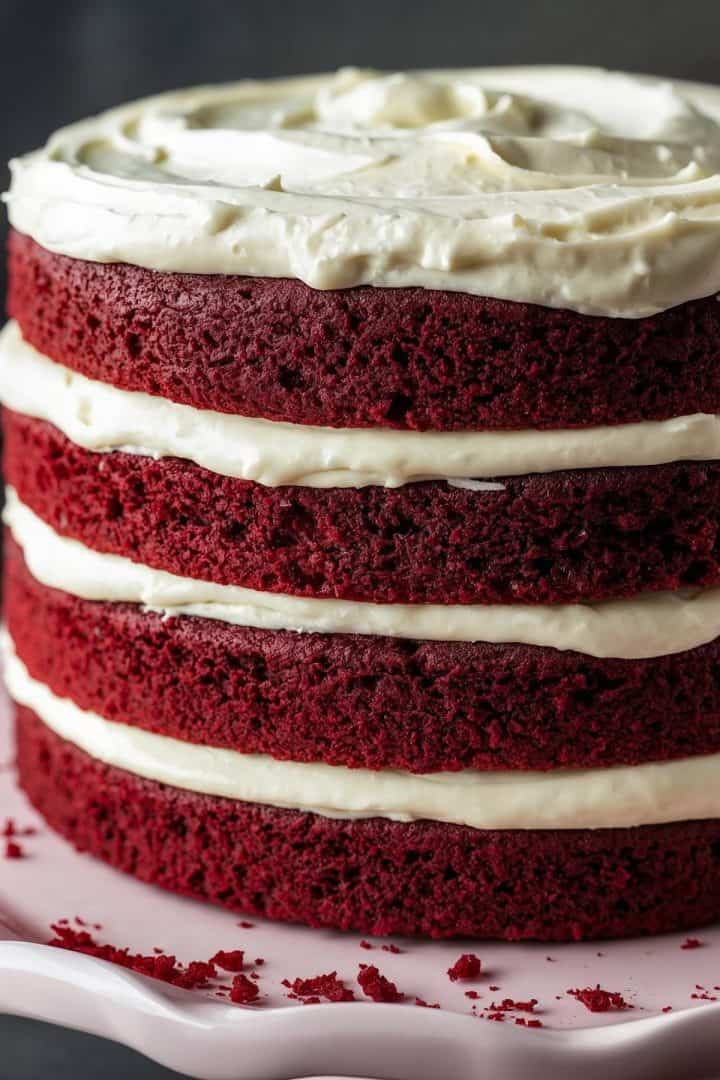
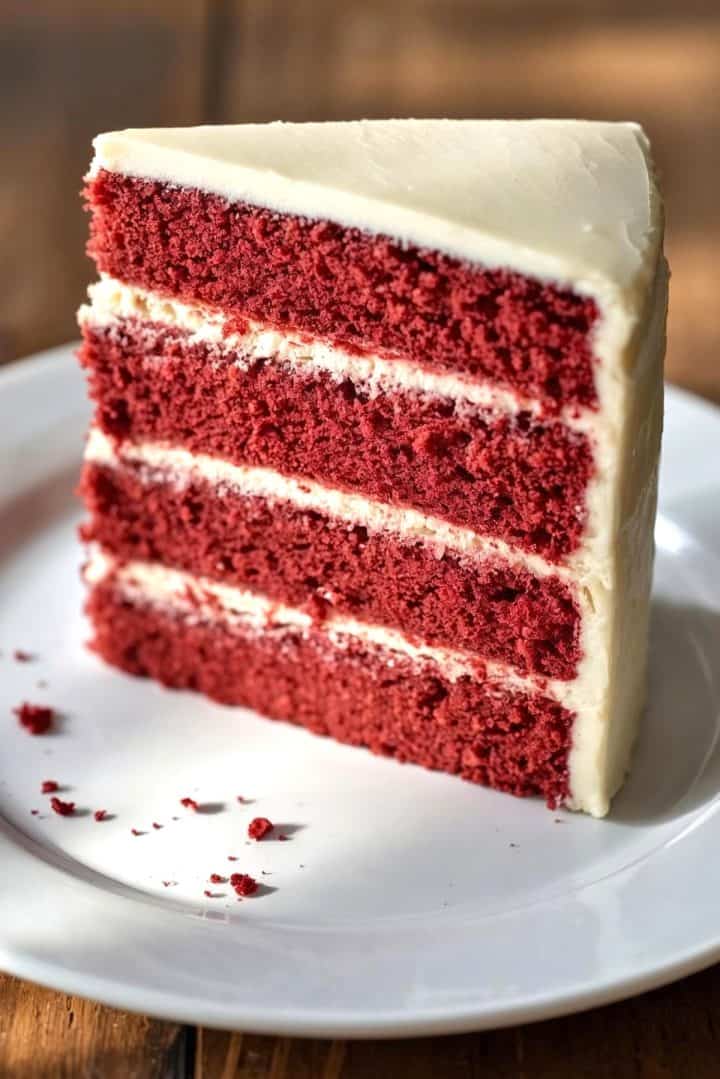
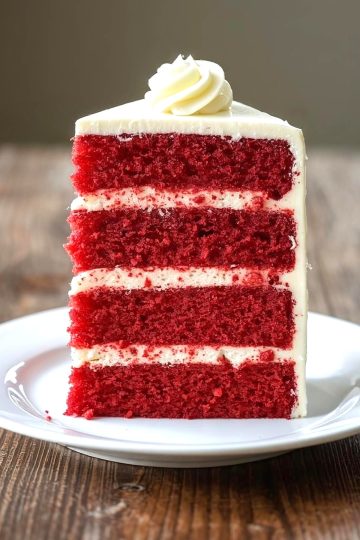
Four Layer Red Velvet Cake is a cocoa-vanilla layer cake made with buttermilk, butter, eggs, and flour, baked in round pans and stacked with cream cheese frosting.
Jump to
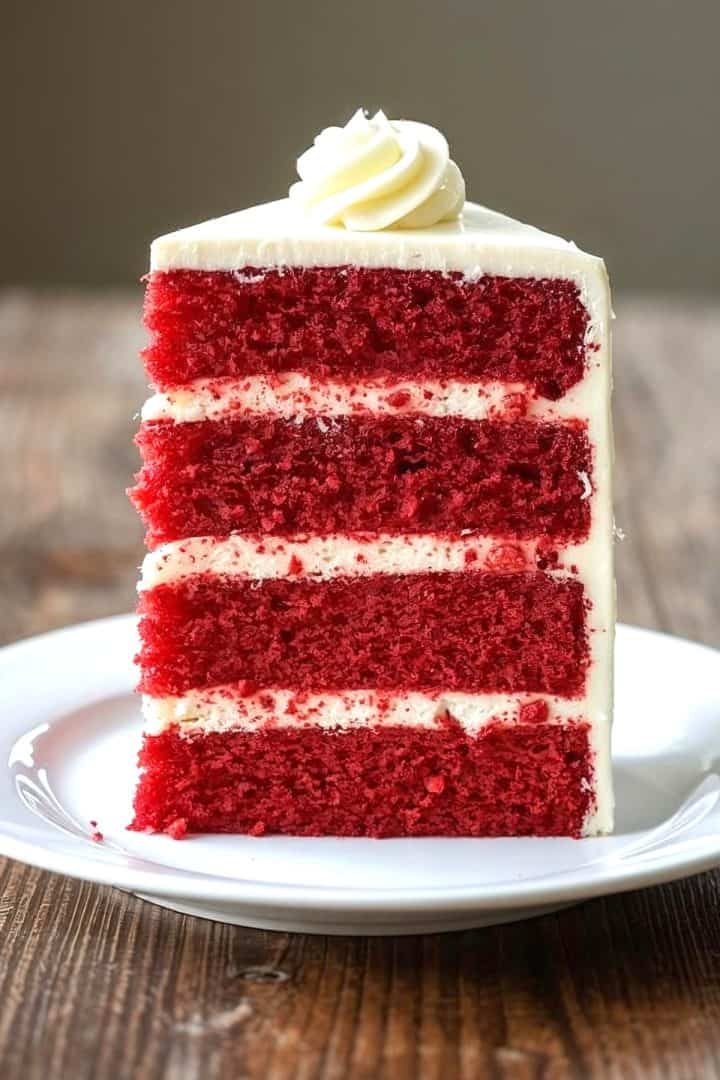
This four layer red velvet cake recipe makes moist red velvet cake layers with creamy cream cheese frosting.
It's a classic red velvet layer cake with a soft crumb and mild cocoa flavor, perfect for Valentine's Day, birthdays, and special celebrations.
Ingredients You'll Need
Note: Full ingredients and amounts are listed in the recipe card below.
- All-purpose flour: Provides structure for the cake layers.
- Cocoa powder: Adds mild chocolate flavor typical of red velvet cake.
- Kosher salt: Balances sweetness in both cake and frosting.
- Buttermilk: Adds acidity and keeps the cake crumb tender.
- Vanilla extract: Adds flavor to both cake and frosting.
- Red gel food coloring: Creates the signature red velvet color.
- Unsalted butter: Provides richness in the cake and stability in the frosting.
- Sugar: Sweetens the cake and softens the crumb.
- Eggs: Bind the batter and create structure.
- Apple cider vinegar: Supports leavening and adds tang.
- Baking soda: Reacts with buttermilk to help the cake rise.
- Cream cheese: Provides tangy frosting structure.
- confectioners' sugar: Sweetens and thickens the frosting.
- Dry milk (optional): Helps stabilize the frosting.
How to Make Four Layer Red Velvet Cake
Note: Full instructions are provided in the recipe card below.
- Red Velvet Cake layers: Adjust the oven rack to the middle position and heat the oven to 170°C (340°F). Grease four 8-inch round cake pans, line with parchment paper, grease parchment, then flour pans.
- Sift the flour and cocoa powder together and whisk to combine. Set aside.
- In a bowl, whisk together the buttermilk, vanilla extract, and red gel food color until well combined. Set aside.
- In a stand mixer fitted with the paddle attachment, beat the butter and sugar on high speed until pale and fluffy, about 5-8 minutes.
- Add the eggs one at a time, beating for about 30 seconds after each addition until fully incorporated.
- Add the dry and wet ingredients alternately, beginning and ending with the dry ingredients. Mix on low speed, folding gently until combined after each addition.
- In a small bowl, combine the apple cider vinegar and baking soda. Stir briefly, then immediately add to the batter and mix for about 30 seconds.
- Divide the batter evenly between the prepared cake pans. Level the tops with a palette knife.
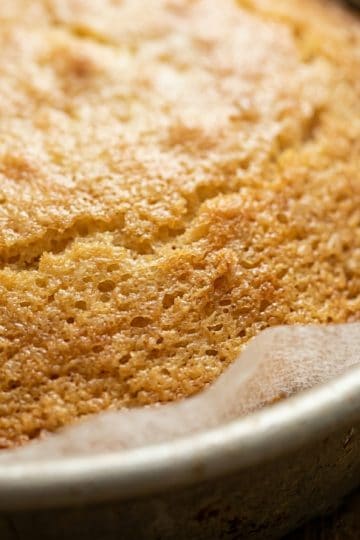
- Bake until a toothpick inserted in the center comes out clean, 20 to 25 minutes, switching and rotating pans halfway through baking. Cool completely before decorating.
- Cream Cheese frosting: In a stand mixer fitted with the paddle attachment, beat the butter and cream cheese together for 2 minutes until smooth. Add the dry milk (if using) and sifted confectioners' sugar in two additions, beating well after each addition until smooth and thick. Cover the frosting until ready to use.
- Decorating: Place a small amount of cream cheese frosting on the cake board to secure the first cake layer. Place the first cake layer on top.
- Pipe a layer of cream cheese frosting over the cake, keeping the frosting slightly away from the edge to create a naked cake finish. Repeat layering with the remaining cake layers and frosting until all four layers are stacked.
- Refrigerate the cake for 30-60 minutes to allow the frosting to set.
- Spread a smooth layer of cream cheese frosting over the top of the cake using a palette knife. Decorate with cake crumbs in the center and pipe small dollops of cream cheese frosting around the top edge if desired. Alternatively, you can frost the entire cake with cream cheese frosting.
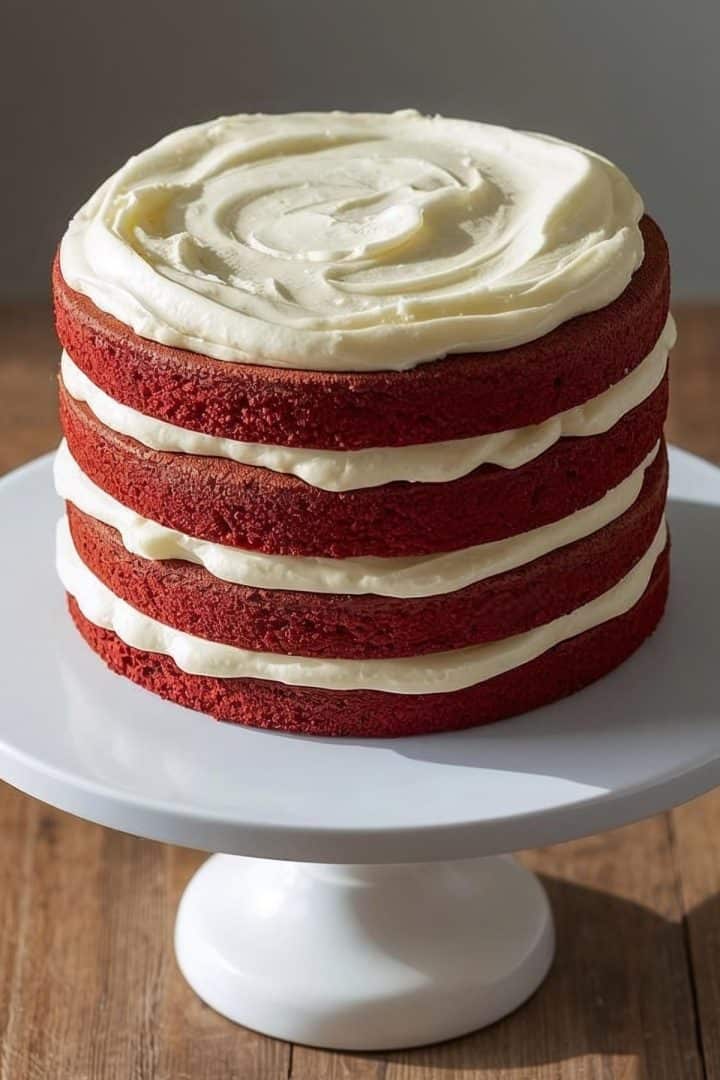
Hint: Chill the stacked cake before finishing the top so the layers stay stable.
Storage, Make Ahead, & Freezing
Storage: Store the cake covered in the refrigerator for up to 4 days.
Make Ahead: Cake layers can be baked 1 day in advance and assembled later.
Freezing: Freeze unfrosted cake layers tightly wrapped for up to 2 months.
Camila's Tips & Variations
- Alternate dry and wet ingredients: Start and end with dry ingredients to prevent the batter from separating.
- Cream butter and sugar fully: Beat 5-8 minutes until pale and fluffy for a lighter cake texture.
- Add vinegar and baking soda last: Mix them together and add immediately for proper lift.
- Chill the cake before finishing: Refrigerate the stacked cake 30-60 minutes so layers don't slide.
- Use concentrated red color gel (paste): Prevents needing large amounts of liquid coloring.
Frequently Asked Questions
Why does red velvet cake use vinegar
Vinegar reacts with baking soda to help the cake rise. It also adds the classic red velvet tang.
Why is my red velvet cake dense
Overmixing after adding flour develops gluten. Mix just until combined.
Why didn't my red velvet cake rise
Baking soda and vinegar must be added together last. Mix and add immediately.
You may also like
Recipe
Four Layer Red Velvet Cake
Equipment
- Stand mixer with paddle attachment
- Four 8-inch round cake pans
- Palette knife or offset spatula
- Piping bag with round tip
Ingredients
For the cake
- 350 g all-purpose flour
- 25 g unsweetened cocoa powder, such as Hershey
- ½ teaspoon kosher salt
- 70 g buttermilk
- 1 tablespoon vanilla extract
- ¾ teaspoon red gel food coloring (preferred over liquid colour)
- 375 g unsalted butter , softened
- 400 g sugar
- 6 large eggs
- 2 teaspoons apple cider vinegar or white distilled vinegar
- 1 teaspoon bicarbonate of soda
For the cream cheese frosting
- 150 g unsalted butter , softened but still cool to the touch
- 240 g cream cheese , softened but still cool to the touch
- 900 g confectioners' sugar , sifted
- 1 tablespoon Nido dry whole milk , optional
- 1 tablespoon vanilla extract
Instructions
- Red Velvet Cake layers: Adjust the oven rack to the middle position and heat the oven to 170°C (340°F). Grease four 8-inch round cake pans, line with parchment paper, grease parchment, then flour pans.
- Sift the flour and cocoa powder together and whisk to combine. Set aside.
- In a bowl, whisk together the buttermilk, vanilla extract, and red gel food color until well combined. Set aside.
- In a stand mixer fitted with the paddle attachment, beat the butter and sugar on high speed until pale and fluffy, about 5-8 minutes.
- Add the eggs one at a time, beating for about 30 seconds after each addition until fully incorporated.
- Add the dry and wet ingredients alternately, beginning and ending with the dry ingredients. Mix on low speed, folding gently until combined after each addition.
- In a small bowl, combine the apple cider vinegar and baking soda. Stir briefly, then immediately add to the batter and mix for about 30 seconds.
- Divide the batter evenly between the prepared cake pans. Level the tops with a palette knife.
- Bake until a toothpick inserted in the center comes out clean, 20 to 25 minutes, switching and rotating pans halfway through baking. Cool completely before decorating.
- Cream Cheese frosting: In a stand mixer fitted with the paddle attachment, beat the butter and cream cheese together for 2 minutes until smooth. Add the dry milk (if using) and sifted confectioners' sugar in two additions, beating well after each addition until smooth and thick. Cover the frosting until ready to use.
- Decorating: Place a small amount of cream cheese frosting on the cake board to secure the first cake layer. Place the first cake layer on top.
- Pipe a layer of cream cheese frosting over the cake, keeping the frosting slightly away from the edge to create a naked cake finish.
- Repeat layering with the remaining cake layers and frosting until all four layers are stacked. Refrigerate the cake for 30-60 minutes to allow the frosting to set.
- Spread a smooth layer of cream cheese frosting over the top of the cake using a palette knife. Decorate with cake crumbs in the center and pipe small dollops of cream cheese frosting around the top edge if desired. Alternatively, you can frost the entire cake with cream cheese frosting.
Notes
Nutrition
Nutrition Disclaimer: The nutritional information provided is an estimate, calculated using standard data sources. Actual values may vary based on ingredient brands, preparation methods, and portion sizes. This information is for general reference only and should not be considered a substitute for professional dietary advice.