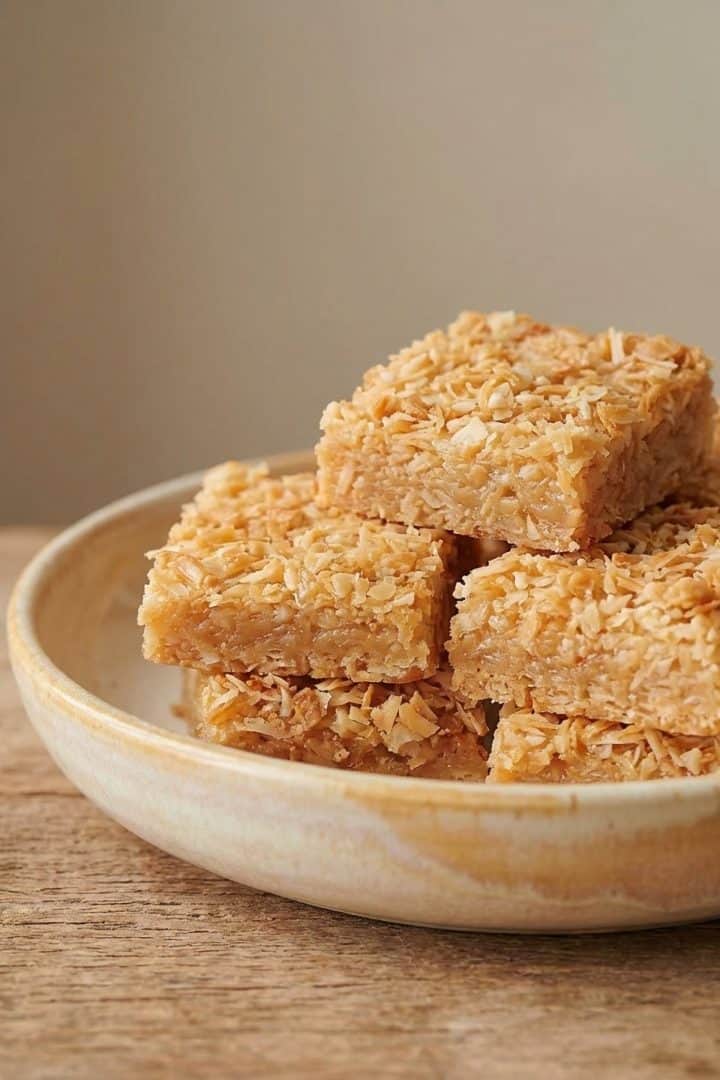
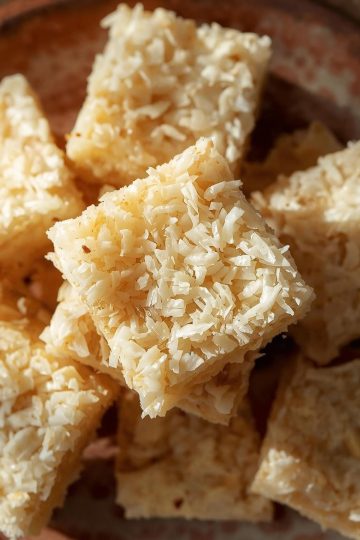
Cocada is a traditional Latin American coconut candy made by cooking shredded coconut with sugar until it caramelizes, yielding a chewy or firm sweet confection.
Jump to
It may include ingredients like condensed milk, eggs, or dulce de leche in some recipes, and in Venezuela, the term can also refer to a coconut drink.
This cocada recipe uses a simple one-pan stovetop method cooked to the brigadeiro stage, so it sets perfectly.
With only three ingredients, it is quick to make and ideal for coconut lovers, holiday gifts, or as an easy dessert.
Ingredients You'll Need
Note: Full ingredients and amounts are listed in the recipe card below.
- Sweetened condensed milk: Binds the cocada mixture, preventing it from drying out as it sets.
- Granulated sugar: Adds structure, allowing the candy to firm as it cools.
- Shredded or flakes unsweetened coconut: Creates texture so the candy slices cleanly.
How to Make Cocada
Note: Full instructions are provided in the recipe card below.
- In a heavy-bottomed saucepan over medium heat, combine the sweetened condensed milk, granulated sugar, and unsweetened shredded coconut.
- Stir constantly until the coconut mixture thickens, begins to pull away from the pan, and no longer spreads back together, yet remains creamy and moist, similar to brigadeiro.
- Remove the coconut mixture from the heat and spread it into a lightly greased 7.5 × 12 × 1.75 in (19.5 × 30 × 4.5 cm) heatproof dish, spreading to about 1 inch (2.5 cm) thick.
- Let rest uncovered at room temperature for about 20 minutes.
- When slightly firm but still soft, cut into squares and let cool completely before serving or storing.
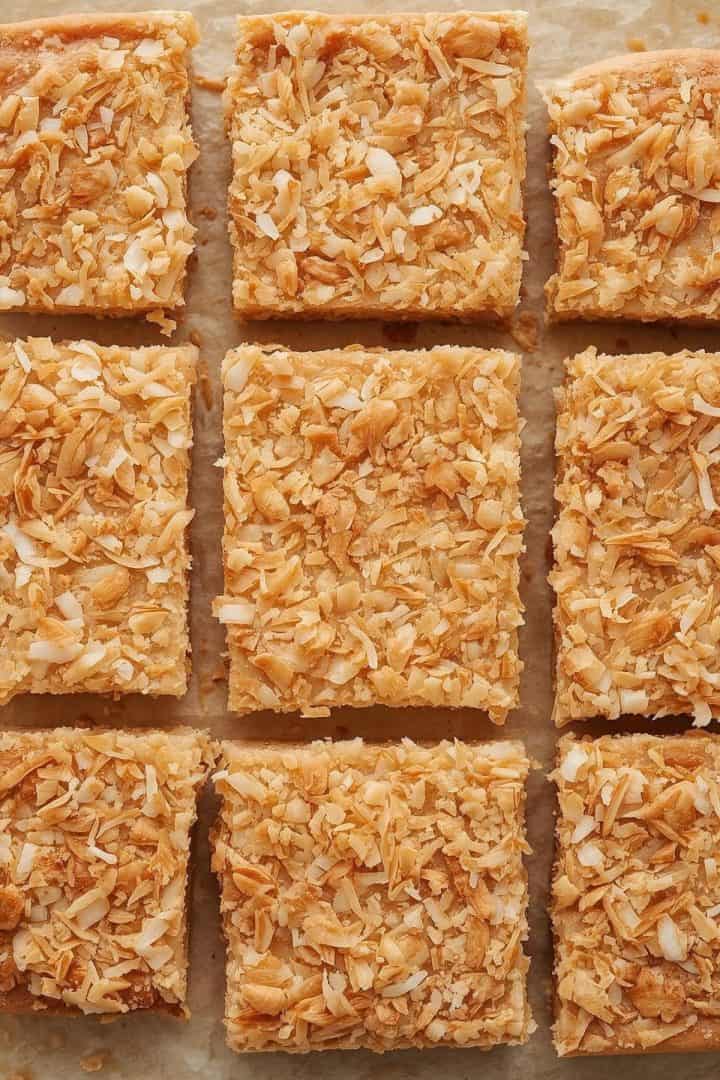
Hint: Cook the coconut mixture until it pulls away from the pan like brigadeiro, because this is what allows the cocada to set correctly.
Storage, Make Ahead, & Freezing
Storage: Let it cool completely, then store in airtight plastic bags, glass jars, or containers at room temperature for up to 20 days.
Make Ahead: This cocada can be made 1 day in advance and kept stored until ready to serve.
Freezing: Not recommended.
Camila's Tips & Variations
- Correct cooking point: The cocada is ready when it pulls away from the pan and no longer spreads back together, yet remains creamy and moist. If you stop too early, it will not set, and if you cook too long, it will turn dry.
- Pan type: Use a heavy-bottomed pan so the coconut does not burn or stick to the bottom.
- Stir: Do not stop stirring while cooking, or the mixture will stick and scorch.
- Thickness: Spread thicker for softer cocada or thinner for firmer pieces.
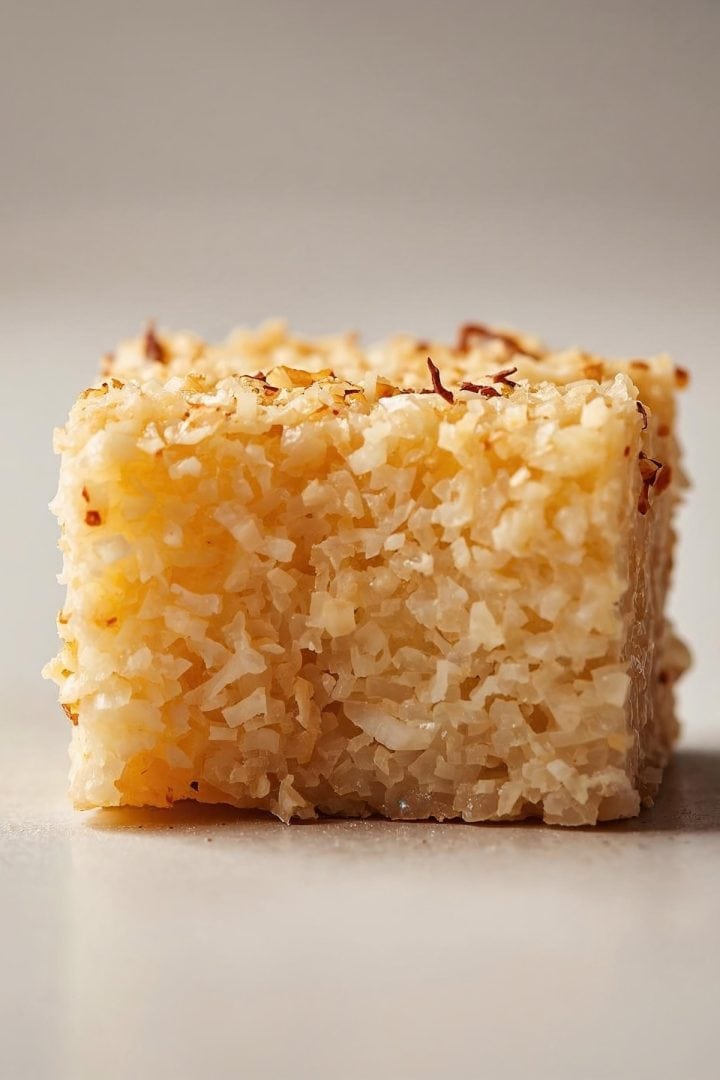
- Perfect texture: Even though it looks firm, the center will remain slightly moist.
Frequently Asked Questions
Why is my cocada still runny after cooling?
It was undercooked; return to the pan and cook until it pulls away like brigadeiro.
How do I keep cocada from sticking to the pan?
Use a heavy-bottomed pan and stir constantly.
What happens if I overcook cocada?
It becomes dry and hard; remove from heat as soon as it releases from the pan.
Why is my cocada still moist underneath?
Because even though it looks set on top, it stays a little moist underneath, and that is exactly how cocada should be.
You may also like
Recipe
Cocada
Equipment
- Baking dish. (19.5 × 30 × 4.5 cm / 7.5 × 12 × 1.75 in)
- Butter
Ingredients
- 396 g (1 can) sweetened condensed milk
- 185 g granulated sugar
- 100 g shredded coconut
Instructions
- In a heavy-bottomed saucepan over medium heat, combine the condensed milk, sugar, and shredded coconut.
- Stir constantly until the mixture thickens and begins to pull away from the sides of the pan, similar to brigadeiro.
- Remove from heat and spread into a greased 7.5 × 12 × 1.75 in (19.5 × 30 × 4.5 cm) heatproof dish, spreading to about 1 inch (2.5 cm) thick.
- Let rest uncovered at room temperature for about 20 minutes.
- When slightly firm but still soft, cut into squares and let cool completely before serving or storing.
Notes
Nutrition
Nutrition Disclaimer: The nutritional information provided is an estimate, calculated using standard data sources. Actual values may vary based on ingredient brands, preparation methods, and portion sizes. This information is for general reference only and should not be considered a substitute for professional dietary advice.