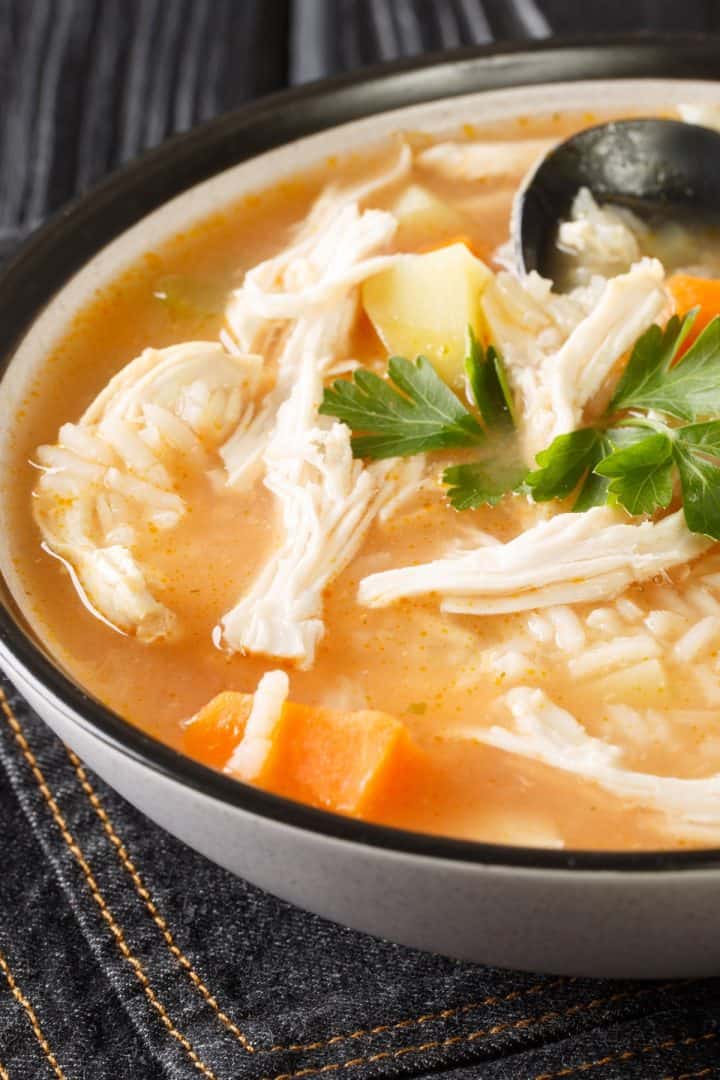
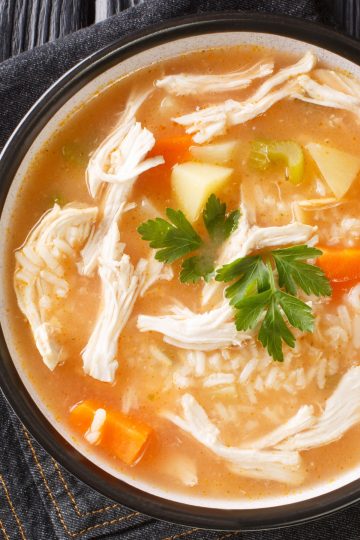
Canja de Galinha is a traditional Portuguese, Brazilian, and Cape Verdean chicken and rice soup made with a light broth, tender chicken, aromatics, and fresh herbs.
Jump to
Often known as a healing comfort soup, it's served when someone needs nourishment and may include variations like potatoes, carrots, or lemon.
This easy Canja de Galinha recipe uses chicken breast for quick browning-though any chicken part works-along with rice and a bit of potatoes for a comforting, hearty base.
It begins by sautéing the chicken directly in a stovetop pressure cooker to build deep flavor, then cooks under pressure to create a tender, richly seasoned broth, and finishes uncovered on the stove for the perfect texture.
Ingredients You'll Need
Note: See the recipe card for quantities.
- Olive oil: Helps brown the chicken and build flavor in the broth. You can substitute with any cooking fat.
- Boneless chicken breast or bone-in chicken: The main protein that gives Canja de Galinha its nourishing flavor. You can substitute with any chicken part, such as chicken thighs or drumsticks. Just remember to use double the weight if it's bone-in.
- Onion & Garlic: Build the soup's savory base.
- Black pepper: Adds mild heat and balances the seasoning.
- Chicken bouillon: I like to season the broth with Knorr chicken bouillon for a deeper flavor, but you can use salt instead.
- Carrot: Adds color, light sweetness, and texture as it cooks into the soup.
- White rice: Thickens the soup and creates the traditional canja consistency. You can substitute with small pasta.
- Potatoes: Add body and tenderness, making the soup heartier. I like using red potatoes because they hold their shape. You can substitute with any potato; just keep in mind that starchy potatoes need less cooking time, so they don't fall apart.
How to Make Canja de Galinha
Note: Full instructions are provided in the recipe card below.
- Heat 1 tablespoon of olive oil in a pressure cooker over high heat.
- Add the chicken and cook until it turns white, lightly golden, and the bottom of the pot becomes browned.
- Add the onion and garlic, and season with black pepper and chicken bouillon or salt. Mix well and sauté for about 2 more minutes.
- Pour in 630 ml (about 3 cups) of boiling water. Stir well, scraping the bottom of the pot to dissolve all the browned bits into the broth.
- Close the pressure cooker and cook for 15 minutes once it reaches pressure. After 15 minutes, turn off the heat, release the pressure carefully, and open the pot. The chicken should be very tender and beginning to fall apart.
- Add the carrot, white rice, and 1470 ml (about 7 cups) of boiling water. Stir and cook, uncovered, over high heat for 15 minutes, stirring occasionally to prevent the rice from sticking.
- Add the diced red potatoes. If using a firmer potato, cook for the full 15 minutes; if using a softer white potato, cook for less time so it doesn't fall apart.
- Continue cooking until the rice is plump, the potatoes are tender but still hold their shape, and the chicken is fully shredded into the soup. Taste and adjust the season with more chicken bouillon or salt to taste.
- Once everything is cooked and the broth is flavorful, turn off the heat and serve hot.

Hint: Browning the chicken well at the beginning is what creates the deep, flavorful broth. Make sure the bottom of the pot gets dark and caramelized-those browned bits dissolve into the soup and make all the difference in taste.
Storage, Make Ahead, & Freezing
Storage: Store cooled canja in an airtight container in the refrigerator for up to 3 days. The rice will continue to absorb liquid, so add a splash of water or broth when reheating.
Make Ahead: You can cook the broth and chicken ahead of time, then add the rice and potatoes when reheating to keep the texture perfect. This prevents the rice from becoming too soft.
Freezing: You can freeze Canja de Galinha for up to 3 months. Cool the soup completely before transferring it to airtight containers or freezer bags.
Keep in mind that the rice may soften after thawing. When reheating, add extra broth or water if the rice has absorbed too much liquid and stir gently.
Camila's Tips & Variations
- Brown the chicken well: Let the chicken brown and develop browned bits-this is what gives the broth its rich, homemade flavor.
- Use any chicken cut: Breast cooks quickly, but thighs and drumsticks add extra flavor. If using bone-in chicken, use double the weight.
- Potato choice: Red potatoes hold their shape best. Softer white potatoes cook faster and can fall apart, so reduce the cooking time.Once cut, place them in a bowl and cover with cold water to prevent oxidizing (turning brown).
- Rice swap: You can replace white rice with brown rice or small pasta, but adjust the cooking time as needed.
- Boost the flavor: Season with chicken bouillon for depth, but salt alone works, too.
- Make it thinner or thicker: Add more broth for a lighter soup or let it simmer longer for a thicker, heartier texture.
Frequently Asked Questions
Can I use any type of chicken?
Short pasta shapes like ditalini, elbow macaroni, or penne work great as they absorb the stew's flavor and mix well with the vegetables and meat.
Can I make Canja de Galinha without a pressure cooker?
Yes. You can cook it in a regular pot; it will simply take longer for the chicken to become tender and for the broth to develop flavor.
Why does my canja get too thick?
Rice continues to absorb liquid as the soup sits. Add more broth or water when reheating to reach your desired consistency.
❤️ Love this Canja de Galinha recipe?
Explore more Brazilian recipes on our website for easy, flavorful dishes you can make at home.
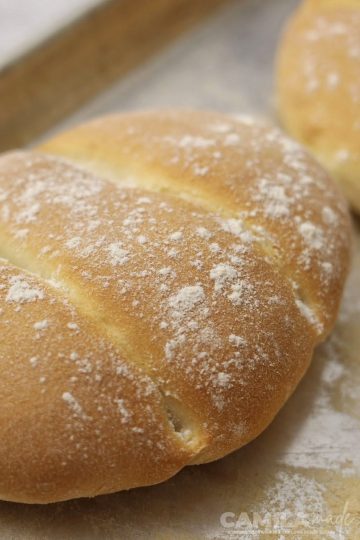
Pair with
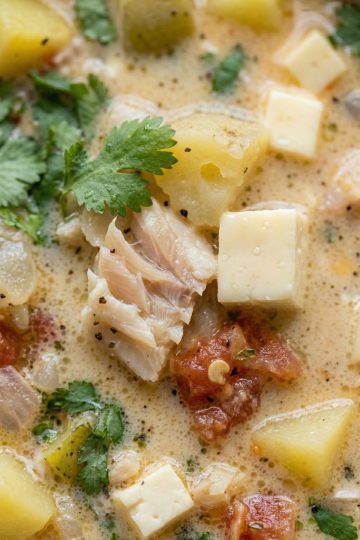
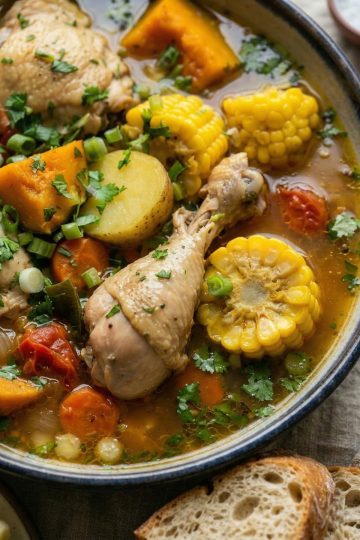
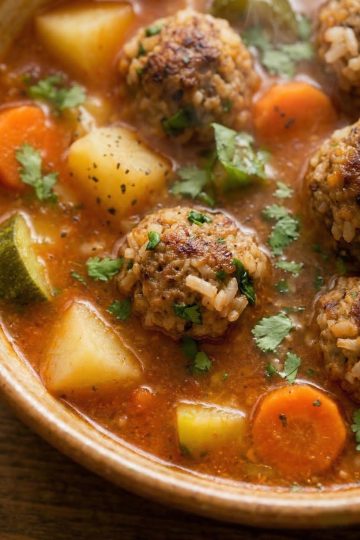
You may also like
Recipe
Canja de Galinha
Equipment
- Wooden spoon or spatula
Ingredients
- 1 tablespoon olive oil or other cooking fat
- 340 g boneless chicken breast fillets, cut into small pieces, or 680 g if using bone-in chicken pieces You can use any chicken part. If using bone-in chicken, use double the weight.
- 1 medium yellow onion, chopped
- 2 garlic cloves, minced or grated
- ¼ teaspoon black pepper
- 2 teaspoons Knorr chicken boiling or kosher salt
- 630 ml boiling water
- 1 medium carrot, grated
- 90 g white rice
- 1470 ml boiling water
- 250 g (about 3 medium) boiling potatoes, diced into small cubes
Instructions
- Heat 1 tablespoon of olive oil in a pressure cooker over high heat.
- Add the chicken and cook until it turns white, lightly golden, and the bottom of the pot becomes browned.
- Add the onion and garlic, and season with black pepper and chicken bouillon or salt. Mix well and sauté for about 2 more minutes.
- Pour in 630 ml (about 3 cups) of boiling water. Stir well, scraping the bottom of the pot to dissolve all the browned bits into the broth.
- Close the pressure cooker and cook for 15 minutes once it reaches pressure. After 15 minutes, turn off the heat, release the pressure carefully, and open the pot.
- The chicken should be very tender and beginning to fall apart.
- Add the carrot, white rice, and 1470 ml (about 7 cups) of boiling water. Stir and cook, uncovered, over high heat for 15 minutes, stirring occasionally to prevent the rice from sticking.
- Add the diced red potatoes. If using a firmer potato, cook for the full 15 minutes; if using a softer white potato, cook for less time so it doesn't fall apart.
- Continue cooking until the rice is plump, the potatoes are tender but still hold their shape, and the chicken is fully shredded into the soup.
- Taste and adjust the season with more chicken bouillon or salt to taste.
- Once everything is cooked and the broth is flavorful, turn off the heat and serve hot.
Notes
Nutrition
Nutrition Disclaimer: The nutritional information provided is an estimate, calculated using standard data sources. Actual values may vary based on ingredient brands, preparation methods, and portion sizes. This information is for general reference only and should not be considered a substitute for professional dietary advice.
Recipe
Canja de galinha
Equipment
- Olla a presión para estufa
- Ta bla de cortar
- Cucharón
Ingredients
- 1 cucharada de aceite de oliva u otra grasa para cocinar
- 340 g de pechuga de pollo sin hueso , cortada en trozos pequeños
- (o 680 g si usas pollo con hueso; puedes usar cualquier parte del pollo. Si usas pollo con hueso, utiliza el doble del peso)
- 1 cebolla amarilla mediana , picada
- 2 dientes de ajo , picados o rallados
- 1 cucharadita de pimienta negra
- 2 cucharaditas de caldo de pollo en polvo o sal kosher , al gusto
- 630 ml de agua hirviendo
- 1 zanahoria mediana , rallada
- 90 g de arroz blanco
- 1470 ml de agua hirviendo
- 250 g de papas blancas o rojas (aprox. 3 medianas), cortadas en cubos pequeños
Instructions
- Calienta el aceite de oliva en una olla a presión sobre fuego alto.
- Agrega el pollo y cocínalo hasta que esté blanco, ligeramente dorado y el fondo de la olla comience a caramelizarse.
- Añade la cebolla y el ajo. Sazona con la pimienta negra y el caldo de pollo o sal. Mezcla bien y sofríe por unos 2 minutos más.
- Vierte 630 ml de agua hirviendo. Revuelve bien, raspando el fondo de la olla para incorporar los sabores dorados al caldo.
- Cierra la olla a presión y cocina durante 15 minutos una vez que alcance presión. Pasado ese tiempo, apaga el fuego, libera la presión con cuidado y abre la olla.
- El pollo debe estar muy tierno y comenzar a desmenuzarse.
- Agrega la zanahoria rallada, el arroz blanco y los 1470 ml de agua hirviendo. Cocina destapado a fuego alto durante 15 minutos, revolviendo ocasionalmente para evitar que el arroz se pegue.
- Incorpora las papas en cubos. Si usas papas más firmes, cocínalas el tiempo completo; si usas papas más suaves, reduce el tiempo para que no se deshagan.
- Continúa cocinando hasta que el arroz esté bien inflado, las papas estén tiernas pero mantengan su forma y el pollo esté completamente desmenuzado en la sopa.
- Prueba y ajusta la sazón con más caldo de pollo o sal, si es necesario.
- Cuando todo esté bien cocido y el caldo tenga buen sabor, apaga el fuego y sirve caliente.
Notes
Nutrition
Nutrition Disclaimer: The nutritional information provided is an estimate, calculated using standard data sources. Actual values may vary based on ingredient brands, preparation methods, and portion sizes. This information is for general reference only and should not be considered a substitute for professional dietary advice.