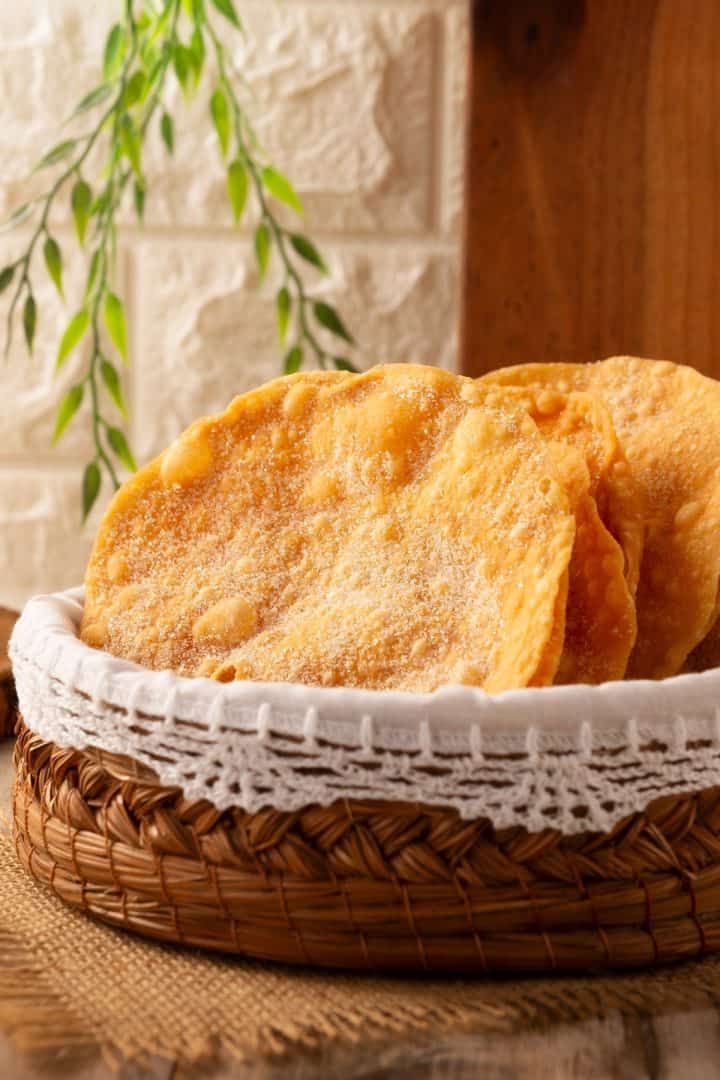
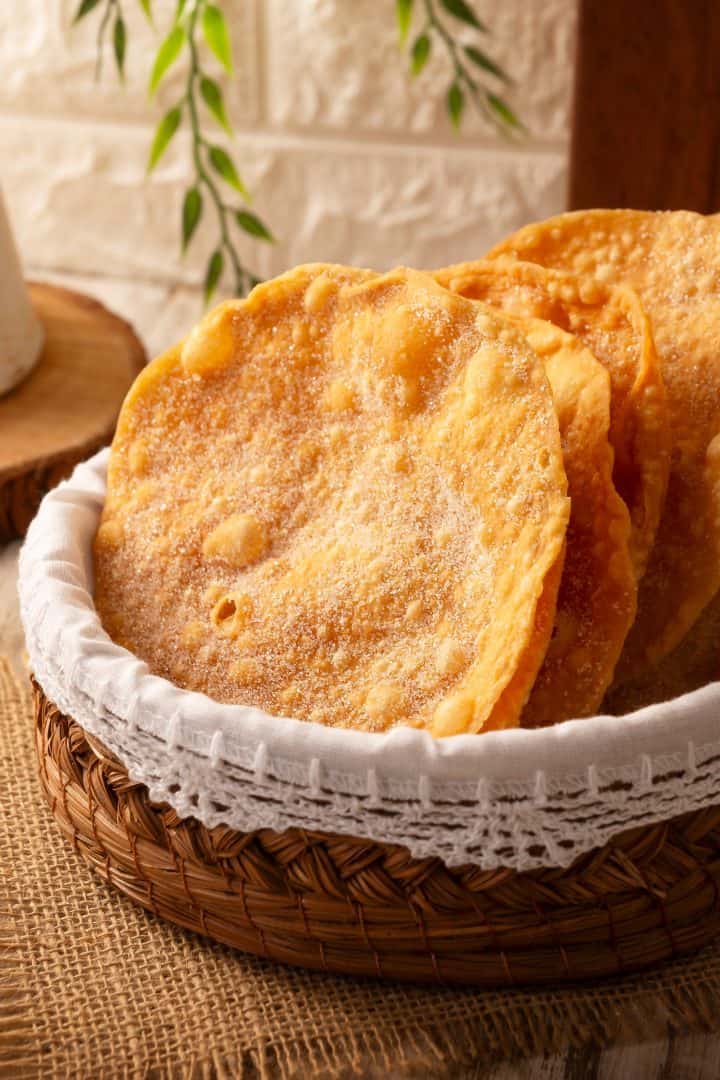
Buñuelos de Rodilla are a traditional Mexican dessert made from very thin dough that is fried until crisp and golden, then served with a sweet piloncillo syrup.
Jump to
The dough is traditionally stretched over the knee before frying, which helps make the buñuelos light, delicate, and crunchy, and they are especially popular during Christmas and holiday celebrations in Mexico.
This Buñuelos de Rodilla recipe follows the traditional method but is written clearly for home cooks, with options to stretch the dough by hand or with a rolling pin.
The buñuelos are fried until crisp and finished with a piloncillo syrup flavored with cinnamon and anise, creating a simple, authentic dessert that's perfect for holidays, celebrations, or special occasions.
Ingredients You'll Need
Note: See the recipe card for quantities.
- All-purpose flour: Forms the base of the dough.
- Baking powder: Helps the dough puff slightly and become lighter.
- Sugar: Adds mild sweetness to the dough and helps with light browning during frying.
- Salt: Enhances the overall flavor of the buñuelos.
- Butter: Adds richness.
- Egg: Helps bind the dough.
- Tomatillo husk-infused water: A traditional ingredient used to help create a lighter, more risen dough.It can be substituted with warm water.
- Star anise: Lightly perfumes the dough with a subtle, traditional aroma.
- Piloncillo: Used to make the syrup, adding a deep caramel flavor that pairs well with the crisp buñuelos. It can be substituted with brown sugar.
- Cinnamon stick: Adds warmth and spice to the piloncillo syrup.
- Neutral oil: Used for frying.
How to Make Buñuelos de Rodilla
Note: Full instructions are provided in the recipe card below.
- Bring water to a boil with the cleaned tomatillo husks and star anise. Remove from the heat and let it cool until warm.
- In a large bowl, combine the flour and baking powder. Make a well in the center and add the sugar, salt, egg, and butter. Mix by hand until well incorporated.
- Gradually add the warm infused water while kneading, incorporating it a little at a time. Stop adding water as soon as the dough comes together into a shaggy mass (it will be slightly sticky). Transfer the dough to a lightly floured surface and continue kneading until smooth and elastic, adding a little more flour if needed. Alternatively, you can knead the dough in a stand mixer fitted with a dough hook.
- Shape the dough into a ball, place it in a lightly oiled bowl, cover with a damp cloth, and let it rest for 30-40 minutes.
- Meanwhile, in a saucepan, combine the water, piloncillo, and cinnamon stick. Bring to a boil and simmer until dissolved and thickened into a syrup. Remove from heat and let cool.
- Divide the rested dough into small 1-inch portions and roll into balls. Cover and let rest for 15 minutes. Using a rolling pin, flatten each ball into a small round, then gently stretch it with your hands or a rolling pin into a 6- to 7-inch-diameter circle. Alternatively, you can sit on a chair, place a damp cloth over your knee, and stretch the dough from the center outward until it is very thin. Lay the stretched dough on a clean surface to dry slightly.
- Line 2 rimmed baking sheets with 2 layers of paper towels and set aside. Heat oil in a Dutch oven or large skillet with high sides over medium-high heat until the temperature registers 350°F (177°C); oil should be 1 to 1 ½ inches deep.
- Fry each buñuelo for about 1 minute per side, turning once, until lightly golden. Transfer to prepared baking sheets or a cooling rack and repeat with the remaining dough, adjusting the heat as necessary to maintain the temperature. Serve warm with the piloncillo syrup.
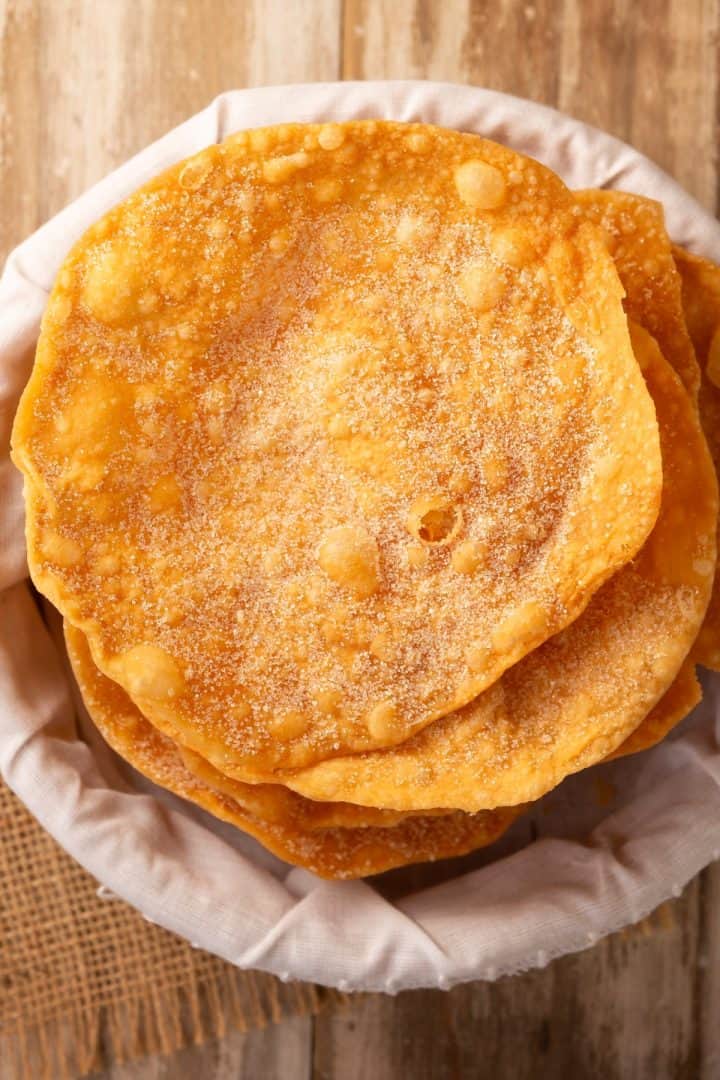
Hint: For the best texture, roll or stretch the dough as thin as possible before frying. Thin dough cooks evenly and creates the light, crisp buñuelos that are traditional for buñuelos de rodilla.
Storage, Make Ahead, & Freezing
Storage: Best enjoyed right away for the best texture. If needed, let the dish cool completely, then store it in an airtight container in the refrigerator for up to 2 days.
Make Ahead: The dough can be prepared and refrigerated for up to 24 hours in advance. The syrup can also be made ahead and stored in the refrigerator for up to 3 days.
Freezing: Not recommended.
Camila's Tips & Variations
- Best texture: Fry the dough right after shaping for the lightest, crispiest result. Letting it sit too long can affect how it cooks.
- Stretching method: If stretching over the knee feels difficult, use your hands or a rolling pin to thin the dough as much as possible-thin dough is key for crisp buñuelos.
- Oil temperature: Keep the oil hot but not smoking (about 350-365°F). If the oil is too cool, the buñuelos will absorb oil; too hot, and they'll brown too quickly.
- Syrup options: Piloncillo syrup is traditional, but you can substitute dark brown sugar if needed. Add cinnamon or anise for extra flavor.
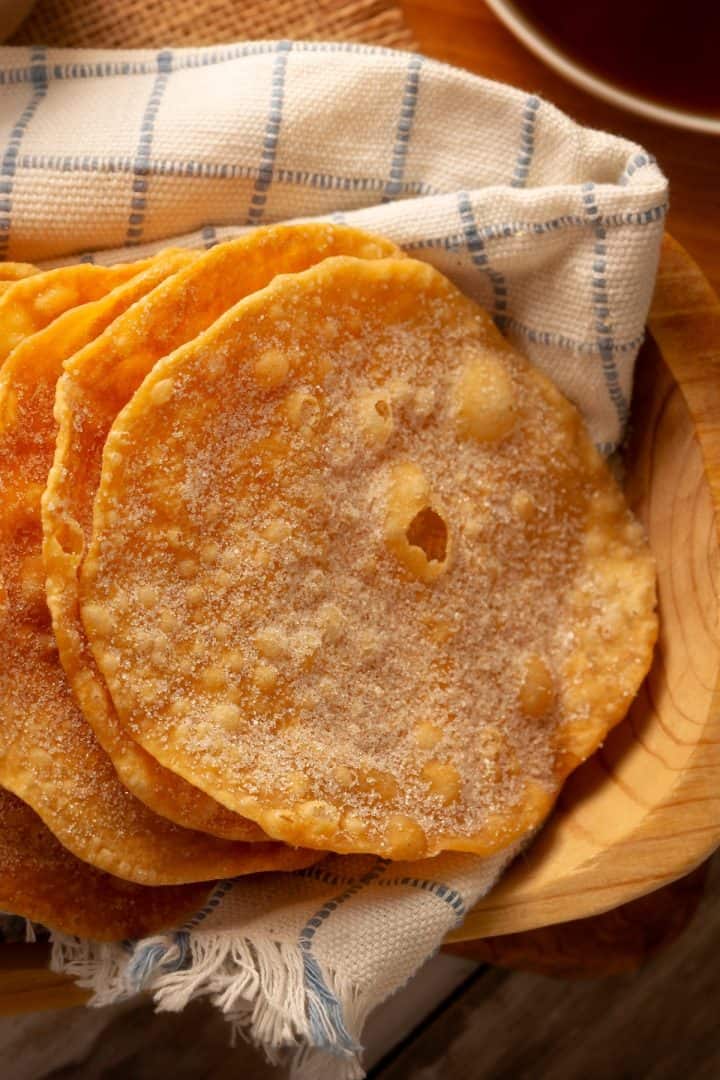
- Serving variation: Sprinkle with plain sugar or a cinnamon-sugar mixture instead of syrup for a lighter, crunchy finish.
Frequently Asked Questions
Why do you boil tomatillo husks for the water?
Boiling tomatillo husks is a traditional method that helps create a lighter, more elastic dough, but it is not required.
Do I have to use star anise in the water?
No. The star anise is optional, but it adds a light aroma and traditional flavor to the dough.
Can I stretch the dough without using my knee?
Yes. Using the knee is a traditional method for making buñuelos de rodilla, but it is not required. You can roll the dough very thin with a rolling pin instead, which works just as well and is easier for most home cooks.
Why do the buñuelos need to dry slightly before frying?
Letting them dry briefly helps remove surface moisture so they fry evenly and become crisp.
❤️ Love this Buñuelos de Rodilla recipe?
Make sure to check out our Buñuelos de Manzana recipe-a classic Mexican version you'll love.
Pair with


You may also like

Recipe
Buñuelos de Rodilla

Equipment
- Clean kitchen towel
- Deep skillet or pot
Ingredients
Buñuelos Dough
- 280 g all-purpose flour
- 1 teaspoon baking powder
- 2 tablespoons sugar
- ½ teaspoon kosher salt
- 2 tablespoons unsalted butter , softened
- 1 large egg
- ½ to ⅔ cup water infused with tomatillo husks and 1 star anise, warm , as needed
- peanut or vegetal oil, as needed to fry
Syrup
- 1½ cups water
- 1 piloncillo cone
- 1 cinnamon stick
Instructions
- Bring water to a boil with the cleaned tomatillo husks and star anise. Remove from the heat and let it cool until warm.
- In a large bowl, combine the flour and baking powder. Make a well in the center and add the sugar, salt, egg, and butter. Mix by hand until well incorporated.
- Gradually add the warm infused water while kneading, incorporating it a little at a time.
- Stop adding water as soon as the dough comes together into a shaggy mass (it will be slightly sticky).
- Transfer the dough to a lightly floured surface and continue kneading until smooth and elastic, adding a little more flour if needed.
- Alternatively, you can knead the dough in a stand mixer fitted with a dough hook.
- Meanwhile, in a saucepan, combine the water, piloncillo, and cinnamon stick.
- Bring to a boil and simmer until dissolved and thickened into a syrup. Remove from heat and let cool.
- Divide the rested dough into small 1-inch portions and roll into balls. Cover and let rest for 15 minutes. Using a rolling pin, flatten each ball into a small round, then gently stretch it with your hands or a rolling pin into a 6- to 7-inch-diameter circle.
- Alternatively, you can sit on a chair, place a damp cloth over your knee, and stretch the dough from the center outward until it is very thin. Lay the stretched dough on a clean surface to dry slightly.
- Line 2 rimmed baking sheets with 2 layers of paper towels and set aside. Heat oil in a Dutch oven or large skillet with high sides over medium-high heat until the temperature registers 350°F (177°C); oil should be 1 to 1 ½ inches deep.
- Fry each buñuelo for about 1 minute per side, turning once, until lightly golden. Transfer to prepared baking sheets or a cooling rack and repeat with the remaining dough, adjusting the heat as necessary to maintain the temperature. Serve warm with the piloncillo syrup.
Notes
Nutrition
Nutrition Disclaimer: The nutritional information provided is an estimate, calculated using standard data sources. Actual values may vary based on ingredient brands, preparation methods, and portion sizes. This information is for general reference only and should not be considered a substitute for professional dietary advice.