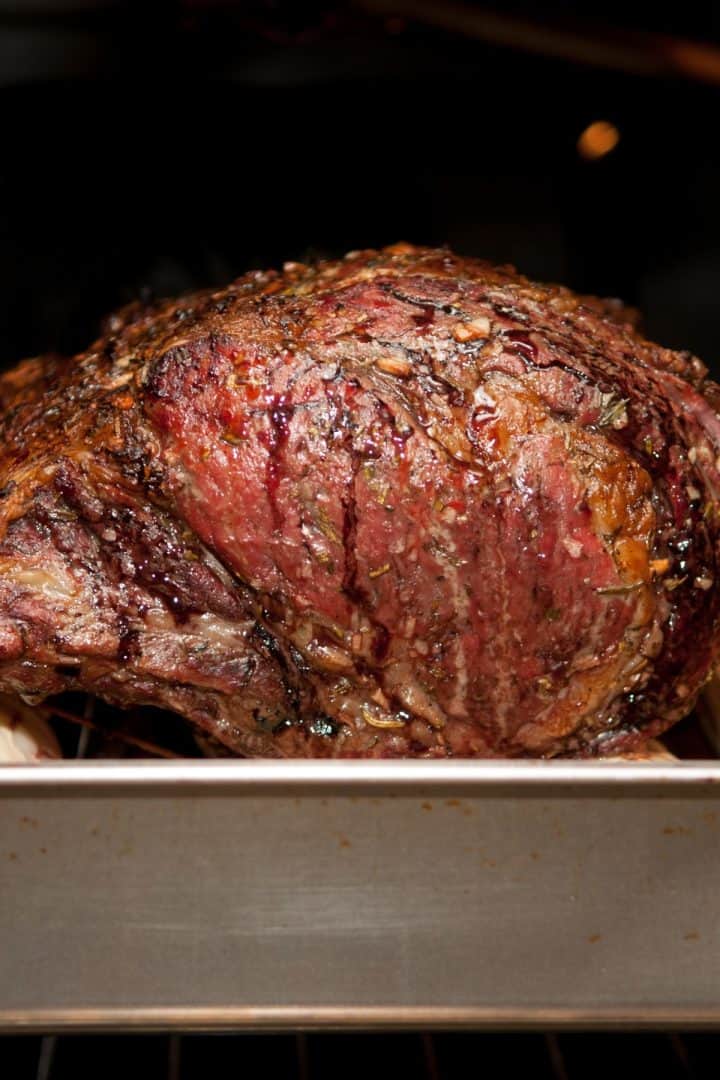
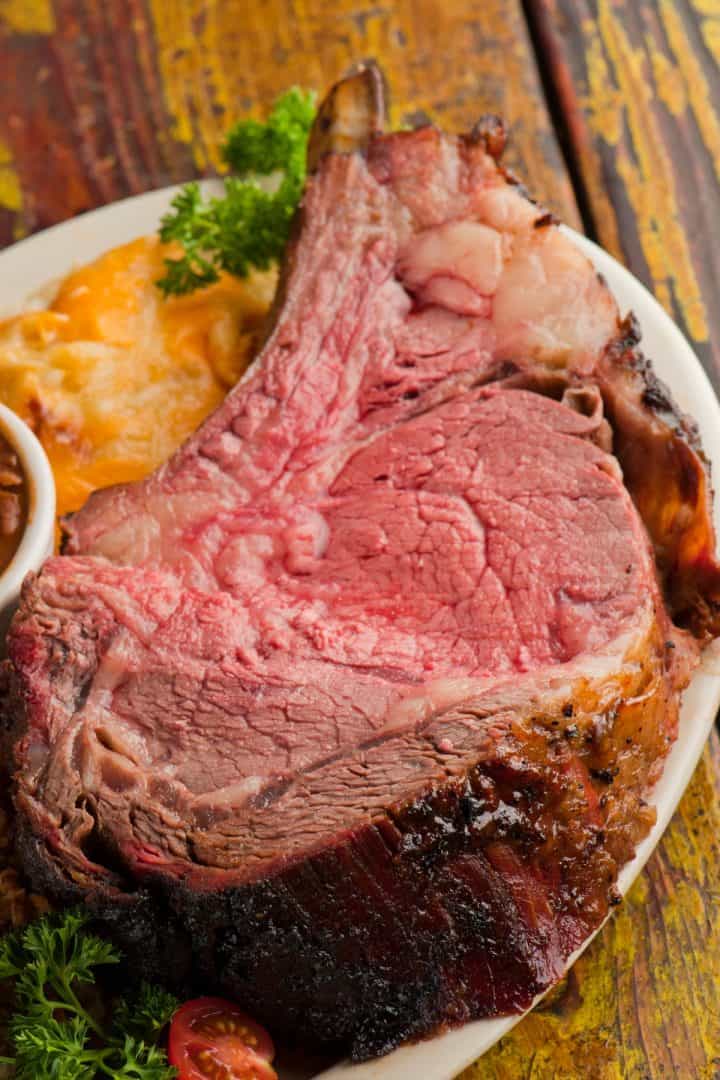
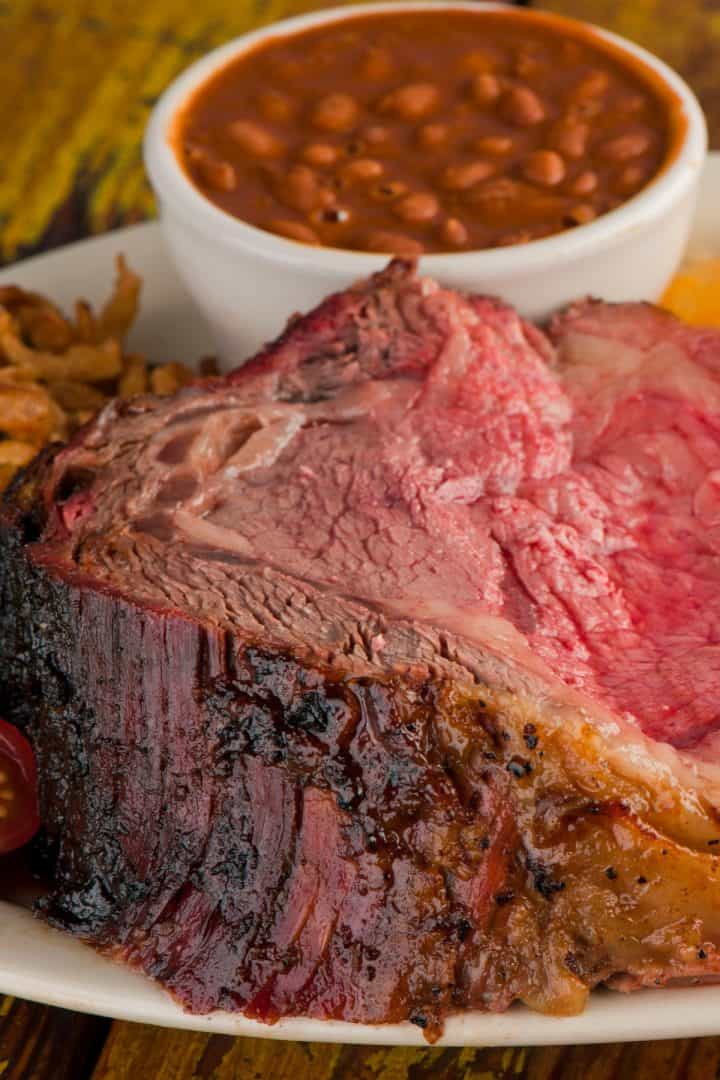
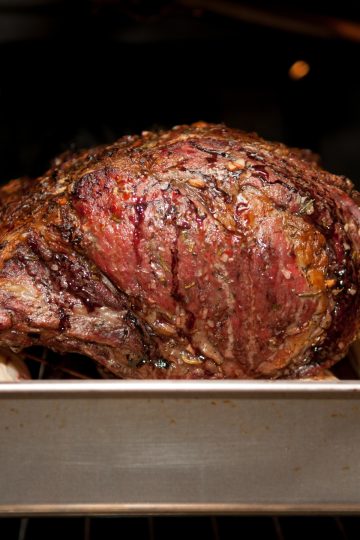
Costillas al Horno (also known as Costillar al Horno or Prime Rib Roast) is a premium cut from the rib primal, cooked whole with the bones intact.
Jump to
The bones help the meat cook evenly and stay juicy, and the cut is prized for its marbling, tenderness, and deep beefy flavor-making it a favorite for holidays and special occasions.
This Costillas de Res is a simple yet impressive roast, finished with a luxurious Red Wine Butter Sauce.
It's an elegant centerpiece perfect for Christmas, New Year's, or any holiday celebration.
Ingredients You'll Need
 Note: See the recipe card for quantities.
- Butter: Creates a rich base for the compound butter and helps carry the thyme flavor into the sauce.
- Thyme: Adds an earthy, aromatic note that pairs well with beef.
- Salt: Enhances all the natural flavors in the butter and on the roast.
- Black pepper: Adds mild heat and balances the richness of the beef.
- Prime rib (bone-in): The bones help the roast cook evenly and stay juicy; the cut is naturally tender and well-marbled, ideal for slow roasting.
- Whole garlic cloves: Inserted into slits in the fat cap to infuse the meat with deep garlic flavor as it cooks.
- Oil: Helps the seasoning adhere and promotes browning during roasting.
- Garlic & Shallots: Builds a savory, aromatic base for the sauce.
- Red wine: Provides acidity, depth, and complexity to the sauce as it reduces.
- Beef stock: Adds body to the sauce and deepens the beef flavor; I use Knorr beef-flavored bouillon to make my broth, but homemade or store-bought stock works as well.
- Peppercorns: Add subtle spice and warmth to the sauce.
- Cabernet Sauvignon vinegar: Helps balance richness and brighten the overall flavor; it can be substituted with red wine vinegar or sherry vinegar for a similar wine-based acidity.
- Parsley: Freshens the sauce and provides a clean finishing note.
How to Make Costillas al Horno
Note: Full instructions are provided in the recipe card below.
- For the butter, combine the softened butter and thyme in a food processor until completely smooth, then season lightly with salt and pepper. Transfer the mixture to a small dish, cover with plastic wrap, and refrigerate until firm and the flavors have developed, at least 2 hours and up to 2 days.
- For the prime rib, take the roast out of the refrigerator about 2 hours before cooking to remove the chill. Pat the exterior dry with paper towels. Using a paring knife, make eight small cuts across the fat cap and tuck a whole garlic clove into each opening.
- Set the rib on a large cutting board. Brush the surface with oil, then generously season all sides with salt and pepper about 15 minutes before placing it in the oven.
- Preheat the oven to 450°F. Place the roast, bone-side down (fat-side up), on a rack inside a large roasting pan and roast for 20 minutes.
- Lower the oven temperature to 350°F and continue cooking until the center and edges reach 125°F for medium-rare; this typically takes around 3 hours, but begin checking the temperature after 2 hours.
- Move the roast to a cutting board with a juice groove and let it rest. Pour off most of the fat from the roasting pan, leaving a few tablespoons. Place the roasting pan over two burners and set the heat to high. Add the shallots and the remaining chopped garlic and cook until softened, about 4 minutes.
- Pour in the red wine and a splash of vinegar, scraping up any browned bits, and let it reduce by about three-quarters, about 5 minutes.
- Add the stock and peppercorns, bring to a boil, and cook until the liquid is reduced by half, about 10 minutes. Strain the mixture into a saucepan over low heat and let it simmer until slightly thickened.
- Whisk in the chilled thyme butter a little at a time until the sauce becomes silky (do not let it boil or it may separate). Adjust seasoning with salt and pepper, add a touch of Cabernet Sauvignon vinegar, and finish with chopped parsley before serving.
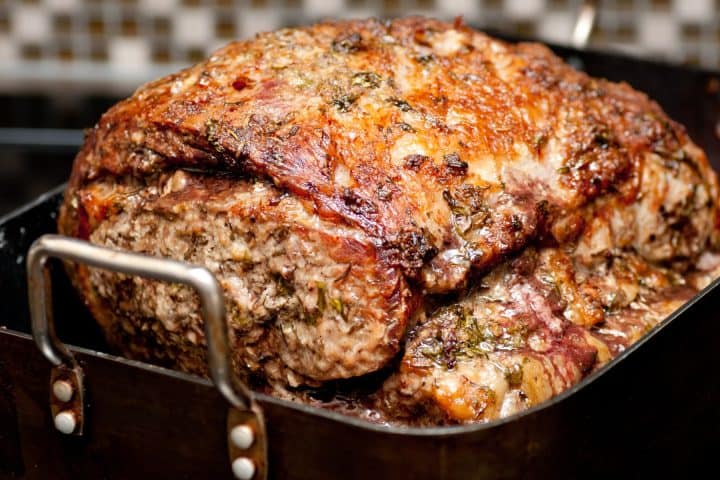
Hint:For the best texture, always let the prime rib rest after roasting-this allows the juices to redistribute, keeping the meat tender and juicy when sliced.
Storage, Make Ahead, & Freezing
Storage: Store leftover costillas in an airtight container in the refrigerator for up to 3 days. Reheat in a 250°F oven with a bit of beef broth.
Place it on a wire rack, cover with foil, and warm until the meat reaches 120-140°F. Slices can also be steamed or briefly microwaved.
Make Ahead: The compound butter can be made up to 48 hours in advance. You can also season the costillas and let it sit uncovered in the refrigerator for up to 24 hours to help it brown better.
Freezing: Not recommended.
Camila's Tips & Variations
- Bring the roast to room temperature: Letting the meat sit out for 2 hours helps it cook more evenly and develop a better texture.
- Dry the surface well: Pat the roast dry to ensure a deeper, more even crust.
- Roast prime rib seasoning: Prime rib is a thick cut, so a generous amount of salt and pepper is essential for full flavor.
- Roast prime rib cook time: Start by roasting the prime rib at 450°F for 20 minutes to develop a crust. Then reduce the oven temperature to 350°F and continue roasting for about 3 to 3¼ hours for a medium-rare bone-in roast. Always check with a meat thermometer-prime rib is perfect at 125°F for medium-rare after resting.
- Use a thermometer: This cut is expensive-using a probe or instant-read thermometer guarantees perfect doneness.
- Let it rest: Resting the roast keeps the juices inside, resulting in tender, succulent slices.
- Choose a wine you enjoy: The sauce concentrates the wine's flavor, so pick a red you actually like to drink.
- Vinegar swap: If you don't have Cabernet Sauvignon vinegar, red wine vinegar, or sherry vinegar are excellent substitutes.
- Broth flexibility: Knorr beef bouillon, homemade stock, or store-bought broth all work well for the pan sauce.
- Make the butter ahead: The compound thyme butter tastes even better after a day or two as the flavors develop.
Frequently Asked Questions
How much prime rib roast per person?
Plan for about 1 pound per person for a bone-in roast. This ensures generous servings and accounts for the bones.
What's the best internal temperature for prime rib?
For medium-rare, aim for 125°F at the center before resting. The temperature will rise as it rests, reaching 130-135°F.
Can I roast a prime rib without a rack?
Yes. If you don't have a rack, place the roast on a bed of sliced onions or carrots to elevate it and promote even cooking.
Can I use boneless prime rib instead?
Yes, but bone-in roasts cook more evenly and stay juicier. If using boneless, reduce the cook time slightly.
❤️ Love this prime rib roast recipe?
Make sure to check out our Rib Roast recipe-a rich, flavorful variation you'll definitely enjoy.
Pair with

You may also like
Recipe
Costillas al Horno
Equipment
- Kitchen shears
- Large roasting pan with rack
- Carving knife
Ingredients
- Fresh Thyme Butter:
- 2 sticks unsalted butter , at room temperature
- ¼ cup fresh thyme leaves
- Kosher salt and freshly ground black pepper
- Prime Rib:
- 1 (12-14 pound) prime rib roast, trimmed of some excess fat
- 11 large garlic cloves (8 whole, 3 chopped)
- Olive oil , for brushing
- Kosher salt and freshly ground black pepper
- For the Sauce:
- 3 shallots , chopped
- 1 bottle Cabernet Sauvignon
- A few splashes Cabernet Sauvignon vinegar
- 4 cups boiling water mixed with 1 tablespoon Knorr Chicken Bouillon
- (or 4 cups warm homemade chicken stock)
- 12 whole black peppercorns
- Chopped fresh parsley , for garnish
Instructions
- For the butter: Combine the softened butter and thyme in a food processor until completely smooth. Season lightly with salt and pepper.
- Transfer to a small dish, cover with plastic wrap, and refrigerate until firm and the flavors have developed, at least 2 hours and up to 2 days.
- For the prime rib: Remove the roast from the refrigerator about 2 hours before cooking. Pat the exterior dry with paper towels.
- Using a paring knife, make eight small cuts across the fat cap and insert a whole garlic clove into each opening.
- Place the roast on a large cutting board. Brush all sides with olive oil and generously season with salt and pepper about 15 minutes before roasting.
- Preheat the oven to 450°F (230°C). Place the roast bone-side down (fat-side up) on a rack set inside a large roasting pan and roast for 20 minutes.
- Reduce the oven temperature to 350°F (180°C) and continue cooking until the center and edges reach 125°F (52°C) for medium-rare, about 3 hours. Begin checking the temperature after 2 hours.
- Transfer the roast to a cutting board with a juice groove and let it rest. Pour off most of the fat from the roasting pan, leaving a few tablespoons behind.
- Place the roasting pan over two burners on high heat. Add the shallots and remaining chopped garlic and cook until softened, about 4 minutes.
- Pour in the red wine and a splash of vinegar, scraping up the browned bits. Let reduce by about three-quarters, about 5 minutes.
- Add the stock and peppercorns, bring to a boil, and cook until reduced by half, about 10 minutes. Strain into a saucepan over low heat and simmer until slightly thickened.
- Whisk in the chilled thyme butter a little at a time until the sauce becomes silky. Do not let it boil.
- Adjust seasoning with salt and pepper, add a touch more Cabernet Sauvignon vinegar if needed, and finish with chopped parsley before serving.
Notes
Nutrition
Nutrition Disclaimer: The nutritional information provided is an estimate, calculated using standard data sources. Actual values may vary based on ingredient brands, preparation methods, and portion sizes. This information is for general reference only and should not be considered a substitute for professional dietary advice.