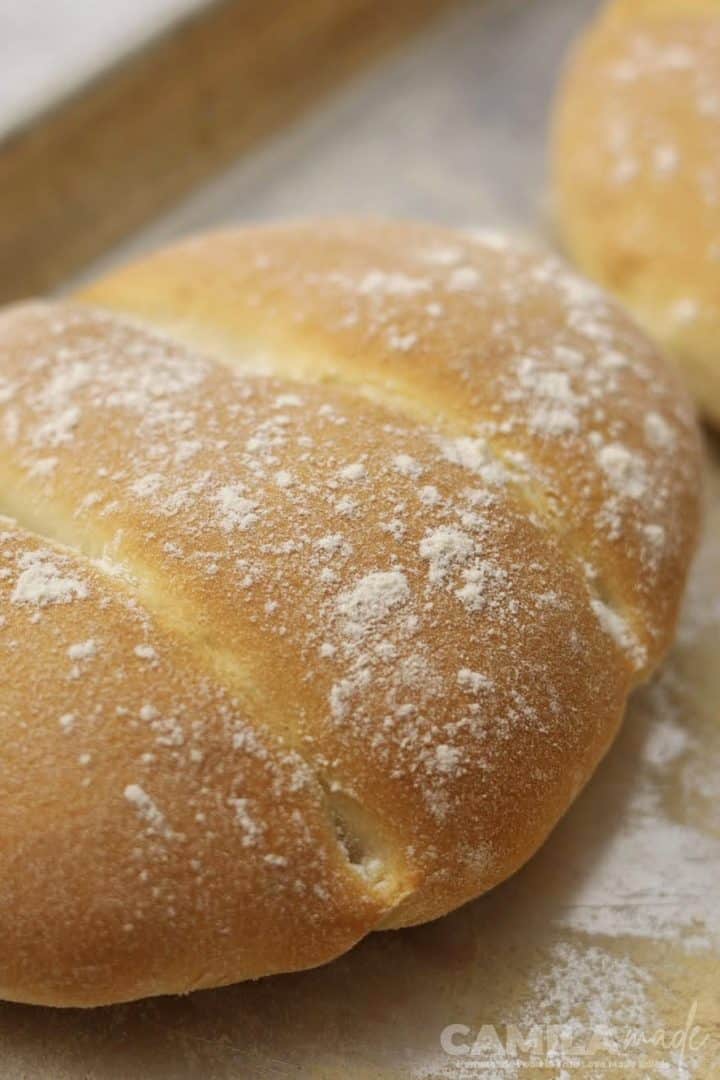
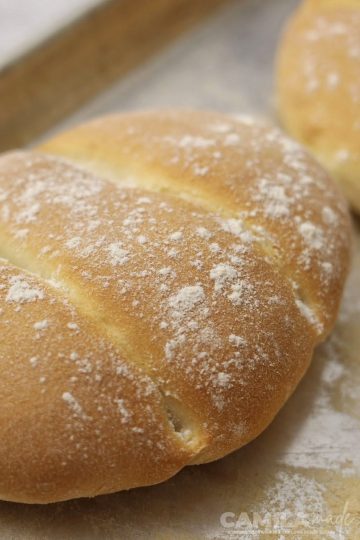
When it comes to Mexican tortas, the bread makes all the difference. Teleras are soft, flour-dusted rolls with a pillowy crumb, a lightly bronzed crust, and two distinct ridges on top that give these sandwiches their signature taste and texture.

Jump to
My original telera bread recipe is great for a crowd, but this version makes a smaller batch that's easier to manage.
The dough is easy to prepare-you can mix it in a stand mixer or knead by hand-then let it rise for 1 hour plus a 15-minute rest, or overnight for a deeper flavor and a bakery-style texture.
Ingredients You'll Need
Note: See the recipe card for quantities.
- All-purpose flour: Forms the structure of the rolls and gives them a soft, tender crumb.It can be substituted with or bread flour.
- Sugar: Feeds the yeast and adds a touch of sweetness to balance the flavor.
- Instant dry yeast: Helps the dough rise, creating light and airy rolls.It can be substituted with or active dry yeast.
- Water: Activates the yeast and hydrates the flour for proper gluten development.
- Shortening: Adds richness and moisture, keeping the rolls soft. For the most authentic Mexican bakery flavor, use lard. It can also be substituted with vegetable oil.
- Kosher salt: Enhances flavor and strengthens the dough's structure.
How to Make Teleras
Note: Full instructions are provided in the recipe card below.
- Activate yeast: Mix yeast, warm water (110-115°F), and sugar. Let it stand until bubbly.
- Mix dough: Add flour, shortening/oil, and salt. Knead 8 minutes until smooth and elastic.
- First rise: Oil the dough, cover, and let it rise until doubled in size, about 1 hour. (Optional: refrigerate overnight; bring to room temp before shaping.)
- Divide & rest: Punch down, divide into 6 balls, dust with flour, cover, and rest 15 minutes.
- Shape: Flatten into 5 × 3-inch ovals. Place on a baking sheet. Press 2 deep ridges lengthwise. Dust with flour and cover.
- Second rise: Preheat oven to 400°F. Let the rolls rise for 30 minutes until puffy.
- Bake: Bake 18-20 minutes, until golden. Cool slightly before serving.
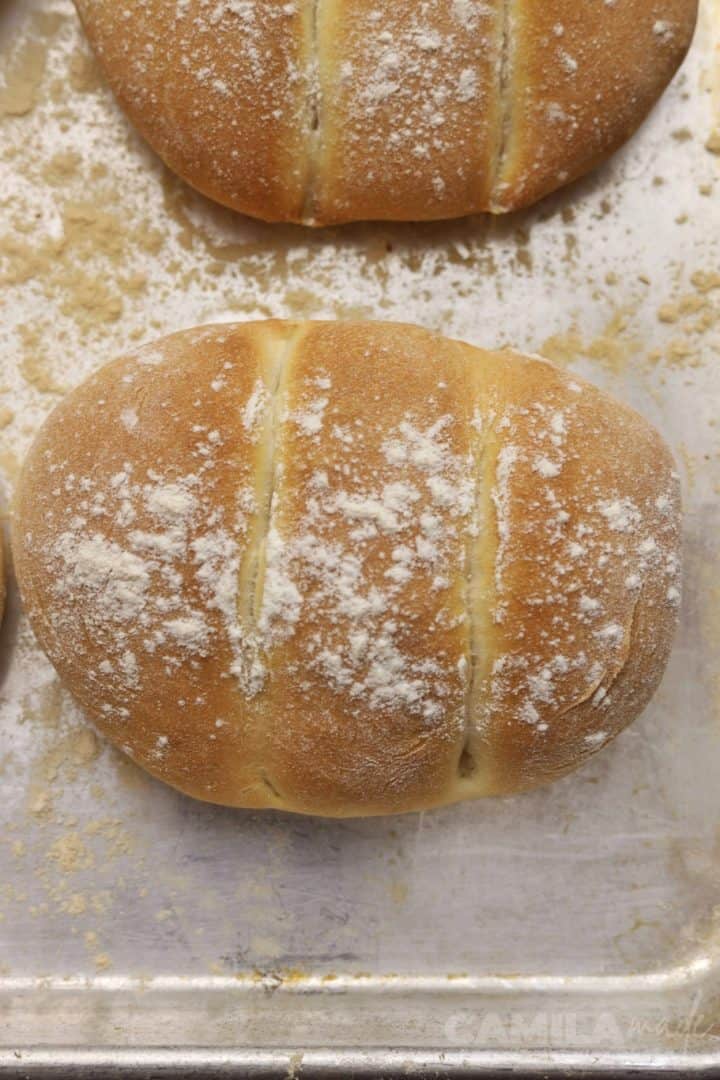
Hint: Press the indentations firmly and almost all the way through each oval-this helps the ridges stay visible after baking.
Storage, Make Ahead, & Freezing
Storage: Keep cooled teleras in an airtight container or bread bag at room temperature for up to 3 days.
Make Ahead: You can refrigerate the dough overnight for a slow rise that develops deeper flavor. Bring it to room temperature before shaping and baking.
Freezing: Baked teleras freeze well. Wrap individually in plastic wrap, place in a freezer bag, and store for up to 2 months. To serve, thaw at room temperature and refresh in a warm oven for a few minutes.
Camila's Tips & Variations
- Kneading: Don't have a stand mixer? You can mix the ingredients by hand and knead on a floured board for about 10 minutes, until the dough is smooth and elastic.
- Shaping: Press the indentations firmly with a floured wooden spoon handle so they stay defined while baking. I personally like using a small fondant rolling pin for clean, even ridges
- Flour Swap: For a chewier texture, replace the all-purpose flour with bread flour. You may need to add a little extra water since bread flour absorbs more liquid.
- Fat Choice: Lard gives the most authentic flavor, but shortening or vegetable oil will still keep the rolls soft.
- Mini Teleras: Divide the dough into smaller portions for slider-sized rolls-perfect for party tortas.
Frequently Asked Questions
Why didn't my dough rise?
Your yeast may have expired, or the water was too hot/cold. Always use fresh yeast and water between 110-115°F.
Why did my rolls turn out dense?
This usually happens if the dough wasn't kneaded enough or if it didn't rise fully. Knead until smooth and elastic, and let the dough double in size before shaping.
Why did my indentations disappear while baking?
Press them deeply with a floured chopstick or spoon handle, and allow the dough to proof properly before baking.
Did you know?
The word telera originally comes from Spain, where it referred to a humble country bread with little prestige. But in Mexico, the telera rose to fame-becoming the essential bread for tortas, one of the country's most beloved sandwiches.
Pair with

You may also like
Recipe
Teleras
Equipment
Ingredients
- 420 g all-purpose flour
- 2 tablespoons sugar
- 7 g (2¼ teaspoons) instant or active dry yeast
- 300 ml water (110-115°F)
- 25 g (2 tablespoons) melted shortening or vegetable oil, plus more for oiling the bowl
- 2 teaspoons kosher salt
Instructions
- Activate yeast: In the bowl of a stand mixer, stir together the yeast, water (110-115°F), and sugar. Let it stand a few minutes until bubbly, if desired.
- Mix the dough: Add the flour, melted shortening or oil, and salt to the bowl. Using the dough hook, mix on low speed for 1-2 minutes, or until the dough is combined. Increase the speed to medium and knead for about 8 minutes, until smooth, elastic, and pulling away from the sides.
- First rise: Lightly oil the top of the dough and sides of the bowl. Flip the dough to coat all over. Cover with a towel or plastic wrap and let rise in a warm spot until doubled in size, about 1 hour. (Optional: refrigerate overnight for a slow rise. Bring to room temperature before shaping, about 2 hours.)
- Divide and rest: Punch down the dough to release gas. Transfer the dough to a floured surface and divide it into six equal pieces. Roll into balls, dust lightly with flour, and cover. Rest for 15 minutes.
- Shape the rolls: Flatten each ball into an oval about 5 × 3 inches. Place on a parchment- or silicone-lined baking sheet, leaving space between them. Use a floured wooden spoon handle to make 2 deep indentations, the length of each oval, pressing almost all the way through the dough. Dust lightly with flour and cover with a plastic wrap or a clean kitchen towel.
- Second rise: Preheat the oven to 400°F. Let the rolls rise until nearly doubled, about 30 minutes.
- Bake: Bake for 18-20 minutes, until golden brown. Cool slightly before serving.
Notes
Nutrition
Nutrition Disclaimer: The nutritional information provided is an estimate, calculated using standard data sources. Actual values may vary based on ingredient brands, preparation methods, and portion sizes. This information is for general reference only and should not be considered a substitute for professional dietary advice.