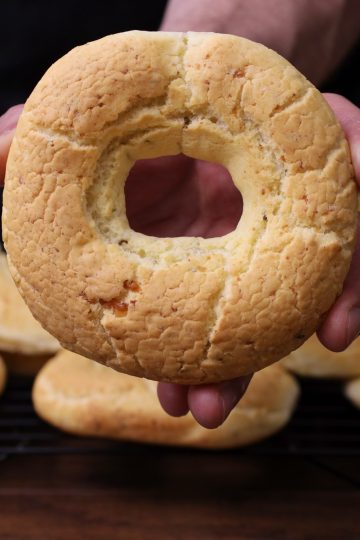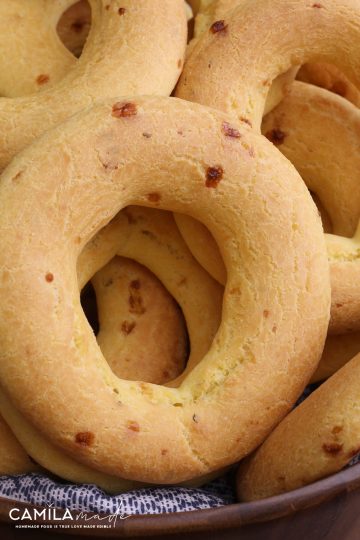
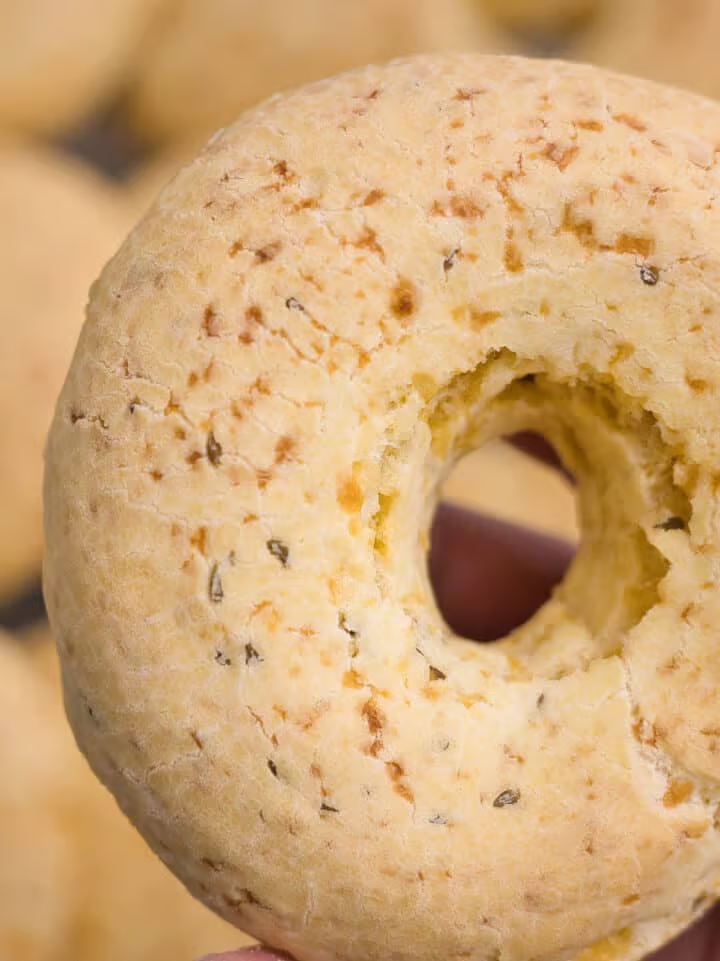
Chipa Almidón (also known as Chipa Aramirõ) is a traditional Paraguayan cheese bread made with yuca starch (also known as tapioca starch).
Jump to
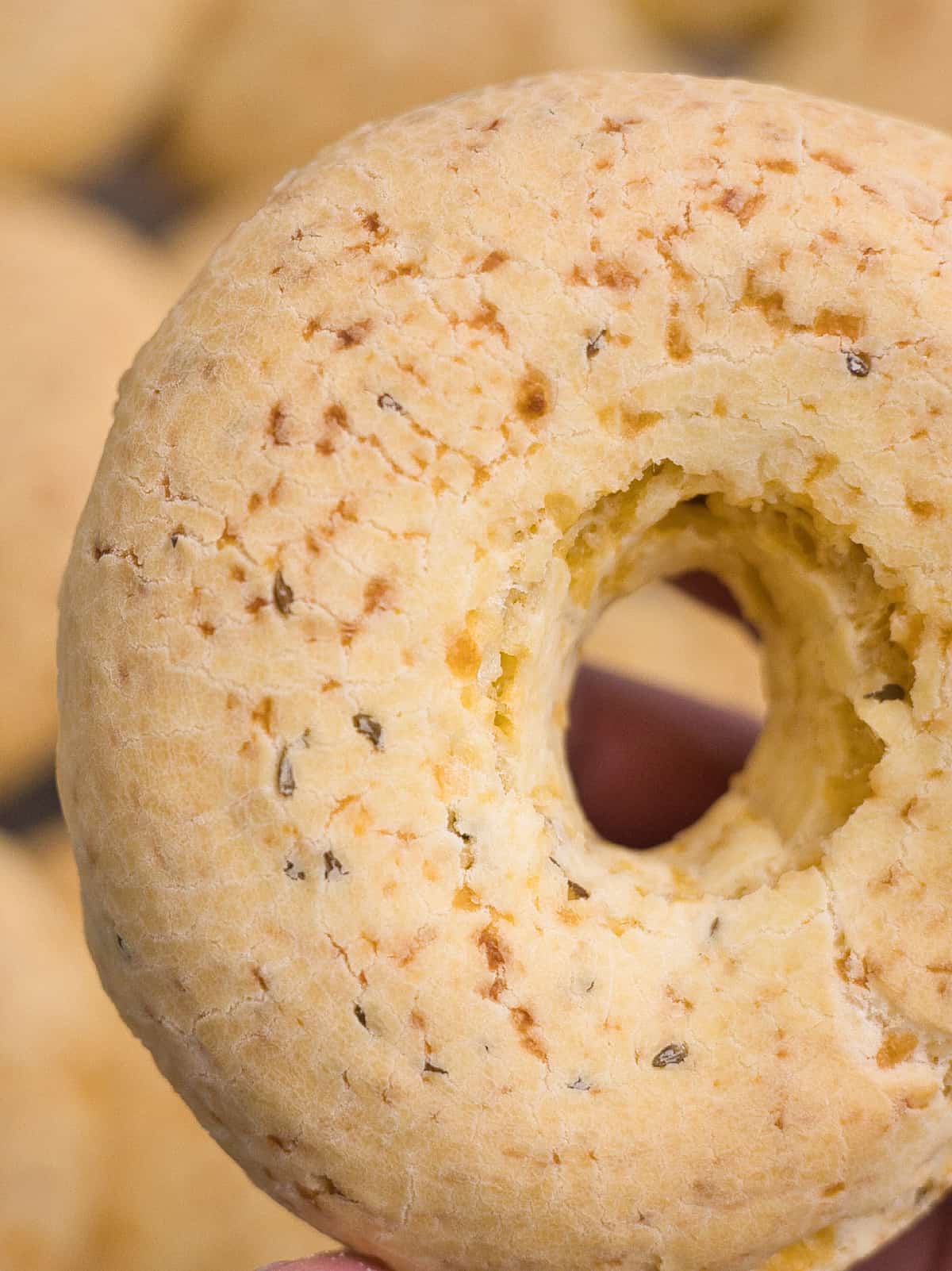
It's the most popular and iconic type of chipa in Paraguay, known for its firm yet chewy texture, golden crust, and signature donut shape.
Similar to its Brazilian cousin, Pão de Queijo, this naturally gluten-free cheese bread is lightly crispy on the outside and soft on the inside, often flavored with a hint of anise.
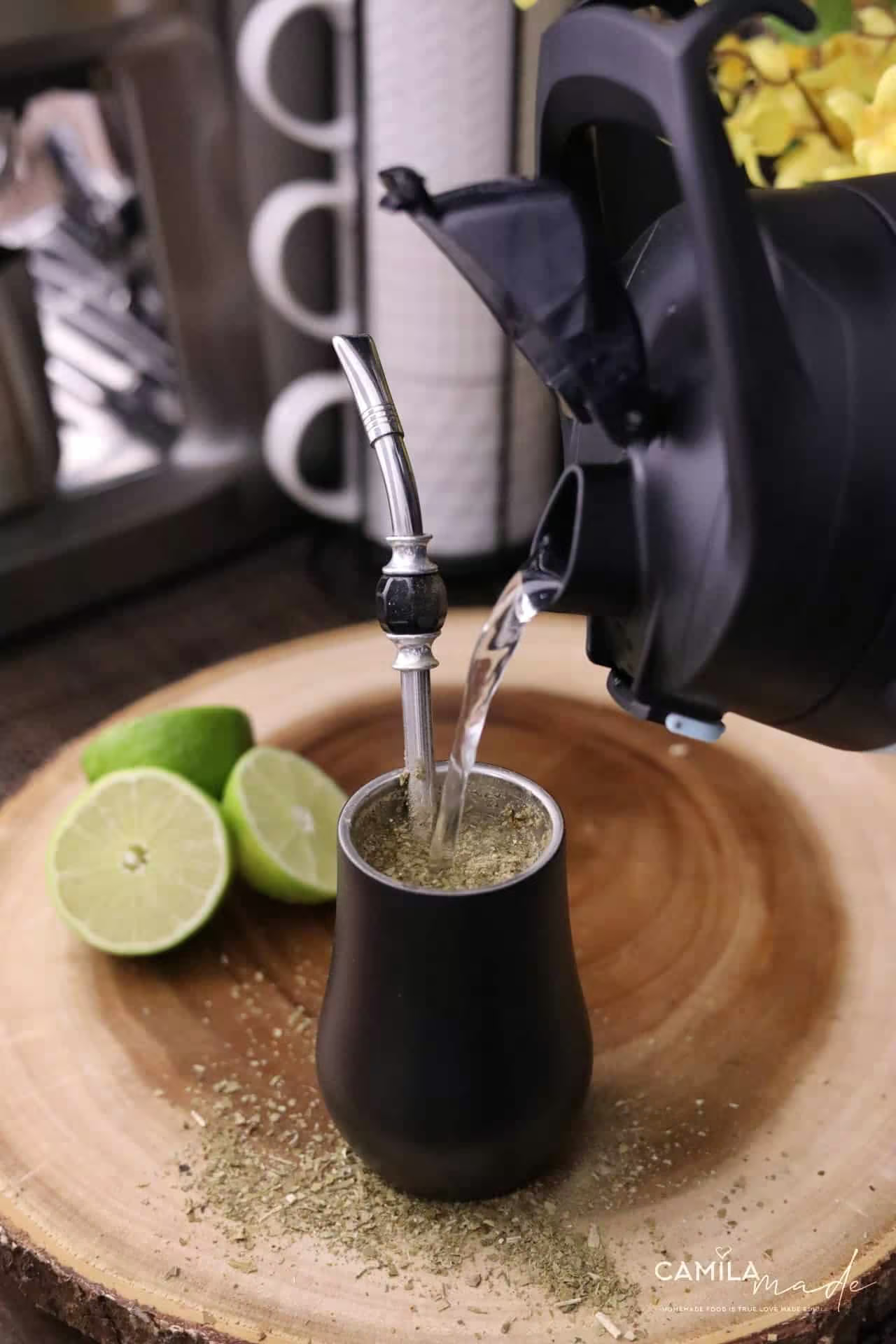
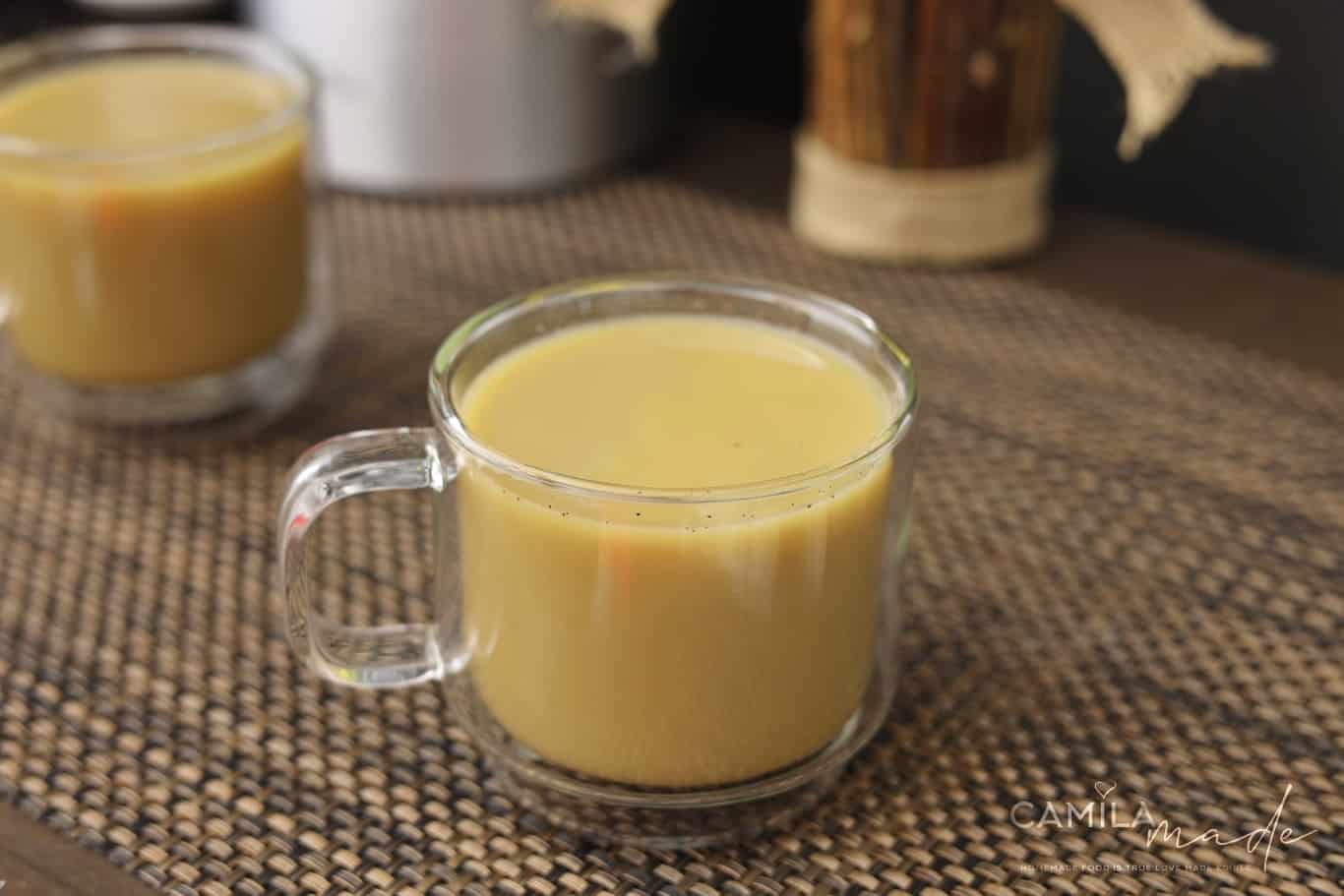
It's a popular choice for breakfast and pairs well with Mate Cocido or coffee.
While most traditional chipa recipes tend to be a bit dry and harden quickly once cooled, I've developed a version that's softer and more flavorful.
I substitute buttermilk for regular milk to help retain moisture and add a subtle tang. I also include a small amount of baking powder for a lighter, fluffier texture.
And although anise seeds are optional, I highly recommend them-they add a unique flavor that sets this recipe apart from its Brazilian counterpart.
Chipa Almidón is best enjoyed warm from the oven, but it also holds up well at room temperature and freezes beautifully.
For more Paraguayan-inspired recipes, check out Chipa Almidon, Chipa, Chipa Asador, Chipa Buns, Muffin Chipa, and Chipa Piru.
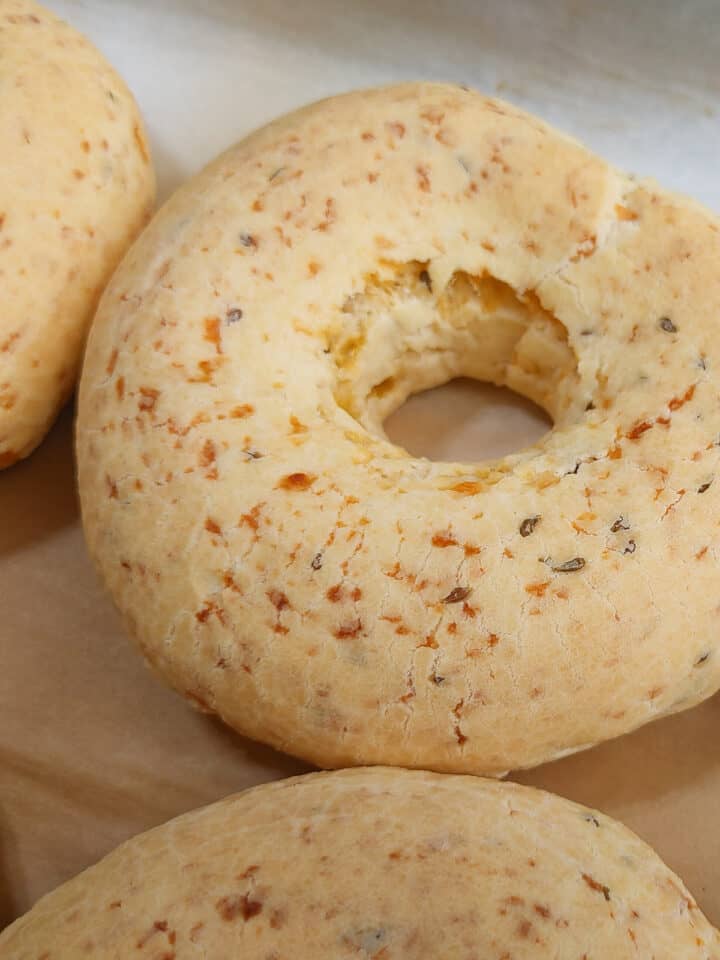
Ingredients You'll Need
Note: See the recipe card for quantities.
- Baking powder: While not traditional, I like to include it for a lighter, fluffier texture.
- Tapioca starch: This ingredient gives the chipa its signature chewy texture and makes it naturally gluten-free.
- Butter: Adds richness and tenderness. While I prefer butter for its flavor, pork lard (grasa de cerdo) is a traditional choice in Paraguay. It's widely used due to its accessibility and affordability, especially in rural areas, where families often raise pigs and render their own lard. You can also use shortening, margarine, or even oil, depending on what you have on hand.
- Eggs: Bind the dough while adding structure and moisture.
- Kosher salt: Enhances the overall flavor of the dough.
- Buttermilk: Brings moisture and helps create a soft, pliable dough. It can be substituted with whole milk if needed.
- Mexican cheese: Adds salty, melty richness throughout the chipa. You can substitute with any semi-soft or semi-firm cheese, depending on availability.
- Anise seeds (optional): Offer a subtle, aromatic note that's typical of traditional Paraguayan chipas.
How to Make Chipa Almidon
Note: Full instructions are provided in the recipe card below.
1. Preheat the oven to 500°F (260°C) and line two 13x18-inch baking sheets with parchment paper.
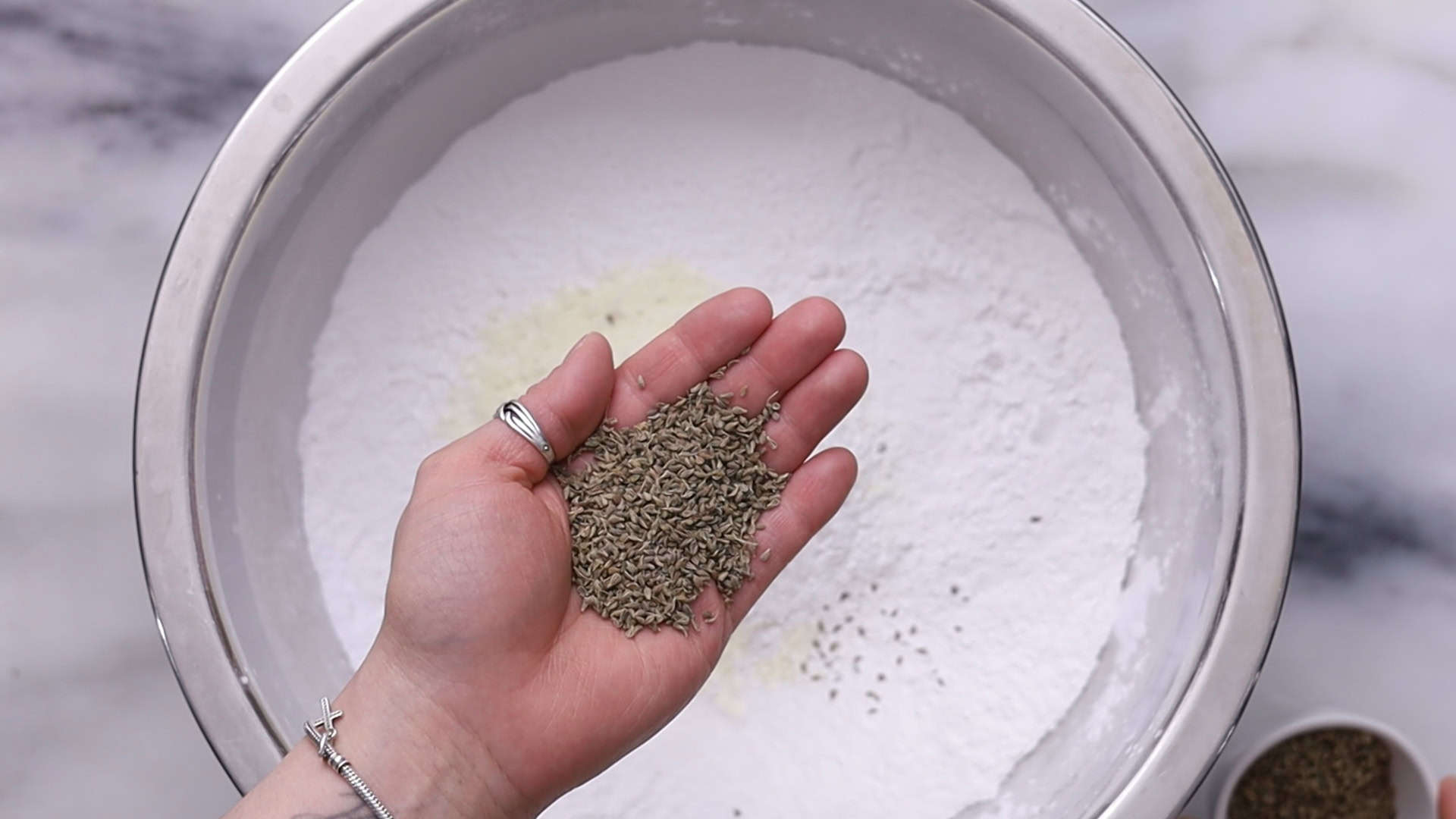
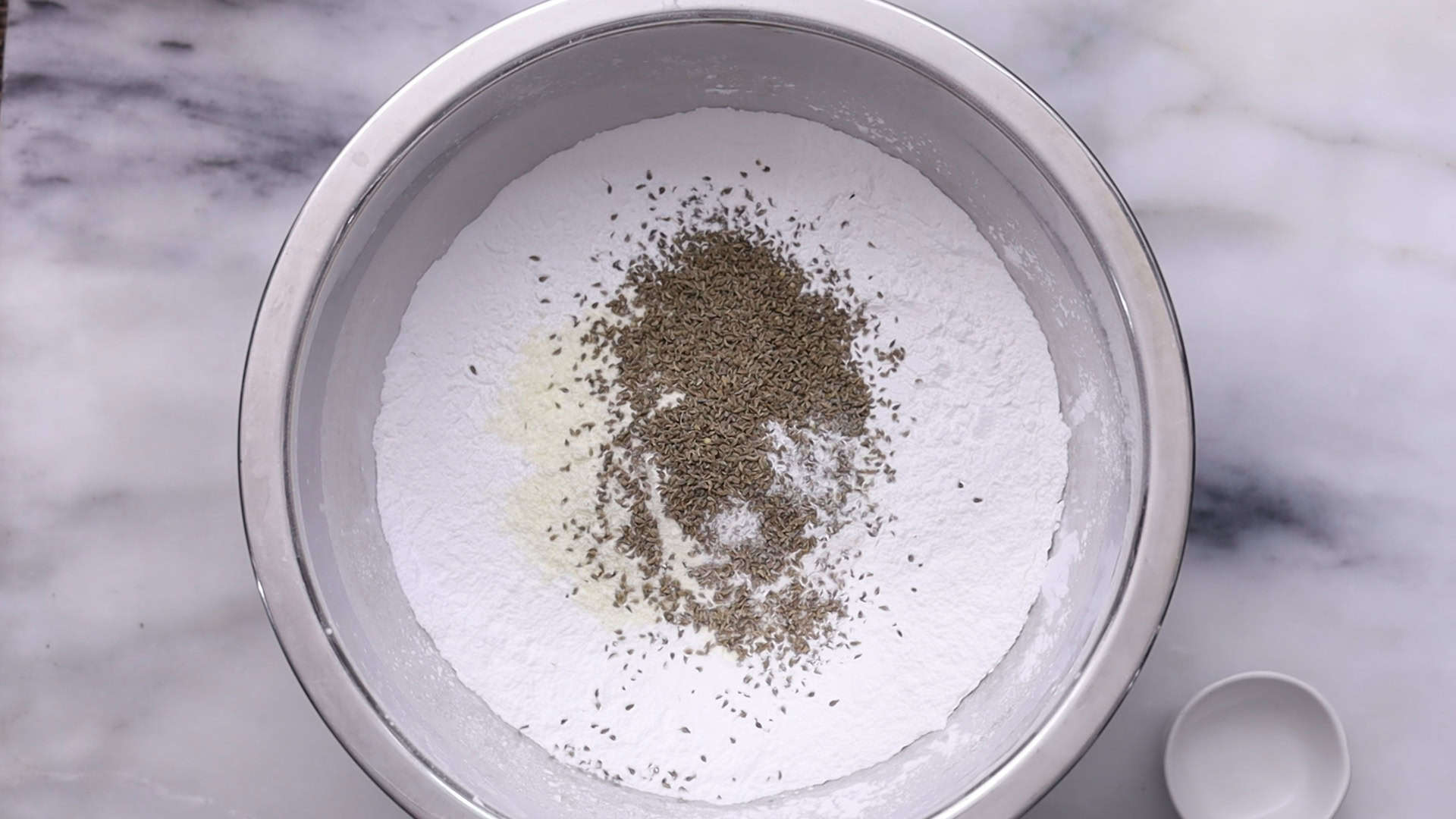
2. Mix dry ingredients: In a large bowl, combine tapioca starch, salt, anise seeds, and baking powder.
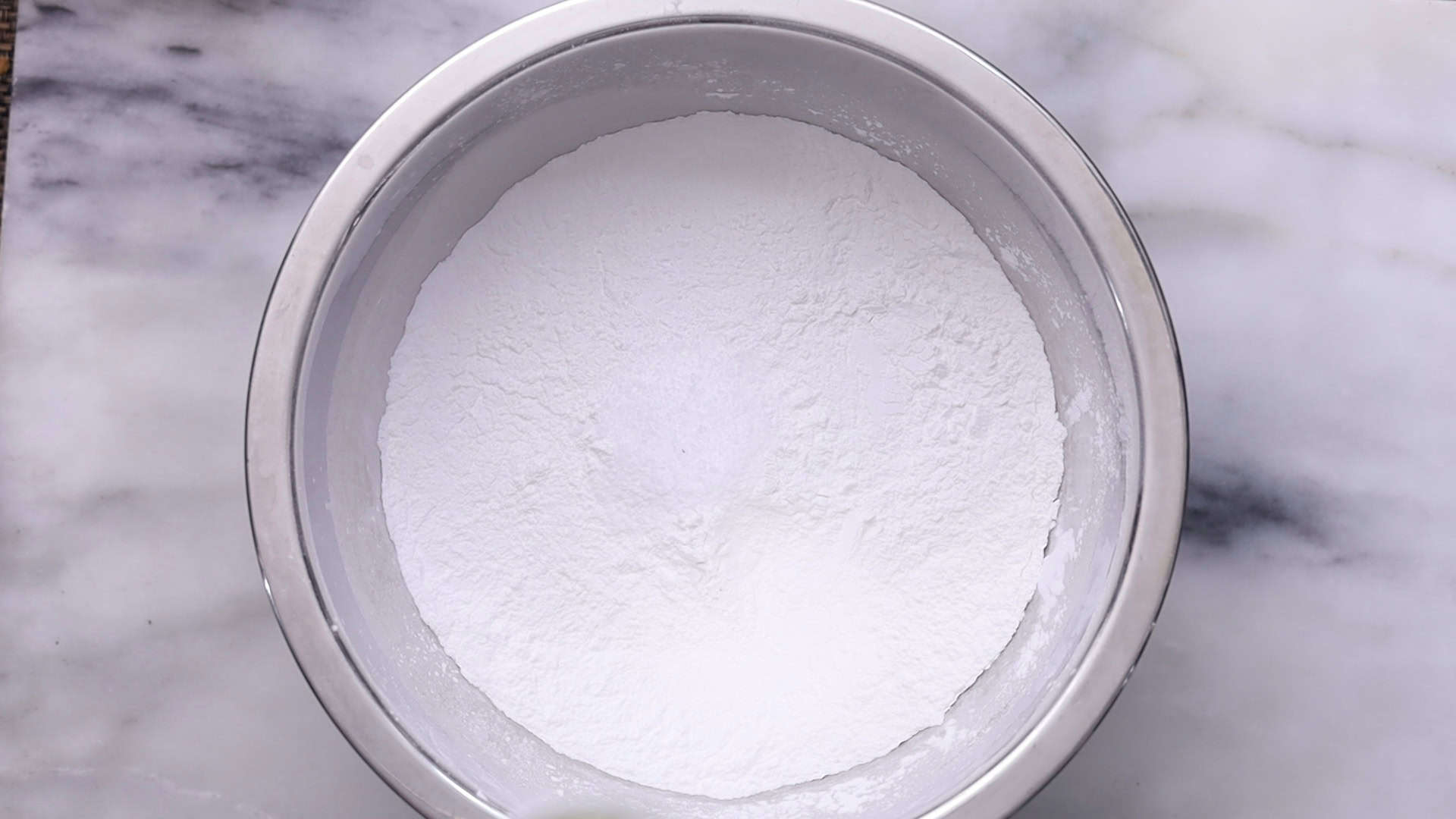
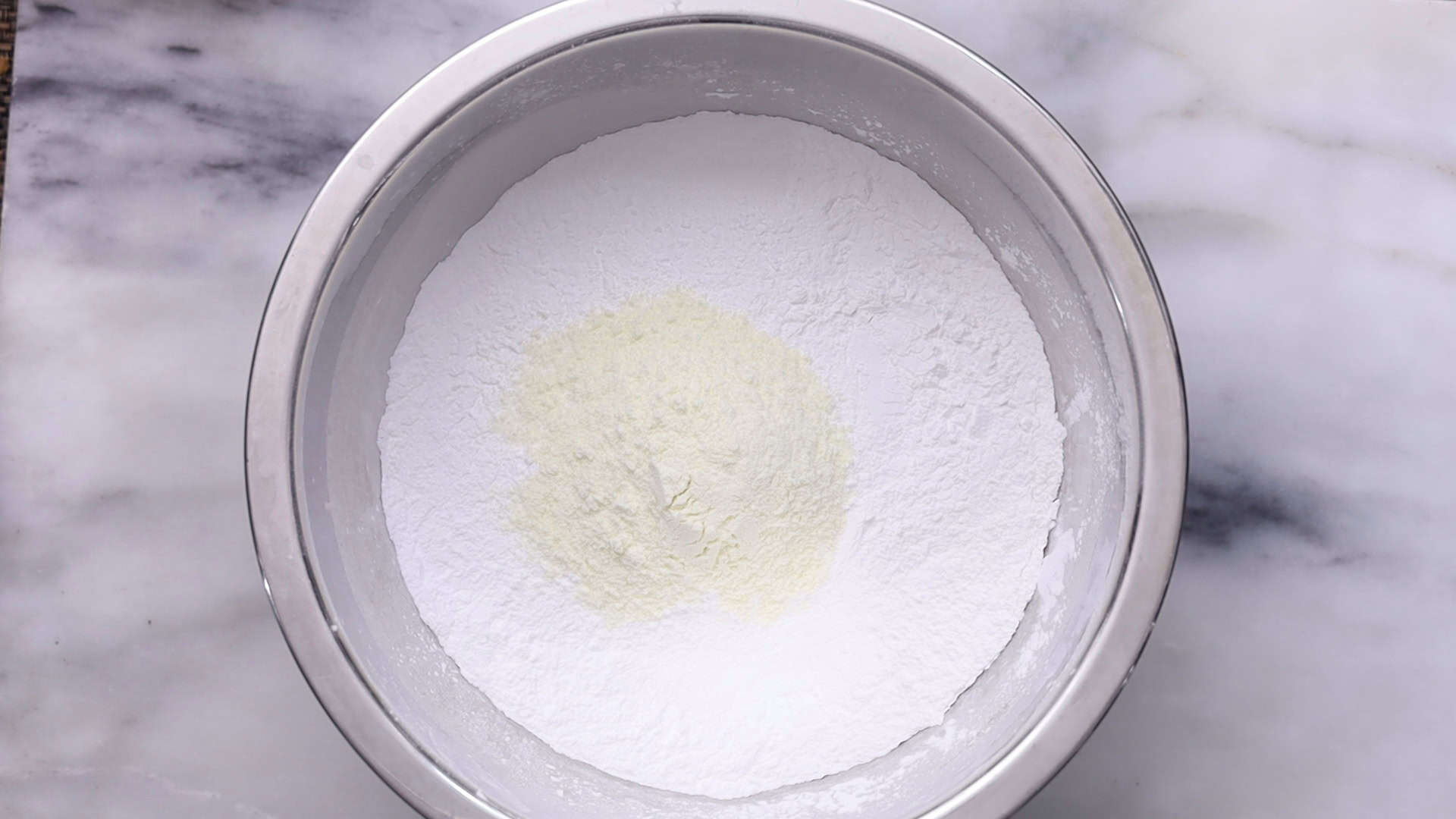
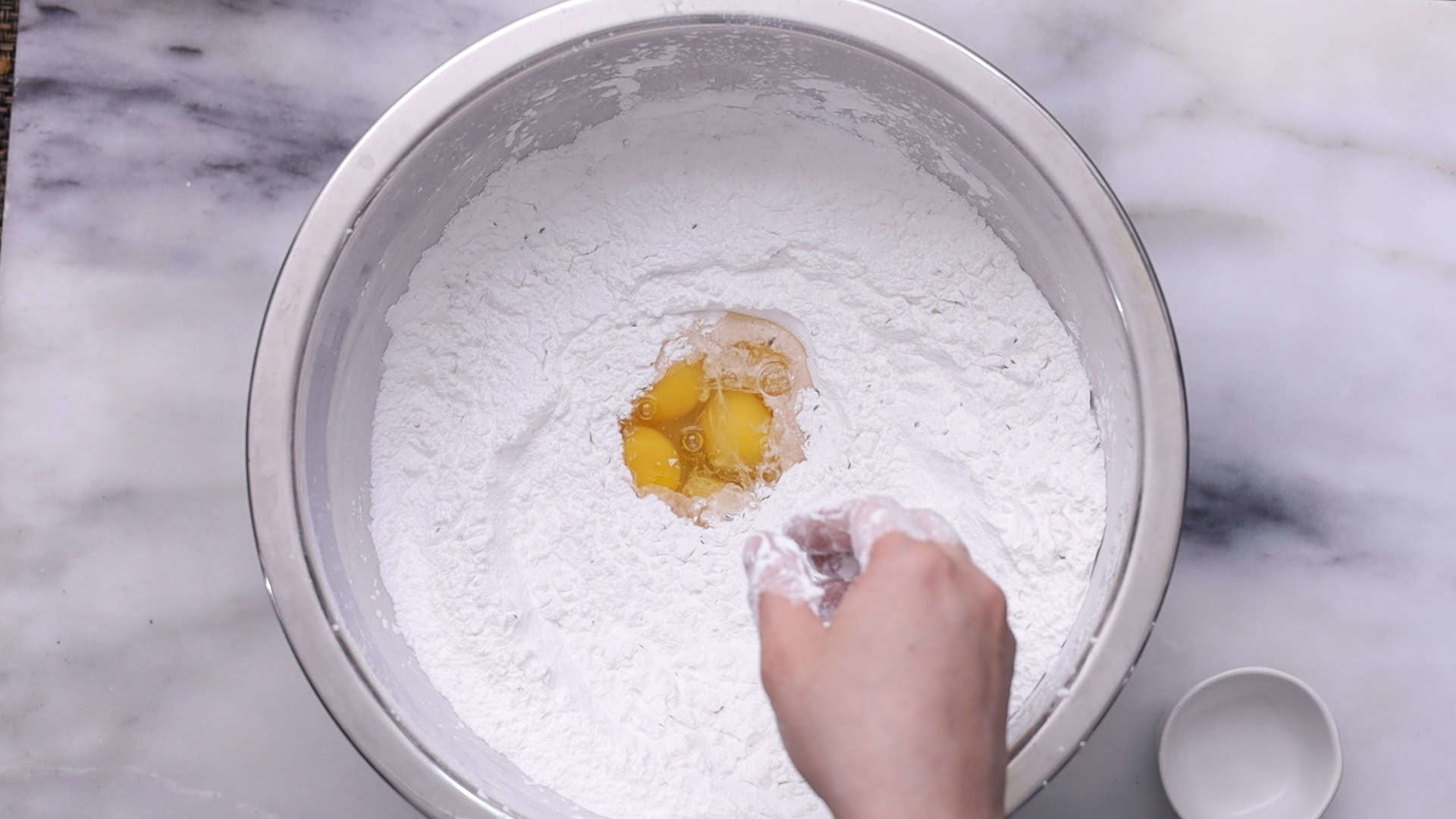
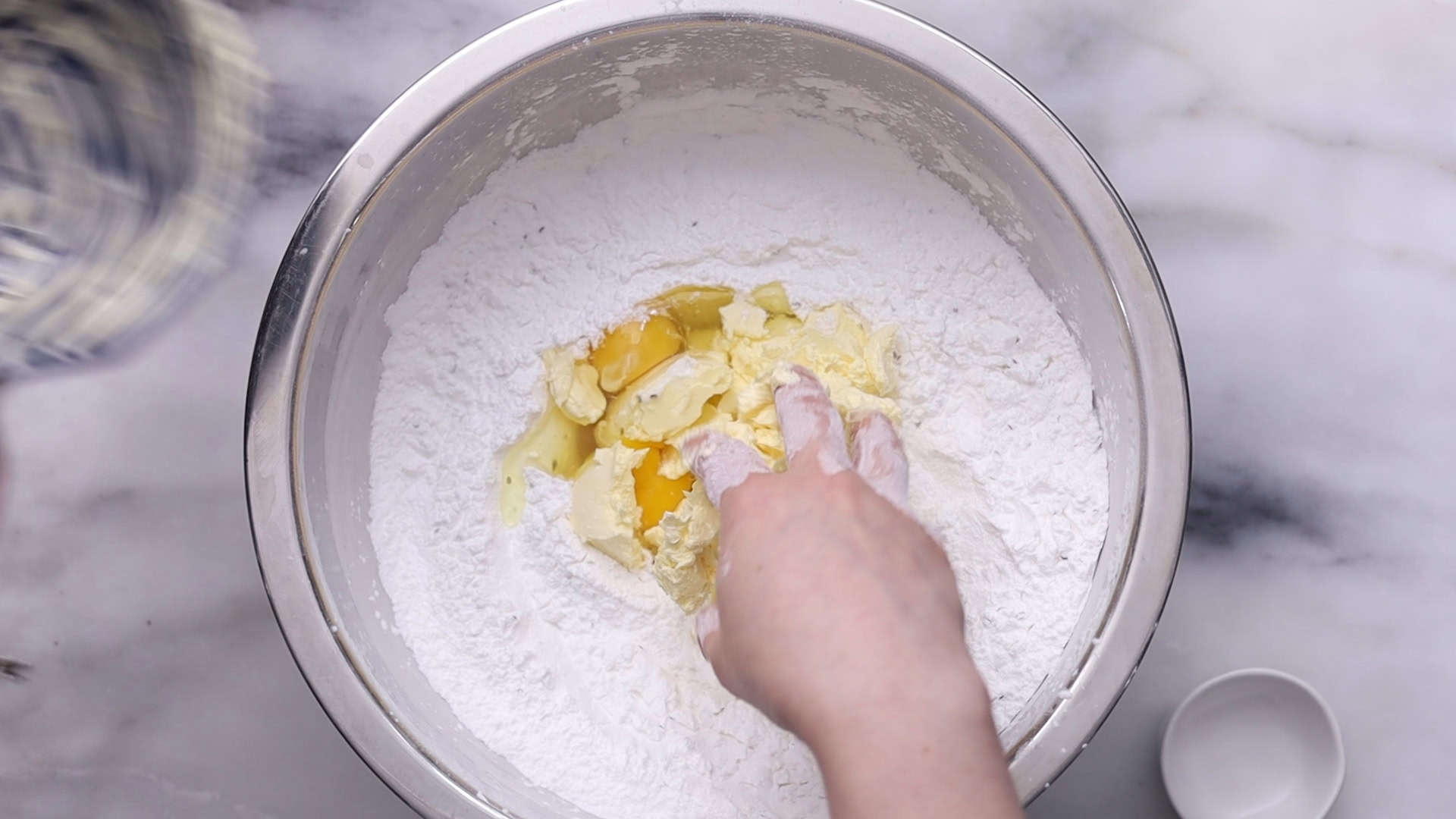
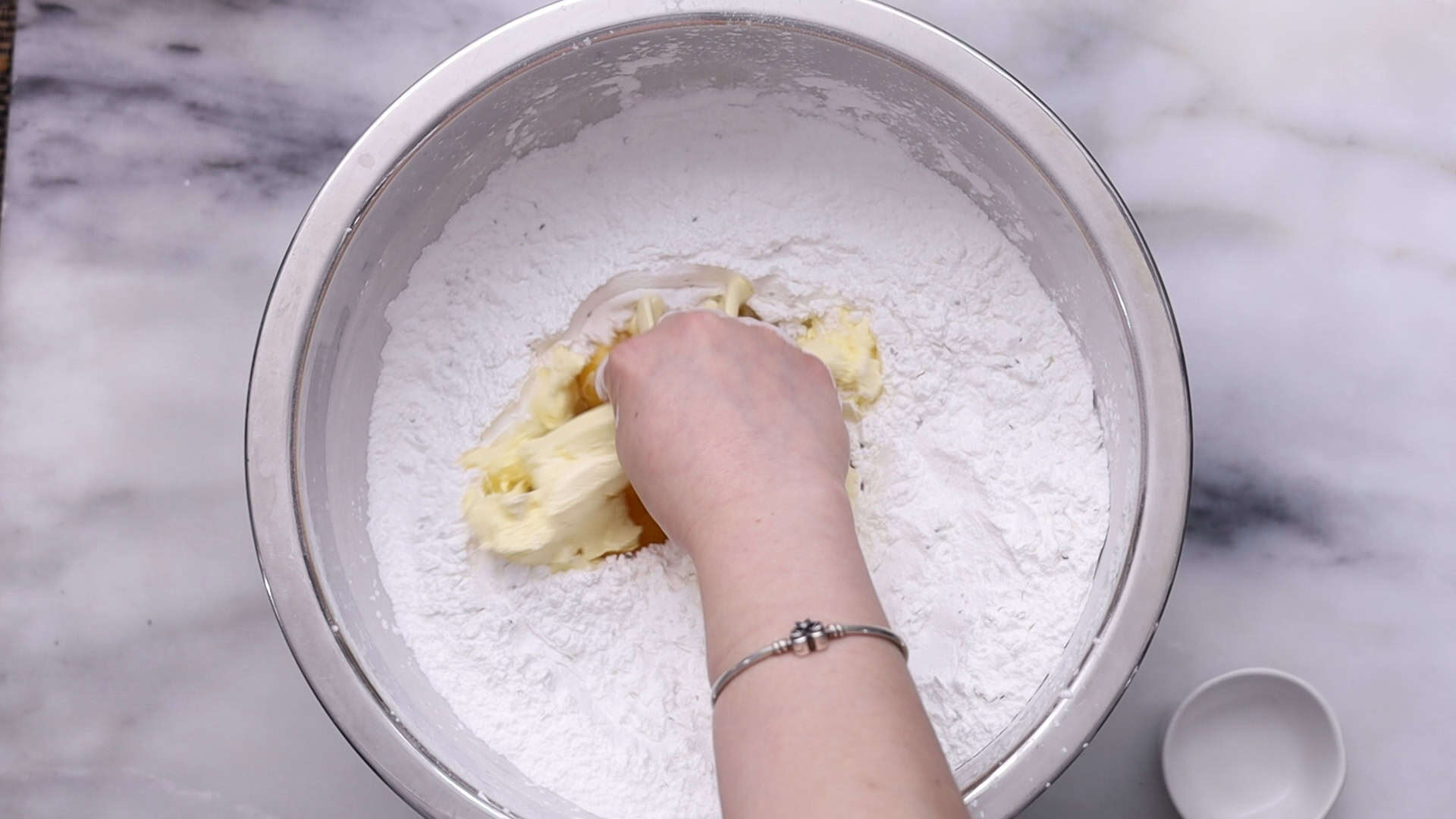
3. Form a well on a clean surface and add butter and eggs; cream them together without incorporating the dry mix yet.
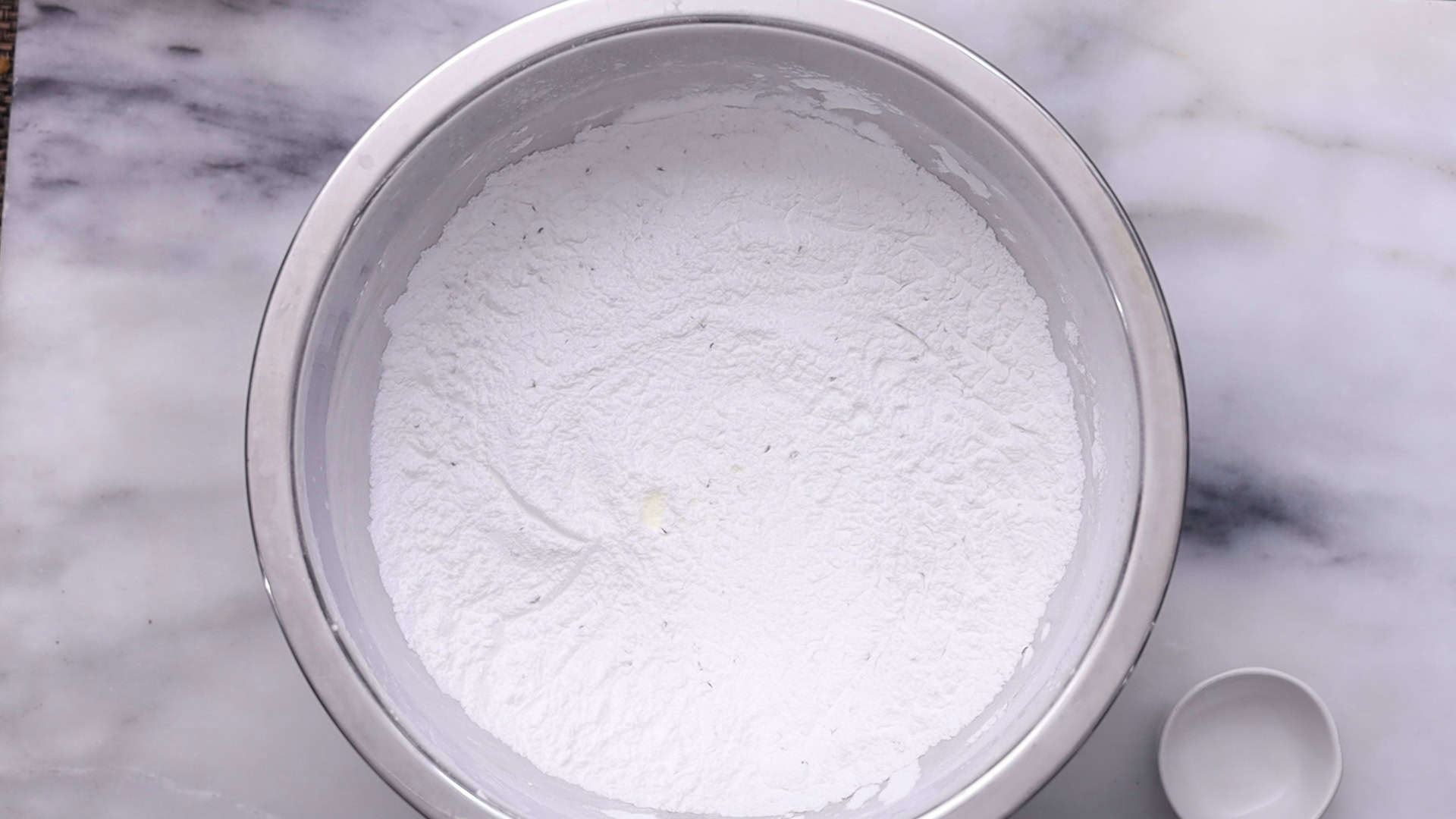
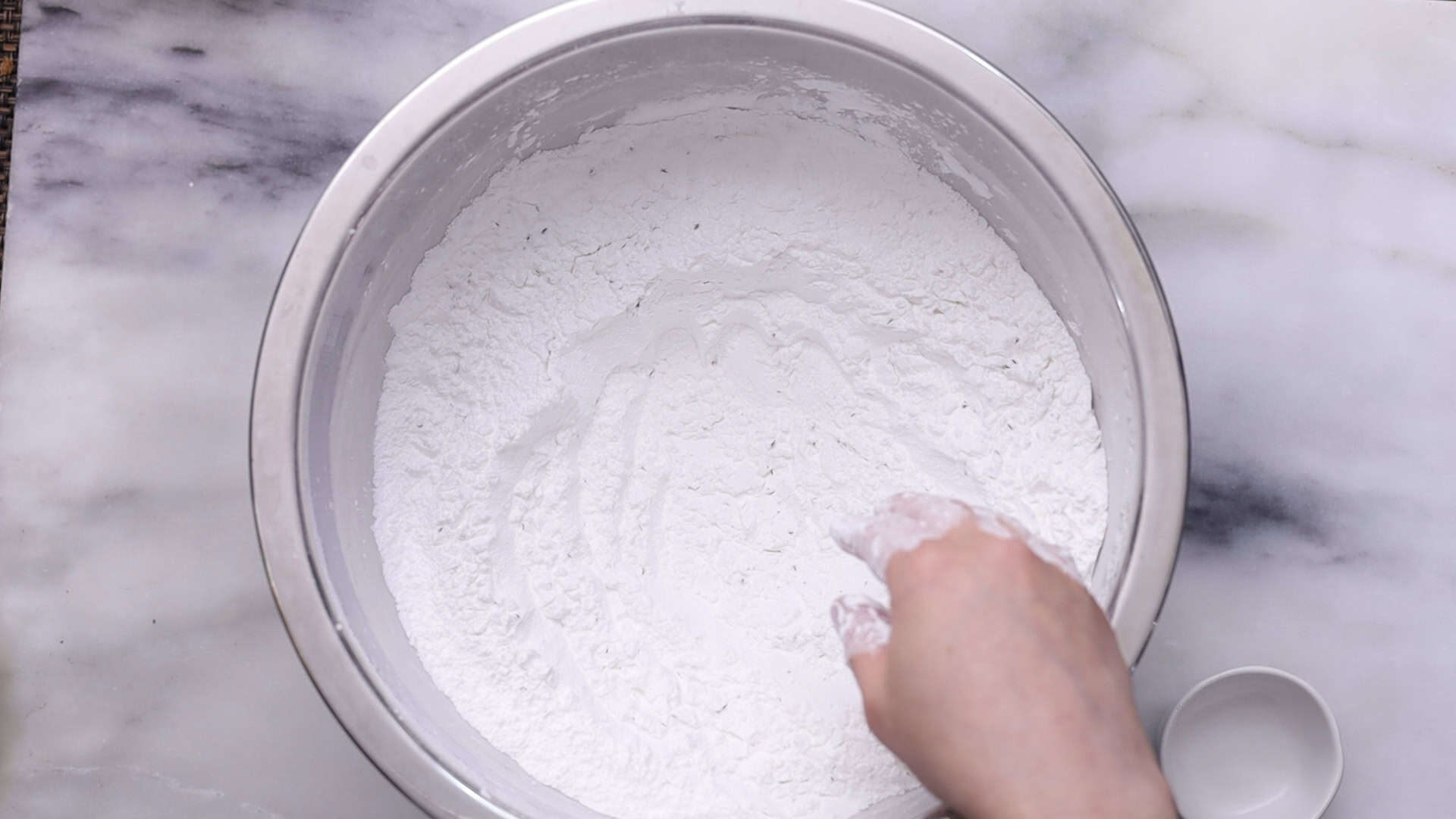
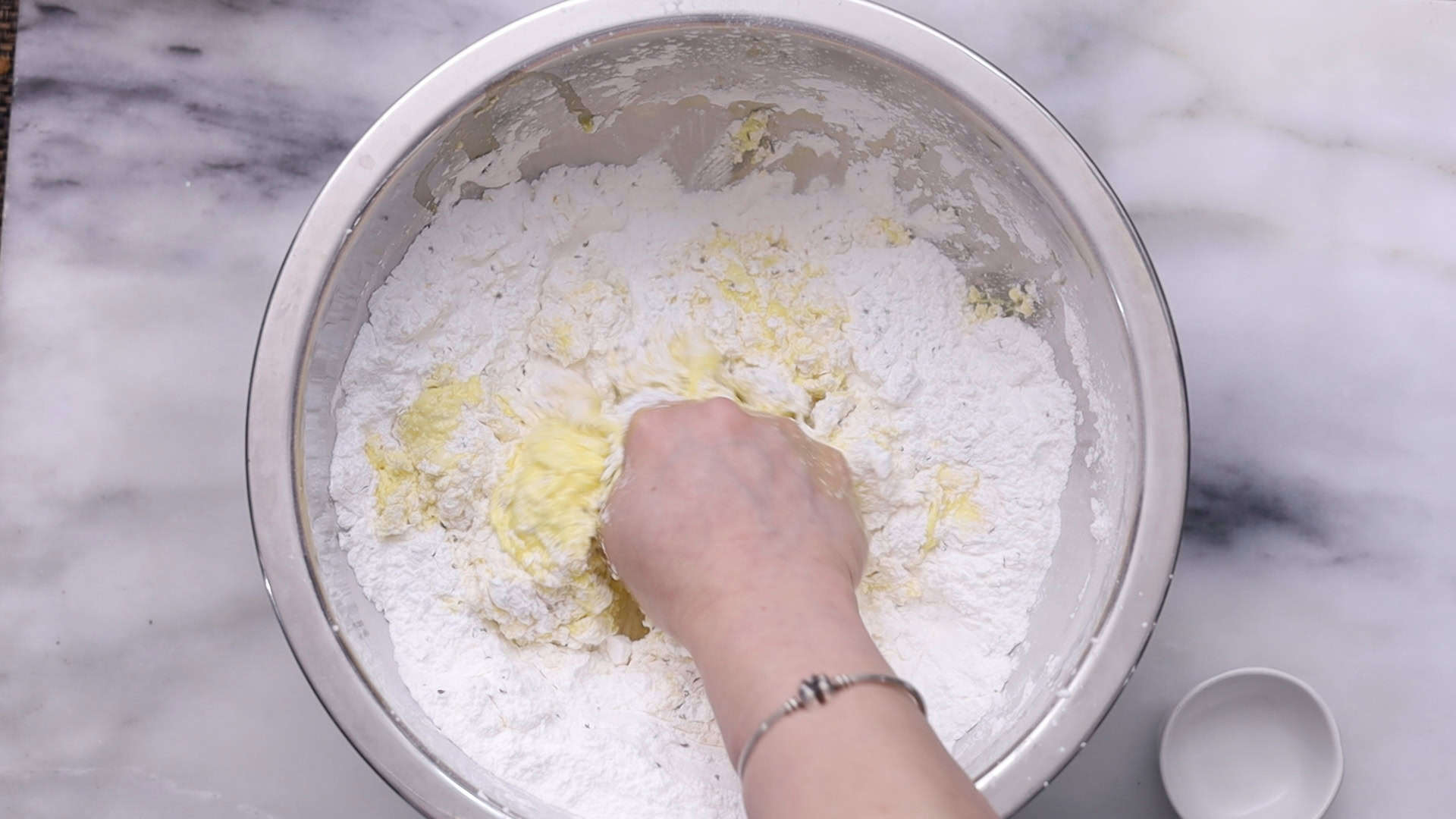
4. Incorporate the dry ingredients gradually until a coarse crumb forms.
5. Add the cheese and mix until it is evenly distributed.
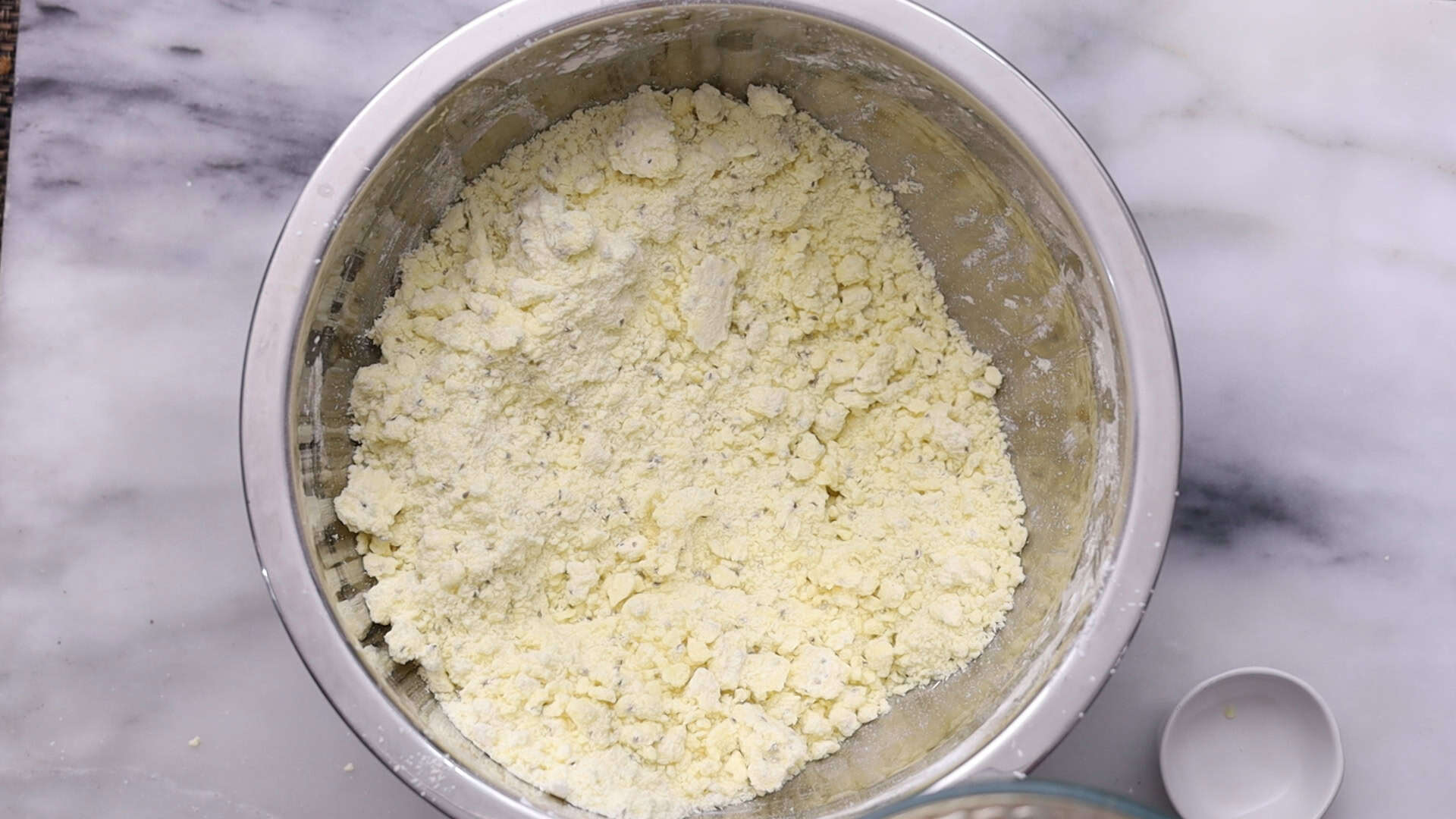
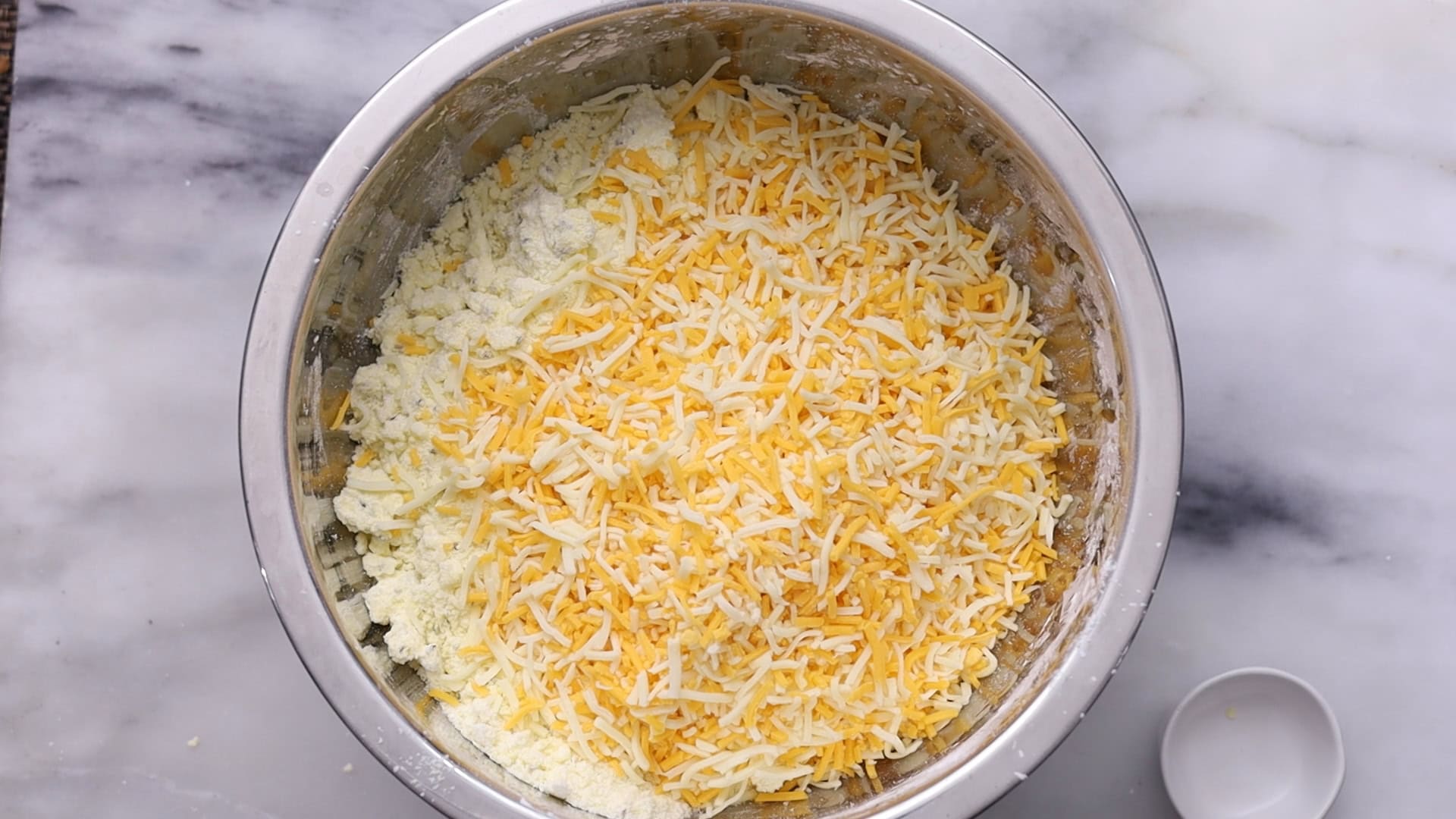
6. Add buttermilk slowly, just enough to bring the dough together. Knead until smooth and homogeneous.
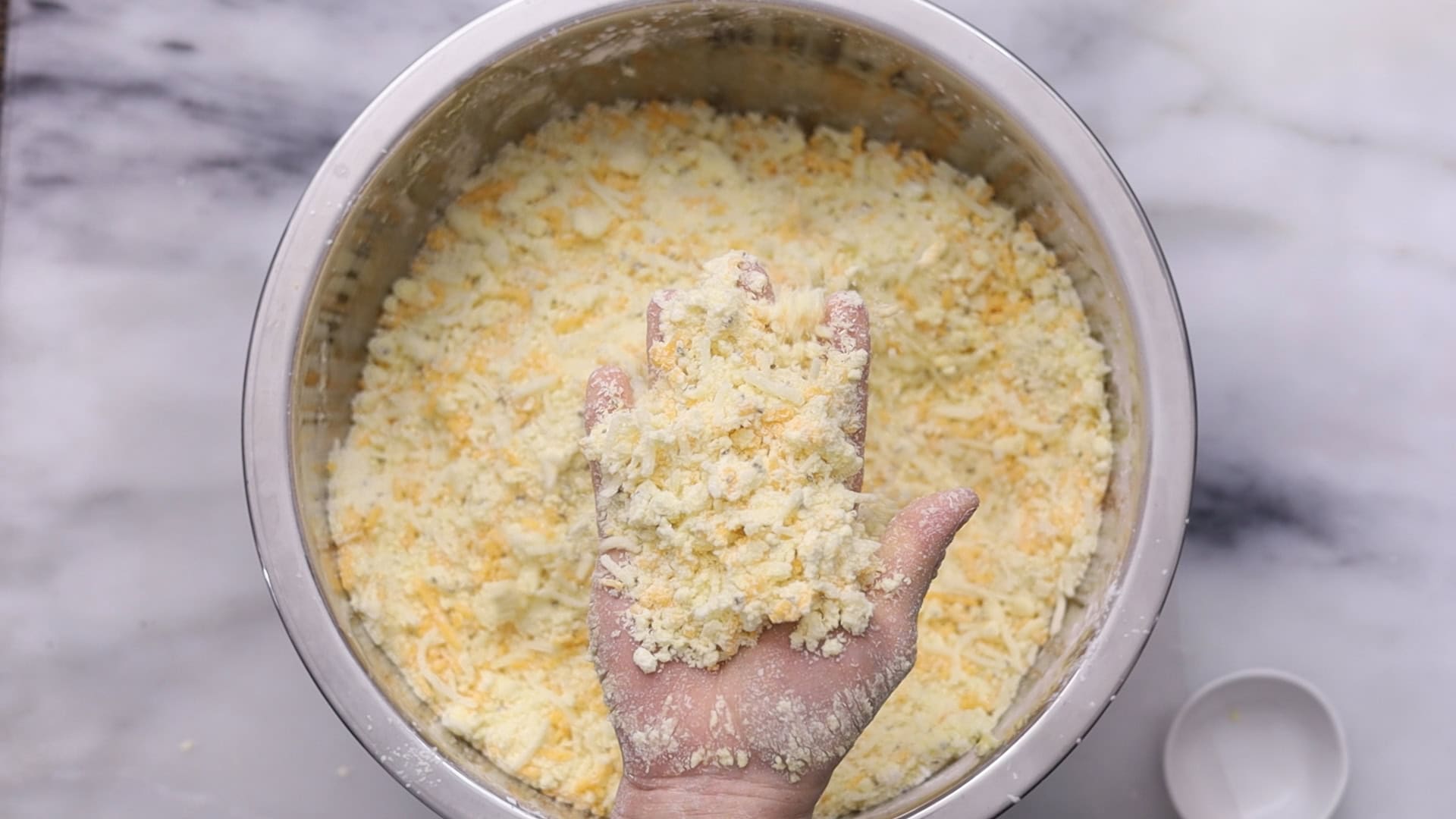
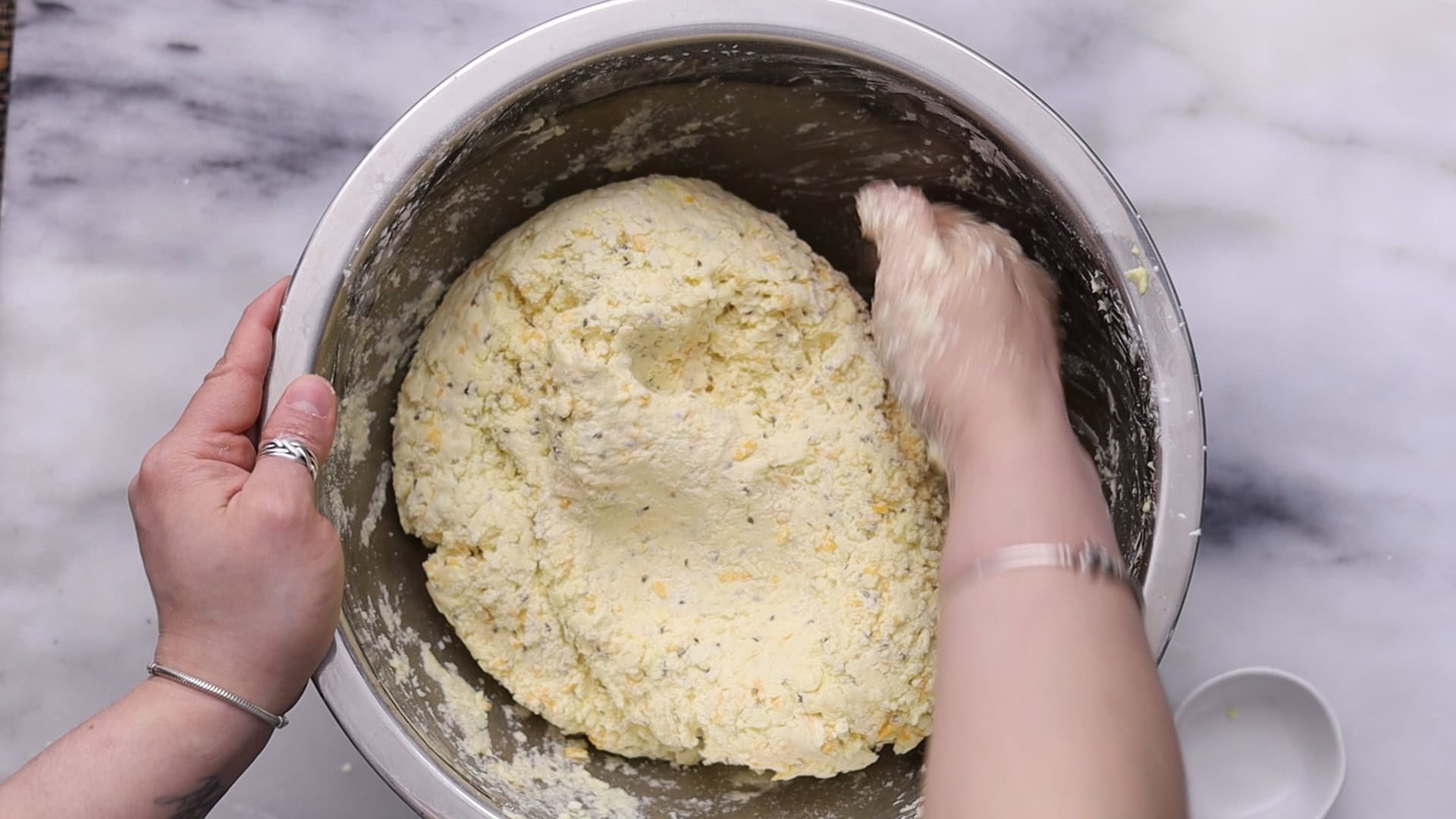
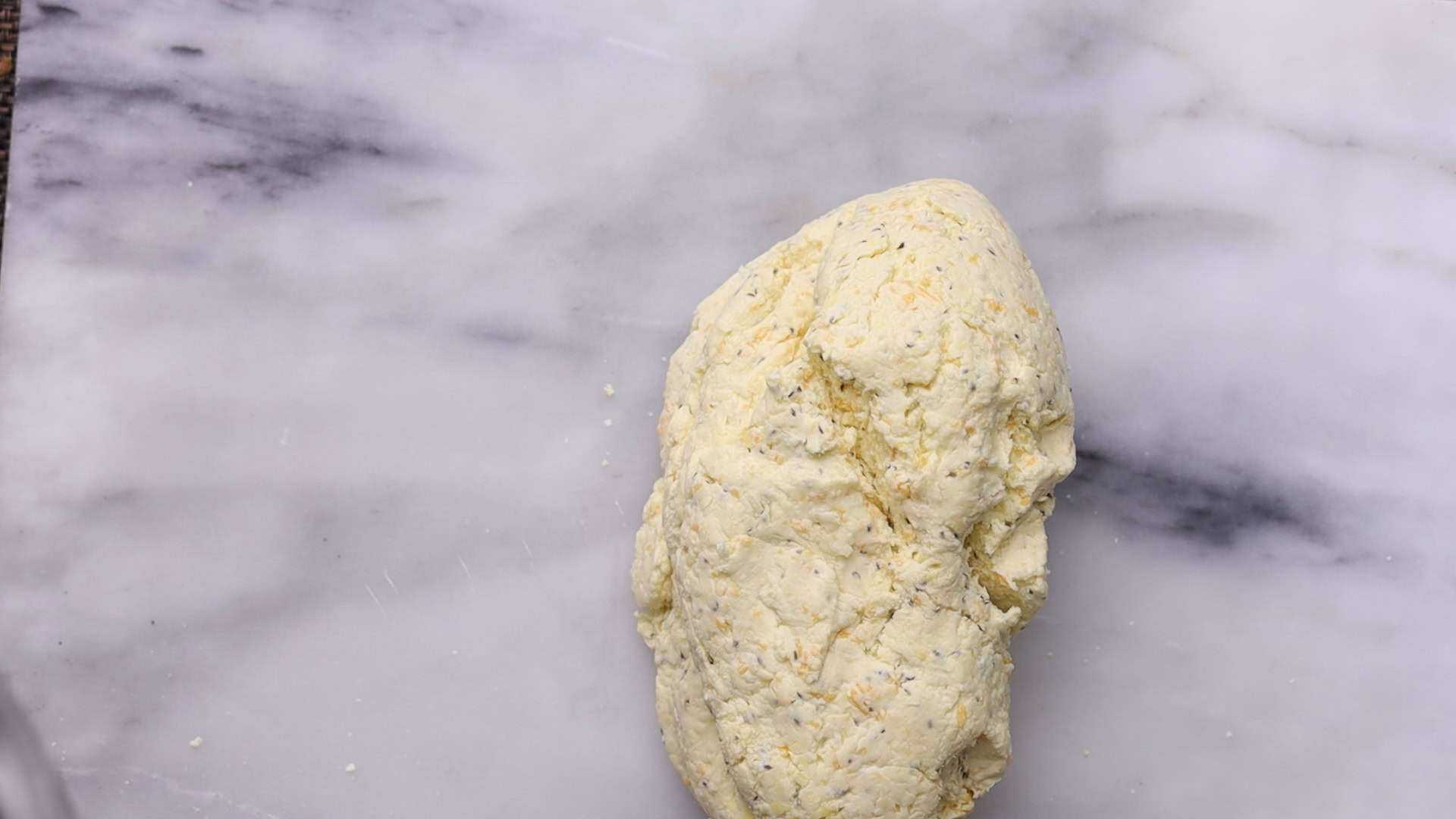
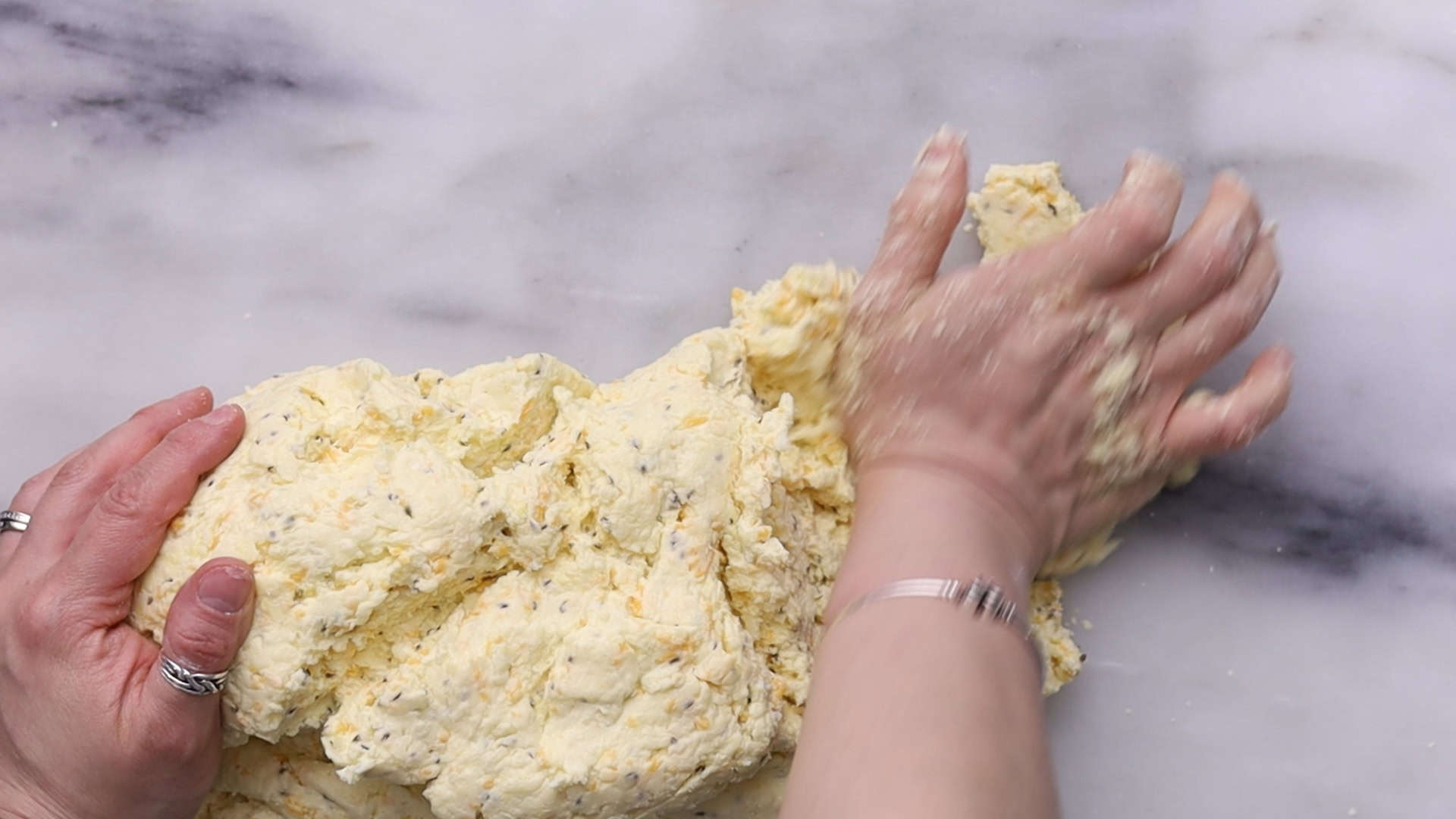
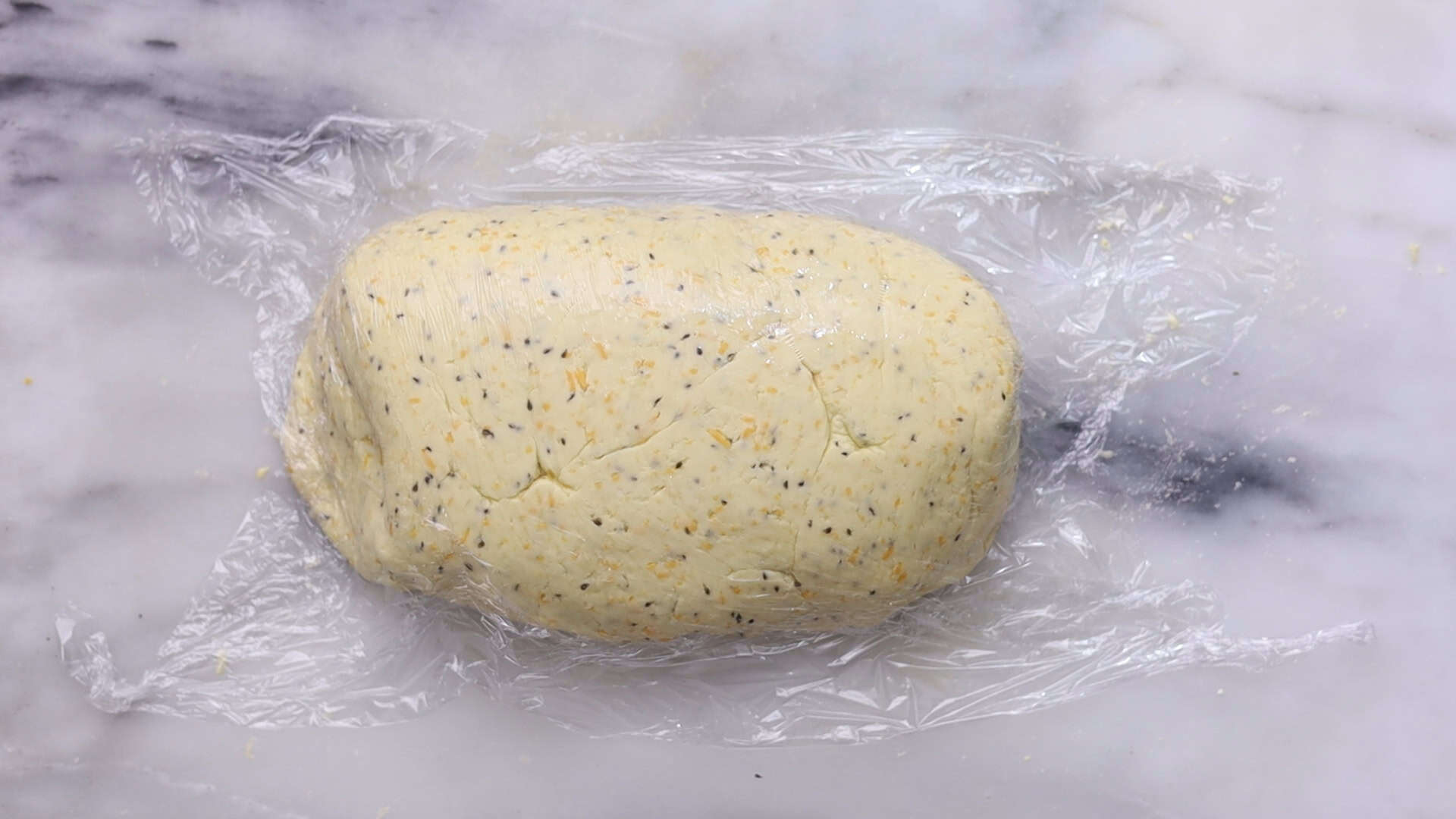
7. Rest the dough covered for 15-20 minutes.
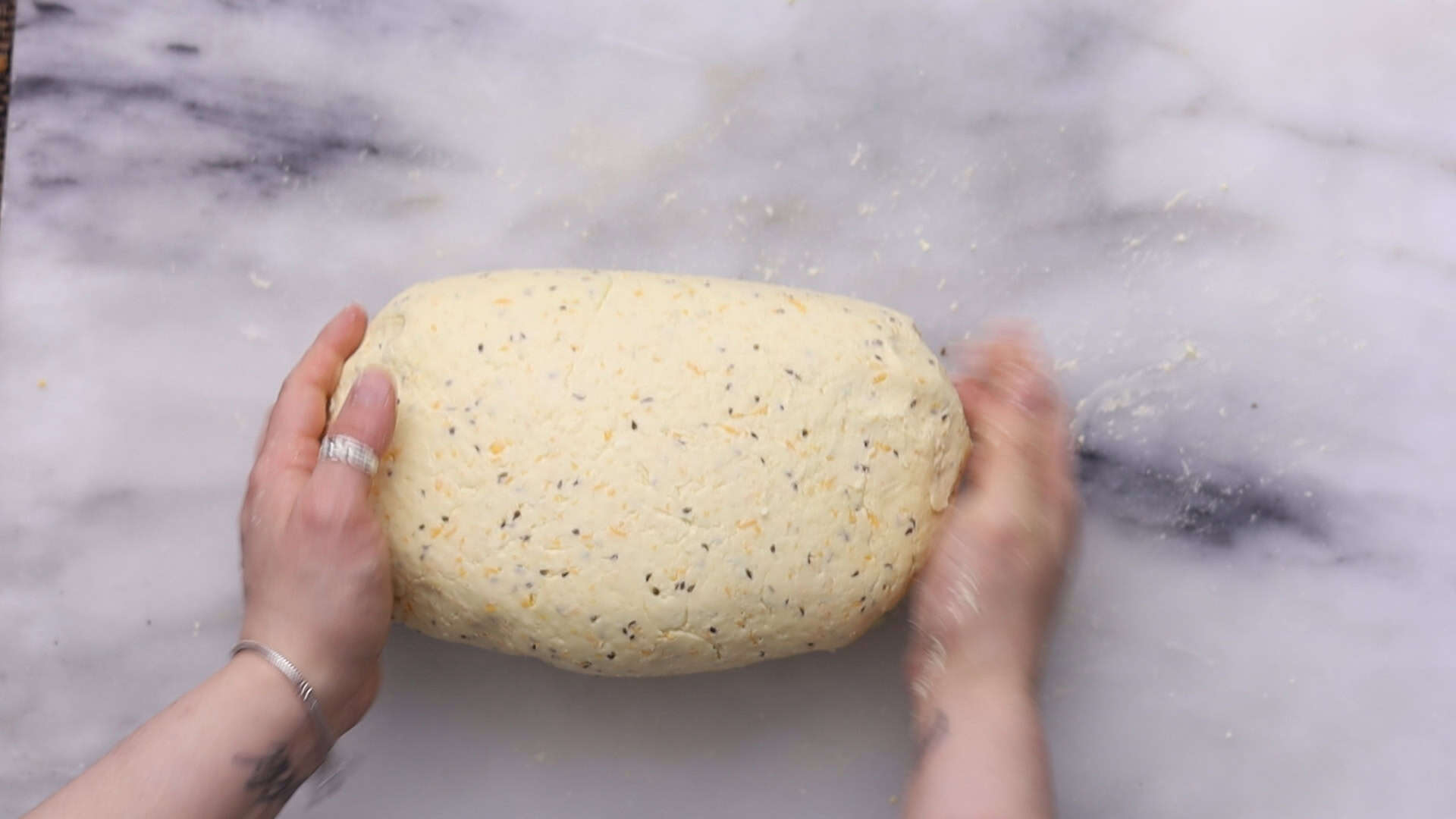
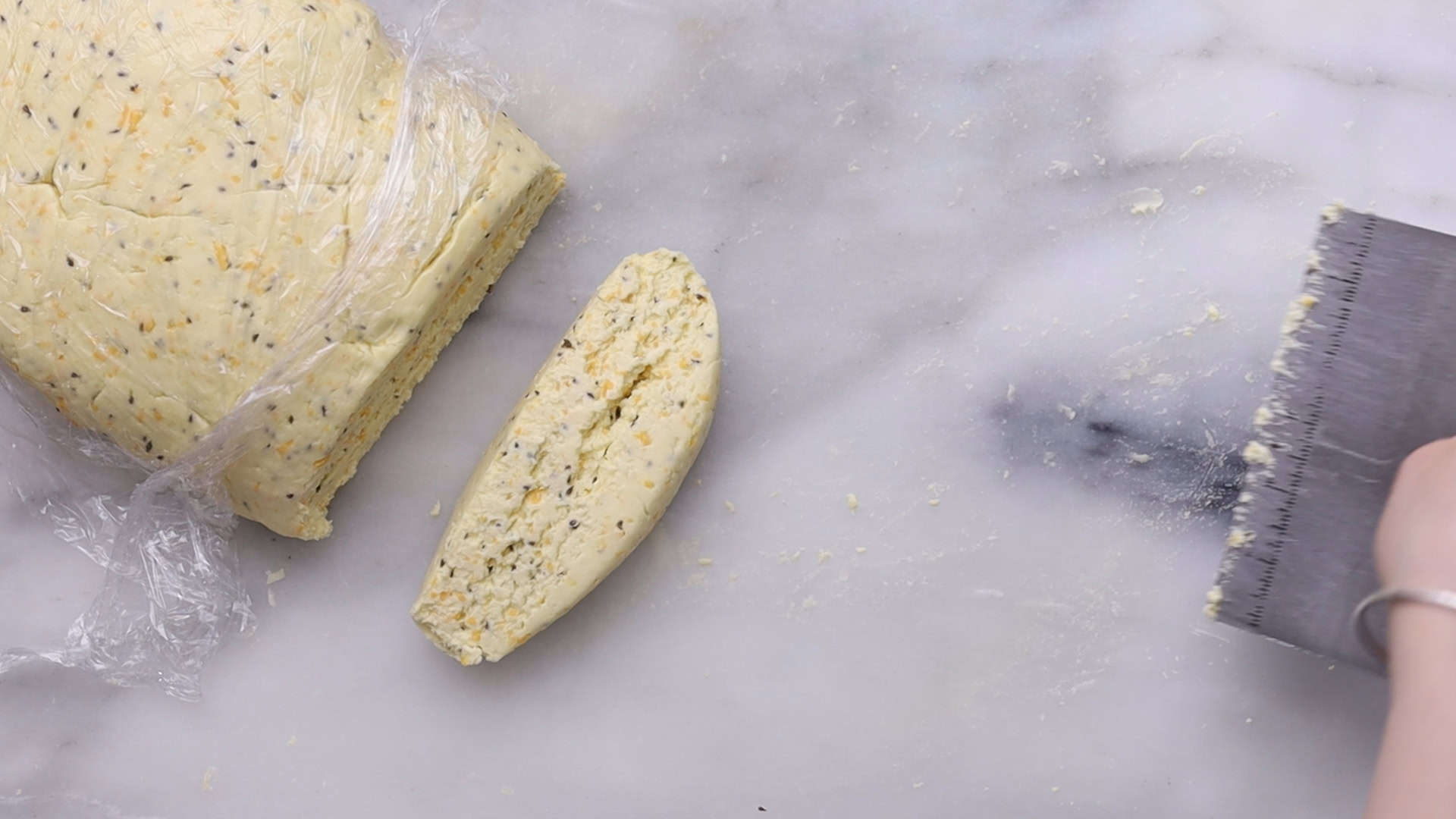
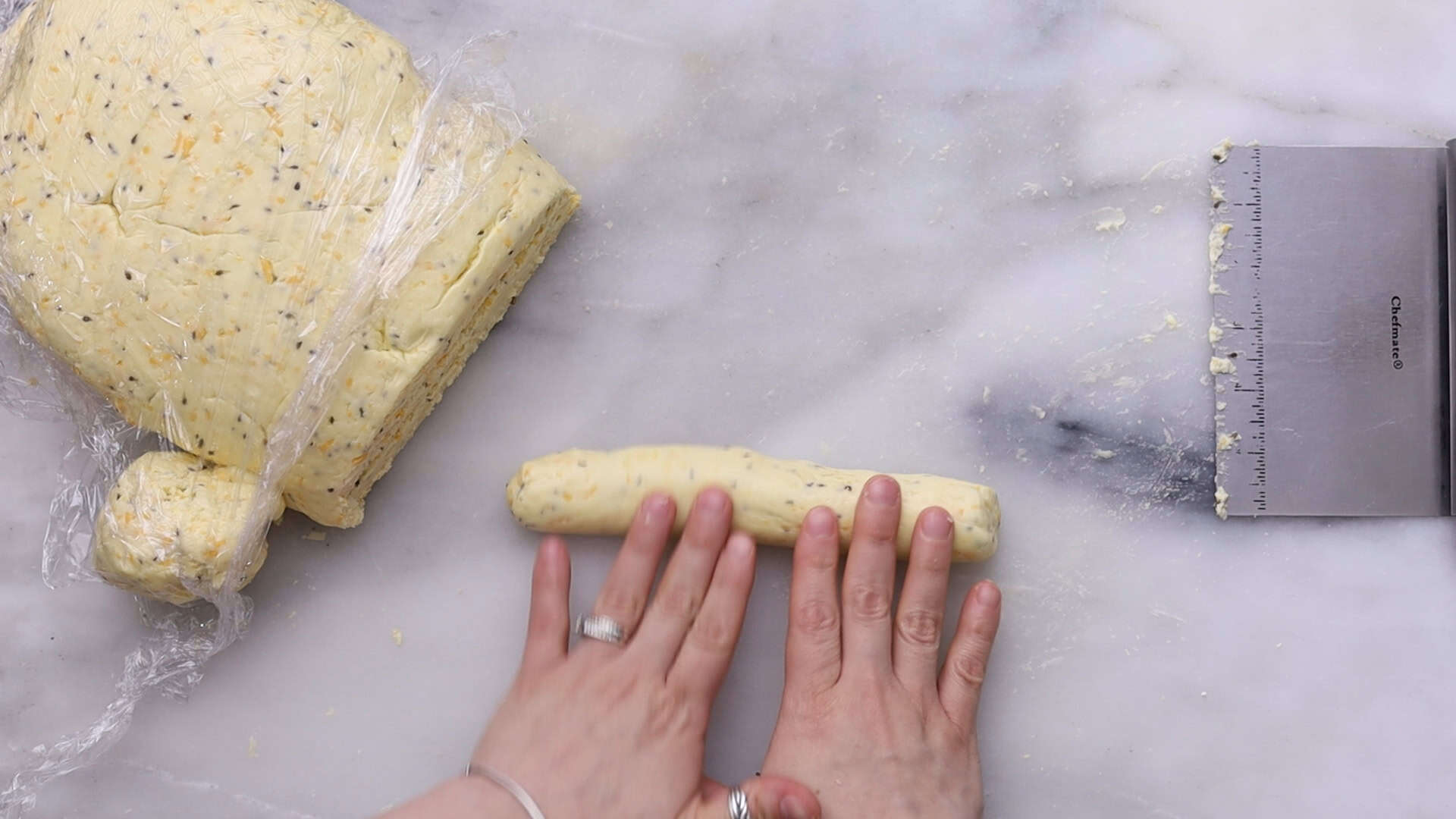
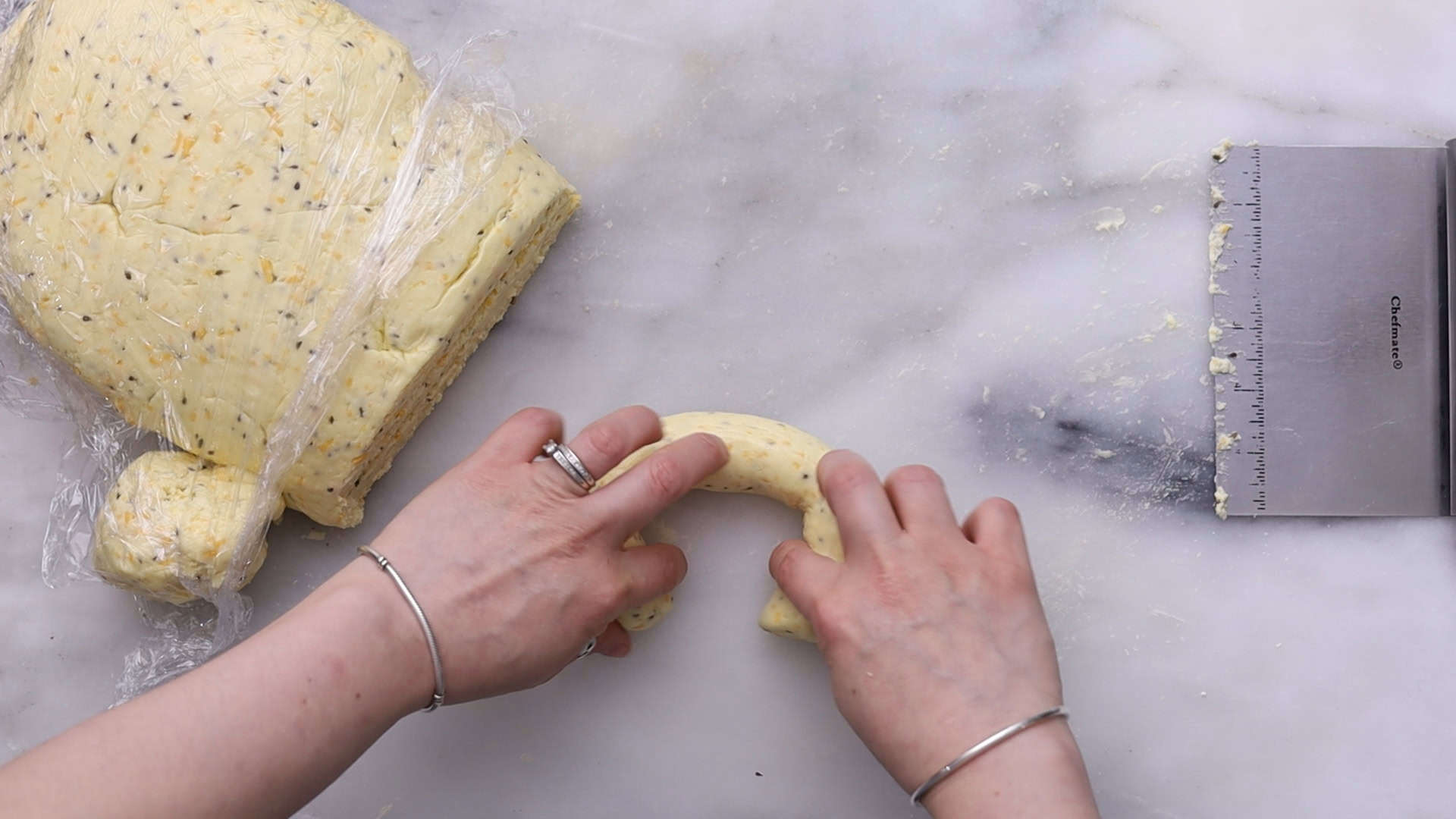
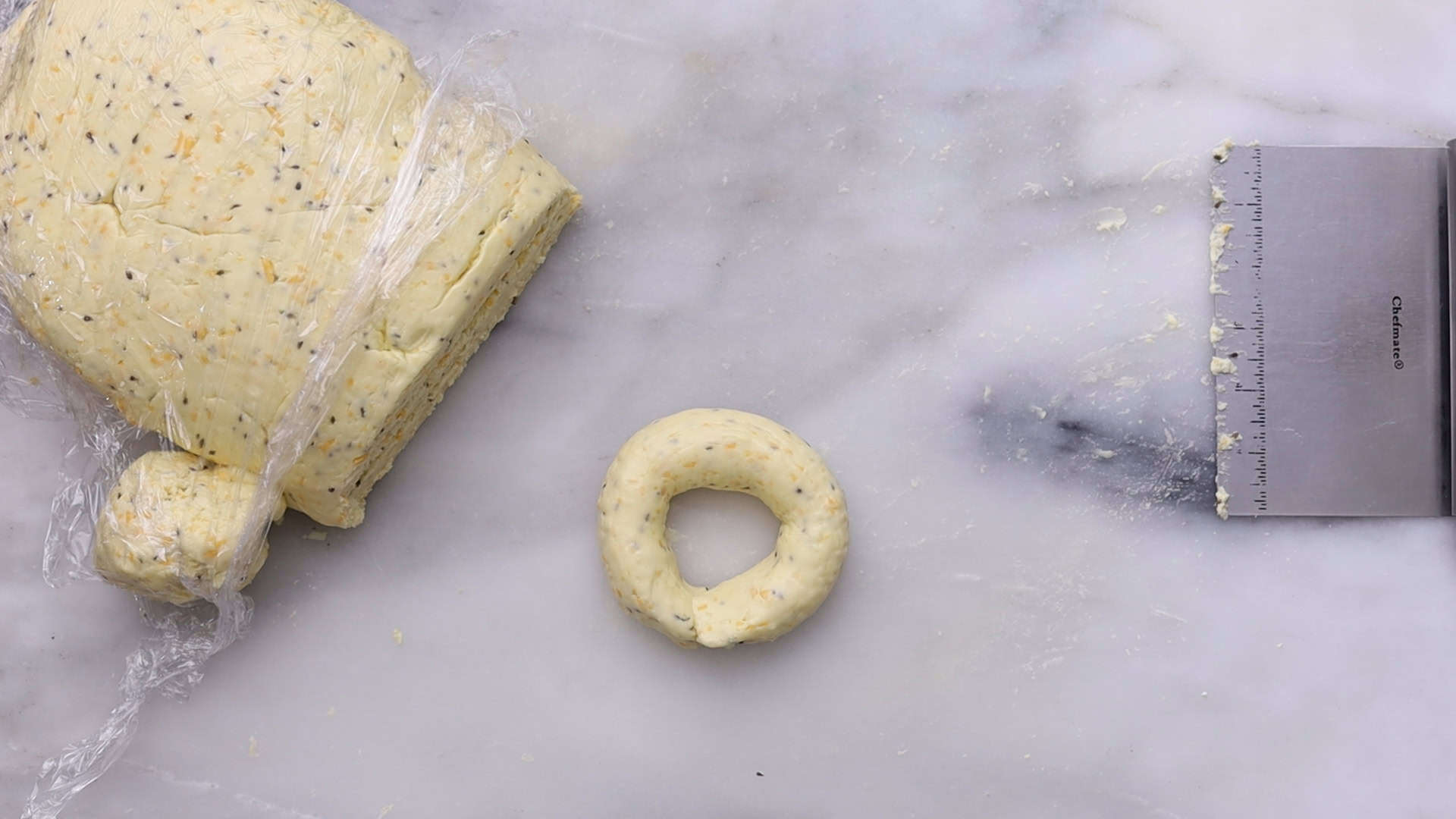
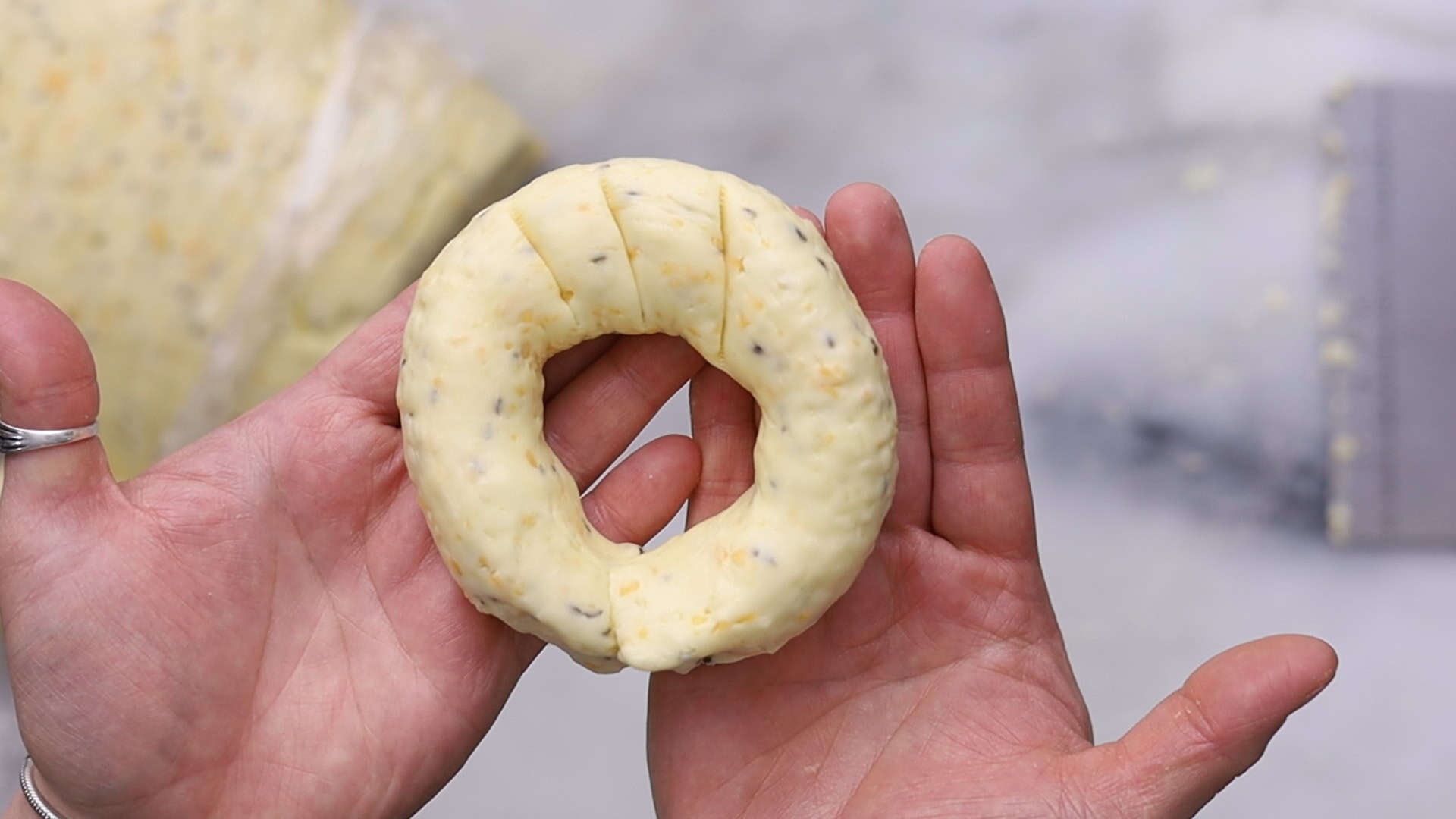
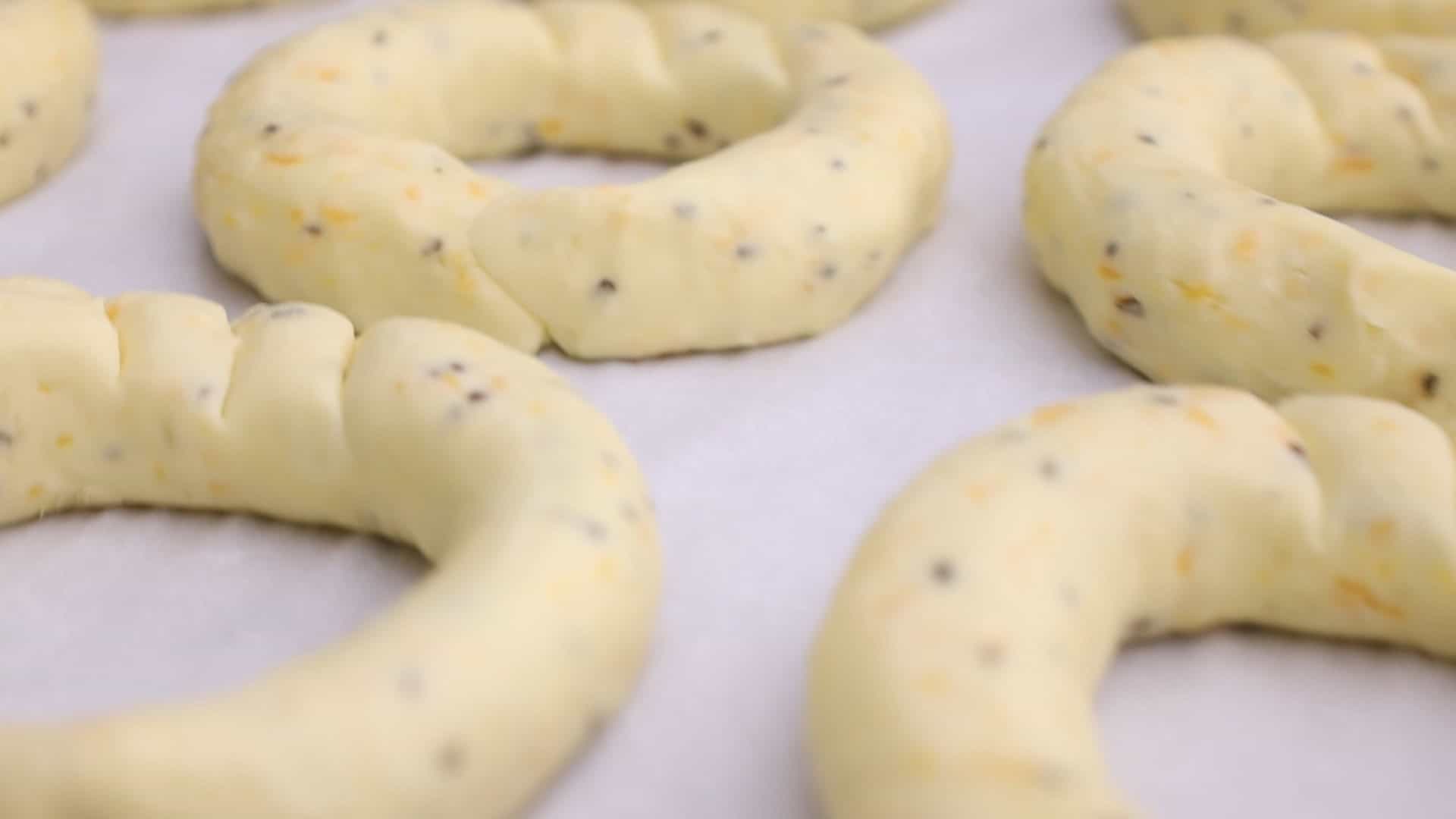
8. Shape into 130g portions, roll into 8-inch logs, and form into rings. Press to seal.
9. Arrange on baking sheets, leaving space between each.
10. Bake for 12-15 minutes until golden and puffed. Serve immediately.
Watch Recipe Video
🧺 Chipa Variations
Chipá has evolved into various versions over time due to the fusion of Cario-Guaraní and Spanish cultures.
These varieties, each with unique ingredients and preparation methods, contribute to the rich diversity of Paraguayan cuisine. Some of the notable variants include:
- Chipa Aramirõ: This is the classic manioc flour-based chipa, often simply referred to as "chipa." Its ingredients typically include cassava starch, semi-hard or Paraguayan cheese, pork fat, margarine or lard, and anise seeds.
- Chipa Mestizo: This variant is widely known in Paraguay. It gets its name from the mix of corn flour (cornmeal) and cassava starch used in its preparation.
- Chipa Four Cheeses: This version is filled with a variety of cheeses, including Mozzarella, Catupiry, Paraguayan Cheese, and sandwich cheese.
- Chipa Chutita: A variation of the Chipa Mestiza, it includes cornstarch and baking powder, and is filled with traditional "chorizo misionero," cheeses, onions, red peppers, and other seasonings.
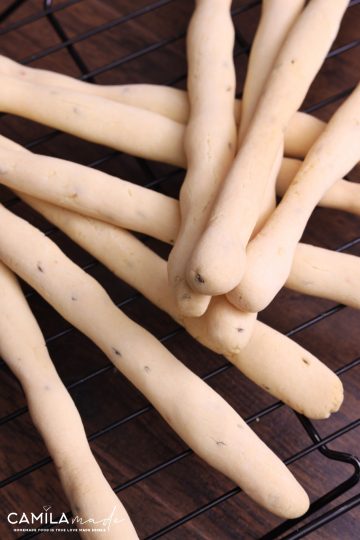
- Chipa Asador, Caburé, or Mbocá: This elongated, hollow variant is cooked over embers around a stick, resulting in a unique texture.
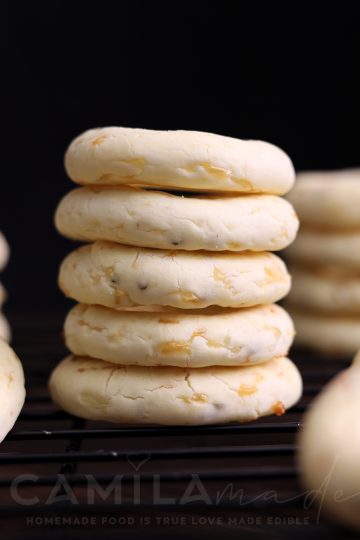
- Chipa Pirú (Chipita): Chipa pirú is a small, crispy donut-shaped treat, approximately two centimeters in diameter, commonly enjoyed as a breakfast or snack. Its name, 'pirú,' refers to its dry and thin texture, setting it apart within the chipa family.
- Chipa So'o: This variant includes a filling of seasoned meat, typically beef, and is shaped like a large cookie with the meat and chopped egg filling.
- Chipa Guasu (Chipa Guazú ): A substantial corn cake, "guasu" meaning 'big' in Guarani, made from fresh corn and eggs.
- Chipa Jasmine: This lighter variant combines cassava starch with wheat flour and includes cheeses, pork fat, and eggs.
- Chipa Manduví: "Manduví" means "peanut" in Guarani, and this chipa is made with a mix of cornmeal and ground peanuts.
- Chipa Rorá: Prepared using the husk of corn seeds after straining.
- Chipa Paquita: A variation of chipa made using wheat flour instead of cassava starch. It's a type of bread filled with cheese.
What is a substitute for queso Paraguay?
Traditional Chipa is made with Queso Paraguay, also known as Queso Paraguayo or Kesu Paraguái. This soft, slightly acidic cheese is a staple in Paraguayan cuisine.
If you can't find Queso Paraguay, no worries! Any mild-textured cheese, soft or semi-hard, can be a good substitute. Here are some I've tried that work well:
- Mexican Blend
- Mild Cheddar
- Monterey Jack Cheese
- Mozzarella Cheese
- Frying Cheese (Queso de Freir)
- Queso Panela
- Queso Blanco
- Queso Fresco
Based on my experience making chipa, I've found that while you can use almost any type of cheese, it's important to be cautious with saltier varieties, such as Parmesan, as they can overpower the flavor and make the chipa too salty.
Fun Fact: Did you know that Chipa is culturally recognized as an icon of Paraguayan culture? Law No. 5267/2014 declares Chipa as the national food of Paraguay and establishes the second Friday of August each year as the "National Chipa Day."🎉
Storage, Make Ahead, & Freezing
Storage: Chipa Almidón is best enjoyed warm, straight from the oven. However, leftovers can be stored in an airtight container or sealed plastic bag at room temperature for up to 3 days or in the refrigerator for up to 5 days.
To reheat, warm briefly in the microwave for a few seconds or wrap in aluminum foil and heat in a 350°F (175°C) oven until just heated through. Avoid overheating, as it can cause the bread to become tough.
Make Ahead: You can prepare the dough a day in advance and store it covered in the refrigerator. When ready to bake, let the dough sit at room temperature for about 15 minutes, then proceed with shaping and baking as directed.
Alternatively, shape the dough into rings and place them on a parchment-lined baking sheet. Cover and refrigerate for up to 24 hours before baking.
Freezing: To freeze, shape the dough as instructed and freeze the unbaked chipa on a parchment-lined tray until firm. Once frozen, transfer to a freezer-safe bag or container, removing any excess air. Label and store for up to 2 months.
When ready to bake, place the frozen chipa directly on a baking sheet and bake as directed, adding a few extra minutes to the baking time.
Camila's Tips and Advice
- Since the recipe is gluten-free, there's no risk of over-kneading. Just make sure to mix the ingredients thoroughly for even distribution, which helps make the chipas lighter.
- If you want to prepare a larger quantity, just double the recipe and follow the preparation instructions.
- The right consistency is crucial for making good chipa; the dough should be compact and moist but not overly wet.
- To ensure the chipá is soft and well-aerated, it's important to knead the dough thoroughly and then shape it.
- Let the chipa dough rest for 15 to 20 minutes to properly rehydrate.
- You can make chipa in any shape and size you want.
- The amount of units you get depends on the size you make your chipa.
- Place each Paraguayan cheese bread on the prepared baking sheet and cover them with a clean kitchen cloth to prevent them from drying out while you finish shaping all the pieces of dough.
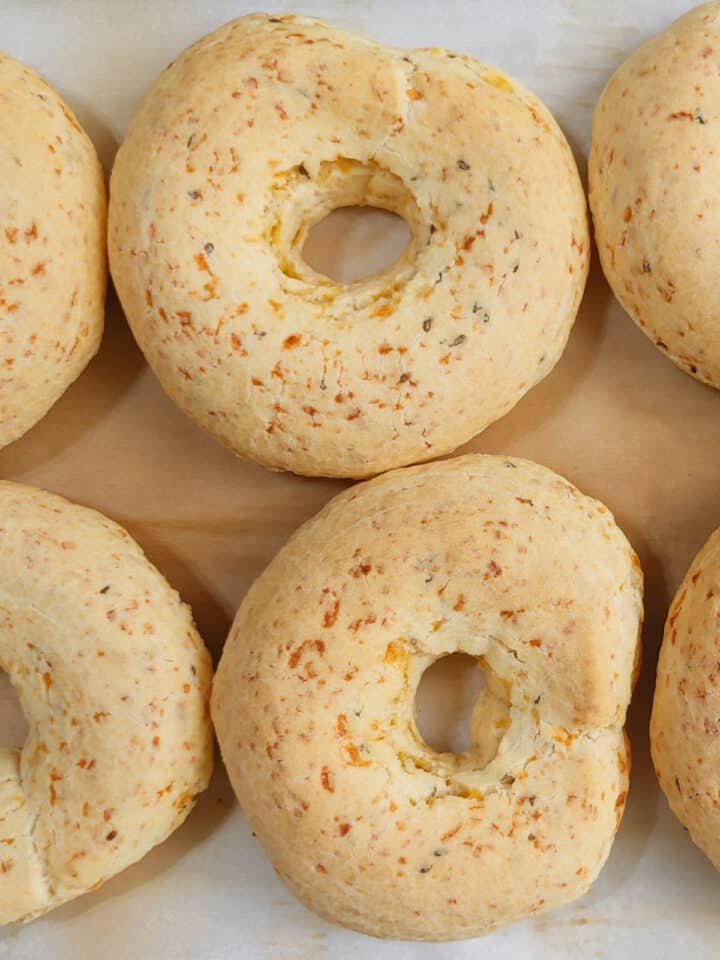
- It's important to preheat the oven and ensure it reaches a very high temperature. Chipas should not be left in the oven for too long to prevent dehydration. Since ovens vary, keep an eye on the chipas and remove them when they turn lightly golden, puffed up, and have cheese spots on the surface.
- To keep the chipas soft, when you take them out of the oven, transfer them to a wire rack to cool completely. Store them in an airtight container or zip-lock bag to maintain their freshness.
- Avoid overcooking; 15 to 17 minutes of baking time is sufficient for them to be well-cooked.
Frequently Asked Questions
What is Chipa Almidón?
Chipa Almidón is a traditional Paraguayan cheese bread, similar to Brazilian pão de queijo, known for its naturally gluten-free, chewy texture and subtle anise flavor. It's made primarily with yuca starch (almidón de mandioca), cheese, and a subtle anise flavor.
What kind of flour is used in Chipa Almidón?
Chipa is traditionally made with almidón de mandioca, also known as yuca starch or tapioca starch. This naturally gluten-free starch gives chipa its signature chewy texture.
In some versions, like Chipa Mestizo, yellow cornmeal is added for structure and a rustic flavor, but tapioca starch remains the core ingredient in most traditional recipes.
What does Chipa Almidón taste like?
Chipa has a flavor and texture similar to Brazilian pão de queijo, with a few subtle differences. It has a chewy, dense interior and a lightly crisp exterior. What sets chipa apart is the occasional addition of anise seeds.
Pair with

You may also like

Recipe
Chipa Almidón
Ingredients
- 1 kg yuca starch (also known as tapioca starch)
- 300 g butter at room temperature
- 6 large eggs , at room temperature
- 3 teaspoons kosher salt , or to taste
- 200 ml buttermilk or whole milk
- 700 g shredded Mexican cheese or crumbled Queso Panela Basket (such as El Viajero) or Queso de Freír ("fresh white cheese for frying," such as Tropical brand)
- 20 g (2 tablespoons) anise seeds, or to taste
- 30 g (2 tablespoons) baking powder
Instructions
- Preheat the oven to 500°F (260°C) and line two 13x18x1-inch baking sheets with parchment paper.
- In a large mixing bowl, combine the tapioca starch, salt, anise seeds, and baking powder.
- Transfer the dry mixture to a clean work surface and form a well in the center. Add the softened butter and eggs to the well. Using your fingers, cream the butter and sugar together thoroughly, being careful not to incorporate the dry ingredients just yet.
- Once the wet ingredients are well creamed, gradually incorporate the dry mixture until a coarse crumb forms.
- Add the cheese and mix until evenly distributed throughout the dough.
- Slowly pour in the buttermilk, a little at a time-just enough to make the dough easy to knead without becoming too soft. Knead until the dough is smooth and homogeneous.
- Note: You may not need all the buttermilk. If the dough becomes too soft or sticky, add a small amount of tapioca starch to balance it out.
- Using the heel of your hand, knead the dough by pushing it away, then gathering it back with a bench scraper. Continue this motion for 4-5 minutes until the dough is smooth and uniform and no longer sticks to your hands or the work surface. The texture should resemble that of soft, pliable playdough.
- Cover the dough with a clean kitchen towel and let it rest for 15-20 minutes.
- Divide the dough into portions of approximately 130 g each. Roll each portion into an 8-inch log, then bring the ends together to form a ring. Slightly overlap the ends and press gently to seal.
- Place the shaped dough rings on the prepared baking sheets, leaving space between each one.
- Bake for 12-15 minutes or until lightly golden and puffed. Do not overbake. Serve immediately for the best texture and flavor.
Watch how to make it
Notes
Nutrition
Nutrition Disclaimer: The nutritional information provided is an estimate, calculated using standard data sources. Actual values may vary based on ingredient brands, preparation methods, and portion sizes. This information is for general reference only and should not be considered a substitute for professional dietary advice.