Rosca de Reyes
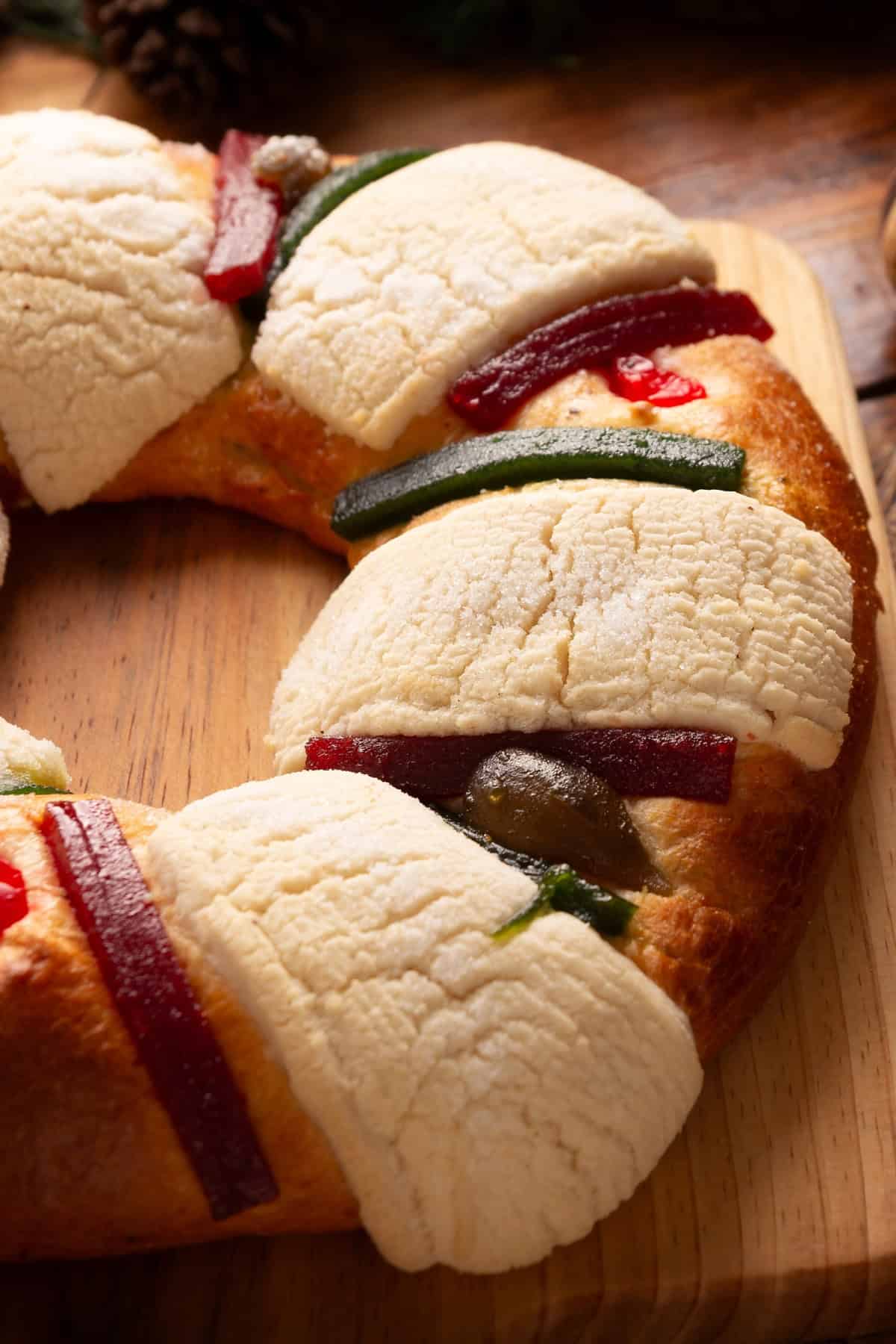
Rosca de Reyes is a traditional Epiphany sweet bread eaten on January 6, Three Kings Day, in many Latin American countries to celebrate the visit of the Three Wise Men to baby Jesus.
Equipment
- Stand mixer with dough hook (or large mixing bowl for hand mixing)
- Microplane or fine grater (for orange zest)
- Bench scraper or knife
- Food processor (for streusel)
- Instant-read thermometer (recommended)
Ingredients
For the dough:
- 280 grams all-purpose flour
- 280 grams bread flour
- 150 grams granulated sugar
- 1 teaspoon kosher salt
- 11 grams instant dry yeast
- Zest from 1 orange , lemon, or lime
- ½ teaspoon orange flower water (optional)
- 150 ml milk
- 3 large eggs
- 2 large egg yolks
- 168 grams unsalted butter at room temperature , cut into 1-inch cubes
For decorating:
- 4 to 8 little “King Cake” babies
- 112 grams unsalted butter , at room temperature
- 28 grams powdered sugar
- 140 grams all-purpose flour
- 2 teaspoons ground cinnamon
- 1 large egg
- 8 oz container guava and/or quince paste
- simple syrup for final garnishes (if using)
- candied orange rind or other candied fruit
Instructions
- Make the dough and overnight rise: In the bowl of a stand mixer, add both flours along with the sugar, salt, and dry yeast.
- Finely grate the citrus zest directly into the bowl. Pour in the milk, add the eggs and yolks, and include the orange blossom water if using.
- Using the dough hook, mix everything by hand just until most of the flour is moistened. Attach the bowl to the mixer and begin mixing on low speed.
- Once the ingredients come together into a cohesive mass, increase the speed to medium-low or medium and knead for about 8 minutes, until the dough looks smooth and well developed.
- (This dough is rich and soft, so it will remain sticky and will not fully pull away from the sides of the bowl.)
- With the mixer running, add the butter gradually, a few pieces at a time, allowing each addition to mostly incorporate before adding more. After all the butter has been added, continue mixing for 3–4 minutes, until the dough becomes more elastic and slightly less sticky.
- Cover the bowl and let the dough rest at room temperature for about 1 hour to initiate fermentation. After that, cover tightly with plastic wrap and refrigerate overnight for a slow, flavor-building rise.
- Shape the rosca and second rise: The next day, remove the dough from the refrigerator about 1 hour before shaping so it can begin to warm slightly.
- Turn the dough out onto a lightly floured surface and gently press it into a rectangle about 5 inches wide and 12 inches long.
- Using a rolling pin, roll the dough into a long rectangle approximately 6 x 30 inches, lifting, stretching, flipping, and lightly flouring as needed to prevent sticking.
- With the long edge facing you, roll the dough up tightly, as if making cinnamon rolls, gently pulling it toward you as you roll to create surface tension.
- When the roll is about halfway formed, place the small figurines evenly along the length, then finish rolling. Pinch the seam firmly from end to end to seal completely.
- Transfer the roll to a baking sheet lined with parchment paper or a silicone mat and shape it into an oval wreath. Where the ends meet, make a small indentation in one end, tuck the other end inside, and pinch securely to join.
- Cover loosely with plastic wrap and let rise in a warm place (around 80°F / 27°C) until fully doubled in size, about 1 hour, depending on dough temperature.
- Prepare the streusel and decorations: While the dough is rising, prepare the sugar topping. In a food processor, combine the butter, sugar, flour, and cinnamon. Pulse until blended, then process until the mixture forms a cohesive ball.
- In a small bowl, whisk the egg with 1 tablespoon water to make an egg wash. Set aside with a pastry brush.
- Cut the fruit paste into strips about ¼ inch thick and 6 inches long.
- Decorate the rosca: Preheat the oven to 350°F (175°C) and place a rack in the center position. Gently brush the surface of the risen rosca with the egg wash.
- Using a tortilla press lined with plastic (or a flat plate with two sheets of plastic), flatten a golf-ball-sized piece of streusel into a thin circle about 5 inches wide.
- Remove the top plastic, trim the edges into a square, then lift the streusel using the bottom plastic. Peel away the plastic and place the streusel square over the seam of the rosca.
- Repeat with three more pieces, spacing them evenly around the wreath. If adding the fruit paste before baking, place the strips between the streusel pieces.
- Bake and finish: Place the decorated rosca in the center of the oven and bake until deeply golden, about 25–30 minutes.
- Because this is a rich, dense dough, the most reliable way to check doneness is with an instant-read thermometer: the internal temperature should reach 200–205°F (93–96°C).
- Transfer the baked rosca to a wire rack to cool completely. If decorating after baking or using candied orange peel, lightly brush simple syrup onto the exposed areas and apply the decorations. Finish with a light dusting of powdered sugar, if desired.
Notes
Storage: Keep the rosca at room temperature, well covered, for up to 2 days. For longer storage, refrigerate for up to 5 days, allowing it to come to room temperature before serving.
Make Ahead: The dough can be prepared in advance and left to rise overnight in the refrigerator, which improves flavor and makes shaping easier the next day.
Freezing: Baked rosca freezes well. Once completely cooled, wrap tightly in plastic wrap and then in foil. Freeze for up to 2 months. Thaw at room temperature, still wrapped, to preserve moisture. Warm briefly before serving if desired.
Nutrition
Nutrition Facts
Rosca de Reyes
Amount per Serving
Calories
494
% Daily Value*
Fat
23
g
35
%
Saturated Fat
13
g
81
%
Trans Fat
1
g
Polyunsaturated Fat
2
g
Monounsaturated Fat
6
g
Cholesterol
144
mg
48
%
Sodium
229
mg
10
%
Potassium
203
mg
6
%
Carbohydrates
63
g
21
%
Fiber
3
g
13
%
Sugar
17
g
19
%
Protein
10
g
20
%
Vitamin A
858
IU
17
%
Vitamin C
44
mg
53
%
Calcium
52
mg
5
%
Iron
2
mg
11
%
* Percent Daily Values are based on a 2000 calorie diet.
Nutrition Disclaimer: The nutritional information provided is an estimate, calculated using standard data sources. Actual values may vary based on ingredient brands, preparation methods, and portion sizes. This information is for general reference only and should not be considered a substitute for professional dietary advice.
