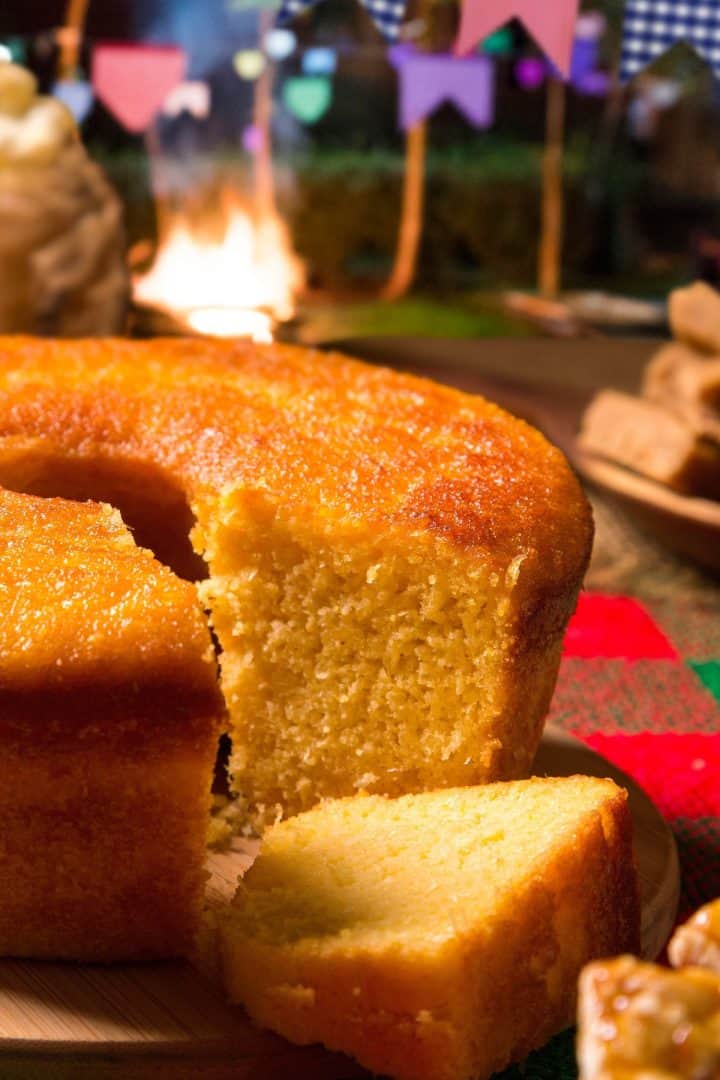
Bolo de Fubá is a traditional Brazilian sweet cornmeal cake made with fine cornmeal, and it's especially popular during Brazil's Festa Junina (June Festivals).
Jump to
There are many variations, including versions with coconut milk, cheese, or anise seeds, as well as the popular bolo de fubá cremosa, which bakes with a soft, custard-like center.
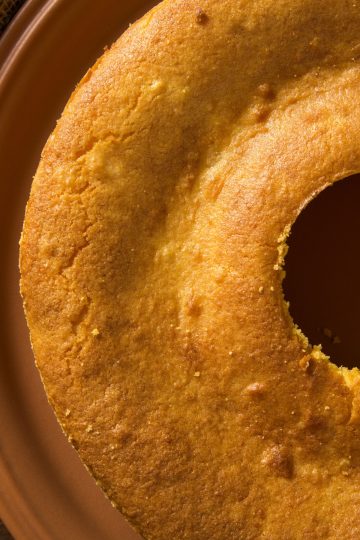
This Bolo de Fubá recipe is a classic Brazilian cornmeal cake that stays soft and moist, and is easy to make.
I use Quaker yellow cornmeal for a consistent texture and soft crumb, along with buttermilk for extra moisture.
I finish the sweet cornmeal cake with a guava glaze, a traditional Brazilian staple that adds classic flavor.
This Bolo de Fubá pairs well with a hot cup of black coffee and makes a comforting afternoon treat.
Ingredients You'll Need
Note: See the recipe card for quantities.
- All-purpose flour: Provides structure and helps the cake hold its shape.
- Cornmeal (fubá): Gives the cake its classic Brazilian flavor and slightly grainy, tender texture.I recommend using Quaker yellow cornmeal.
- Baking powder: Helps the cake rise and become light.
- Kosher salt: Balances the sweetness and enhances overall flavor.
- Granulated sugar: Sweetens the cake and helps create a soft crumb.
- Buttermilk: Adds moisture and tenderness while giving the cake a mild tang.If you don't have buttermilk, use my easy buttermilk substitute-click here for the recipe.
- Unsalted butter (melted): Adds richness and keeps the cake soft.
- Eggs: Bind the ingredients and contribute to structure and moisture.
- Vanilla extract: Adds warm, aromatic flavor to the cake.
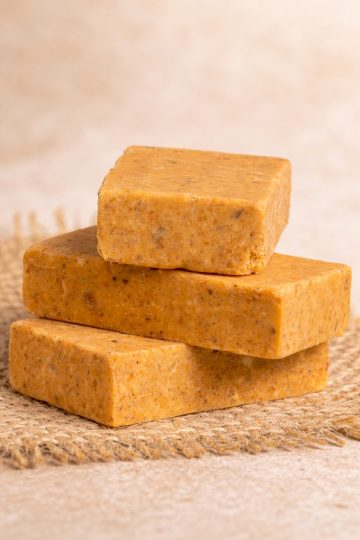
- Guava paste: Creates a sweet, fruity glaze with classic Brazilian flavor.
- Water: Helps melt the guava paste into a smooth glaze.
How to Make Bolo de Fubá
Note: Full instructions are provided in the recipe card below.
- For the Brazilian Cornmeal cake, preheat the oven to 350°F (180°C) and place the rack in the lower-middle position. Grease a 10-cup tube pan, dust with cornmeal, and tap out the excess.
- Whisk the flour, baking powder, salt, and cornmeal in a medium bowl. In a separate large bowl, whisk the sugar, buttermilk, melted butter, eggs, and vanilla until smooth.
- Add the dry ingredients to the wet ingredients, whisking just until combined. Pour the batter into the prepared pan, and smooth the top.
- Bake for about 50 minutes, or until a knife or skewer inserted in the center comes out clean. Cool in the pan for 30 minutes.
- Run a thin knife around the edges and center tube, invert the cake onto a parchment-lined baking sheet, then flip again onto a wire rack so the sugared top is facing up. Cool completely, about 2 hours.
- For the guava glaze, cut the guava paste into small pieces. Add the guava paste and water to a small saucepan. Cook over low heat, stirring often, until melted. Stir until smooth and slightly thick.
- If too thick, add a little water; if too thin, cook longer. Let cool slightly before pouring over the cake.
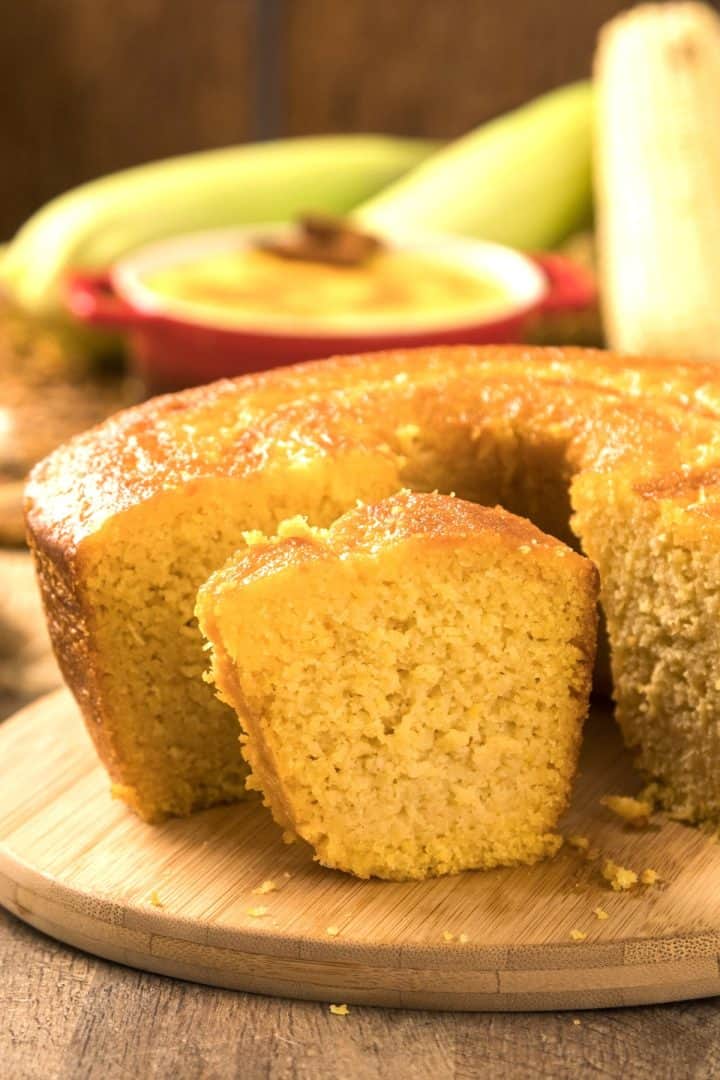
Hint: Do not overmix the batter after adding the dry ingredients. Mixing only until combined keeps the cake soft, tender, and prevents it from becoming dense.
Storage, Make Ahead, & Freezing
Storage: Store the cooled cake tightly covered at room temperature for 2 days or in the refrigerator for up to 4 days.
Make Ahead: Bake the cake 1 day in advance. Once cooled, keep it covered; the texture stays moist, and the flavor improves overnight.
Freezing: Freeze the cake (without glaze) for up to 2 months. Wrap tightly in plastic wrap and foil. Thaw at room temperature, then add the glaze before serving.
Camila's Tips & Variations
- Cut the guava paste into small pieces: Smaller pieces melt faster and give you a smoother glaze.
- Don't overmix the batter: Mix only until combined to keep the cake soft and tender.
- Use room-temperature ingredients: They blend more easily and help the cake bake evenly.
Frequently Asked Questions
Why did my cake turn out dense?
This usually happens when the batter is overmixed. Stir only until the dry ingredients are combined.
Do I have to use a tube pan?
A tube pan gives the best rise and even baking, but a 13x9 pan also works and usually bakes in about 30 to 35 minutes.
❤️ Love this Bolo de Fubá recipe?
Make sure to check out our Bolo de Cenoura com Cobertura de Chocolate recipe next!
Pair with
You may also like
Recipe
Bolo de Fubá
Equipment
- 10-cup tube pan
Ingredients
Cake
- 213 grams all-purpose flour
- 106 grams Quaker yellow cornmeal , plus extra for the pan
- 2 teaspoons baking powder
- ½ teaspoon kosher salt
- 300 grams granulated sugar
- 237 ml buttermilk , room temperature
- 198 g unsalted butter , melted
- 3 large eggs , room temperature
- 1 tablespoon vanilla extract
Glaze
- 240 grams guava paste
- 50 ml water
Instructions
For the Cake:
- Preheat the oven to 350°F (180°C) and place the rack in the lower-middle position. Grease a 10-cup tube pan, dust with cornmeal, and tap out the excess.
- Whisk the flour, baking powder, salt, and cornmeal in a medium bowl. In a separate large bowl, whisk the sugar, buttermilk, melted butter, eggs, and vanilla until smooth.
- Add the dry ingredients to the wet ingredients, whisking just until combined. Pour the batter into the prepared pan, and smooth the top.
- Bake for about 50 minutes, or until a knife or skewer inserted in the center comes out clean. Cool in the pan for 30 minutes.
- Run a thin knife around the edges and center tube, invert the cake onto a parchment-lined baking sheet, then flip again onto a wire rack so the sugared top is facing up. Cool completely, about 2 hours.
For the Guava Glaze:
- Cut the guava paste into small pieces. Add the guava paste and water to a small saucepan. Cook over low heat, stirring often, until melted. Stir until smooth and slightly thick.
- If too thick, add a little water; if too thin, cook longer. Let cool slightly before pouring over the cake.
Notes
Nutrition
Nutrition Disclaimer: The nutritional information provided is an estimate, calculated using standard data sources. Actual values may vary based on ingredient brands, preparation methods, and portion sizes. This information is for general reference only and should not be considered a substitute for professional dietary advice.