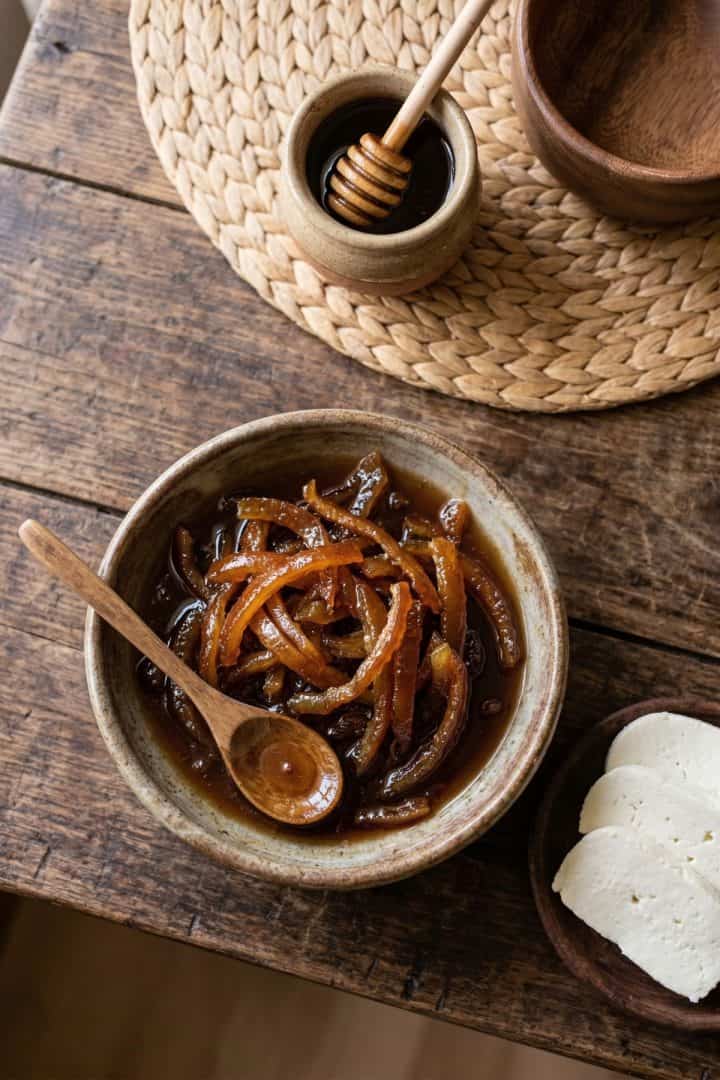
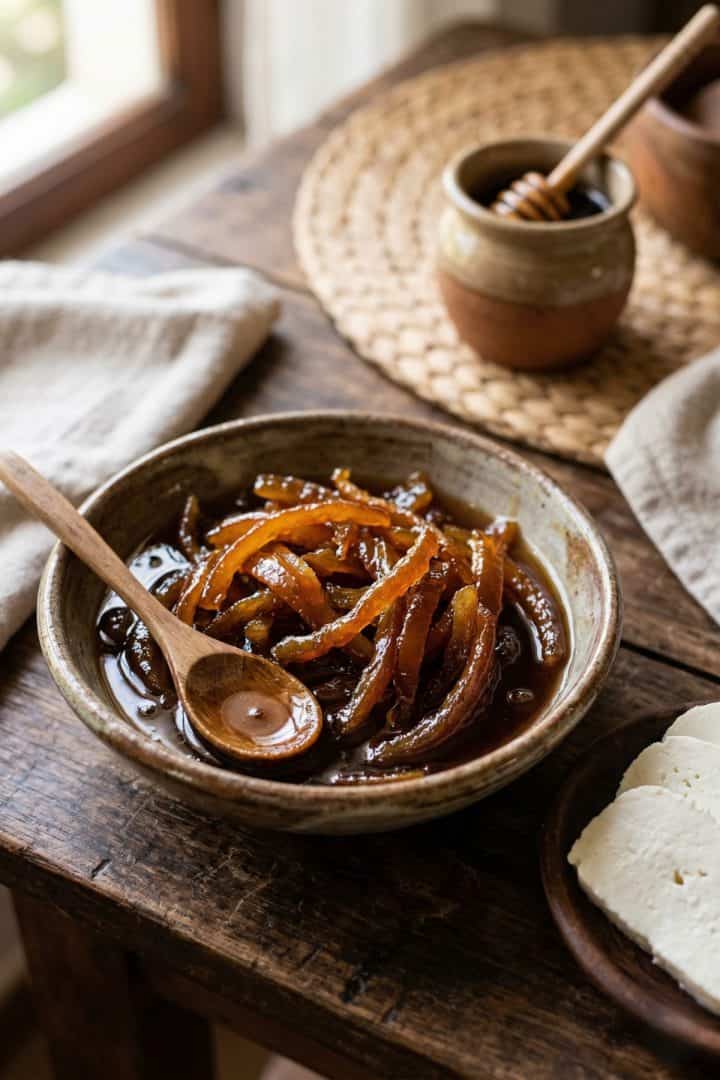
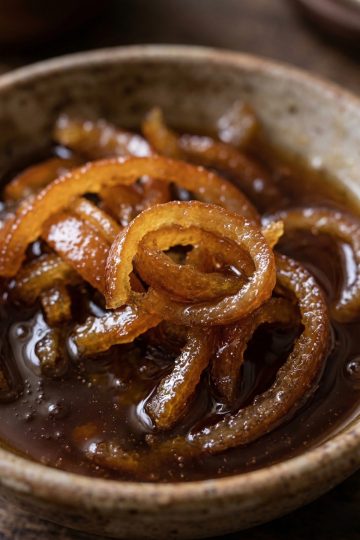
Kosereva is a traditional Paraguayan preserved dessert made from sour orange (apepú) peel cooked in cane syrup (miel de caña) until tender and glossy. It is often served with cheese and has a bittersweet, slightly tangy flavor.
Jump to
This Paraguayan Kosereva recipe uses only the white pith of sour orange peel, which is boiled multiple times to remove bitterness and simmered in a cane syrup and light brown sugar mixture with a touch of clove until glossy and translucent. The result is balanced and not overly sweet.
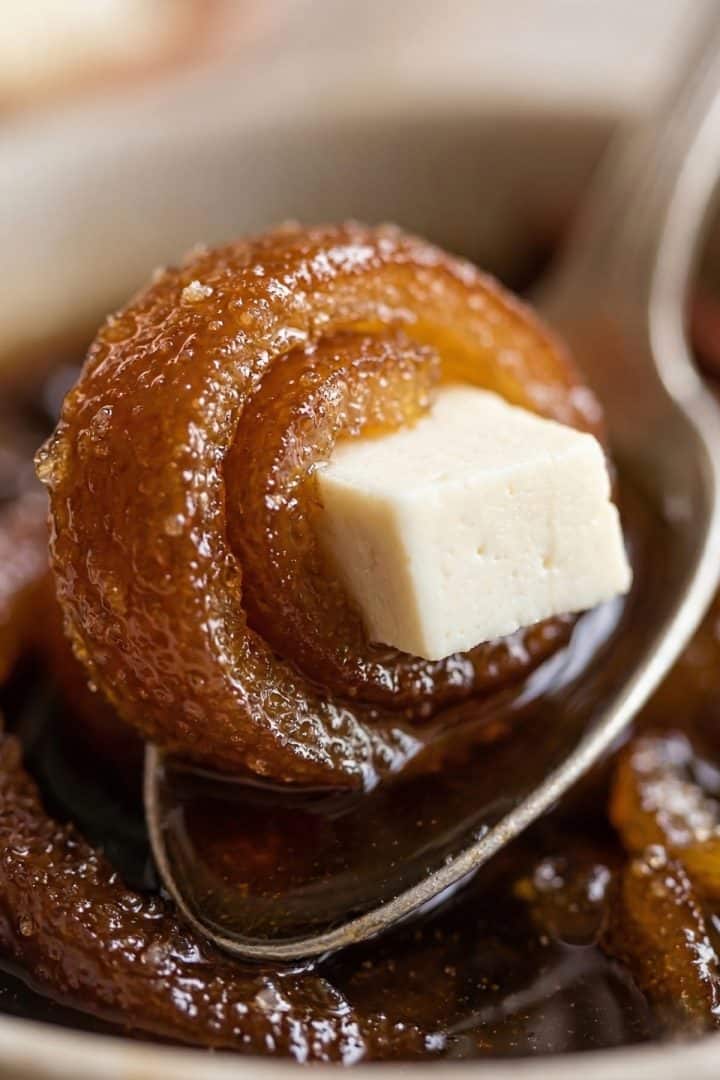
Kosereva is typically served with queso Paraguayo, but queso panela works as an easy-to-find alternative.
Ingredients You'll Need
Note: Full ingredients and amounts are listed in the recipe card below.
- Sour oranges (also known as apepú or naraja ha'i): For Kosereva, only the thick white pith (albedo) is used, as it absorbs the syrup and develops the traditional texture.
Remove all the colored zest with a knife or vegetable peeler, and remove the pulp. Save the pulp to make fresh orange juice (jugo de naranja) here. - Sugar or sugarcane syrup (miel de caña): Creates the thick syrup and preserves the peel. If desired, you can use only sugarcane syrup.
- Water: Helps remove bitterness during soaking and boiling.
- Baking soda: Softens the peel after boiling.
- Cinnamon and cloves (optional): Add warm flavor to the syrup
How to Make Kosereva
Note: Full instructions are provided in the recipe card below.
- Wash the sour oranges thoroughly. Peel them, removing all the colored zest and inner pulp, keeping only the thick white pith.
- Cut the pith into segments (casquitos), making sure no pulp remains.
- Place the peels in a pot, cover with water, and bring to a boil.
- Discard the water and repeat the boiling process 4-7 times, starting each time with fresh, cold water.
- After the final boil, place the peels in a bowl, cover with water, and add 1 teaspoon of baking soda. Let it rest for 10 minutes.
- Rinse the peels thoroughly with clean water to remove any baking soda residue.
- In a heavy-bottomed saucepan, combine sugar or cane syrup, cloves (if using), and 250 ml cup of water.
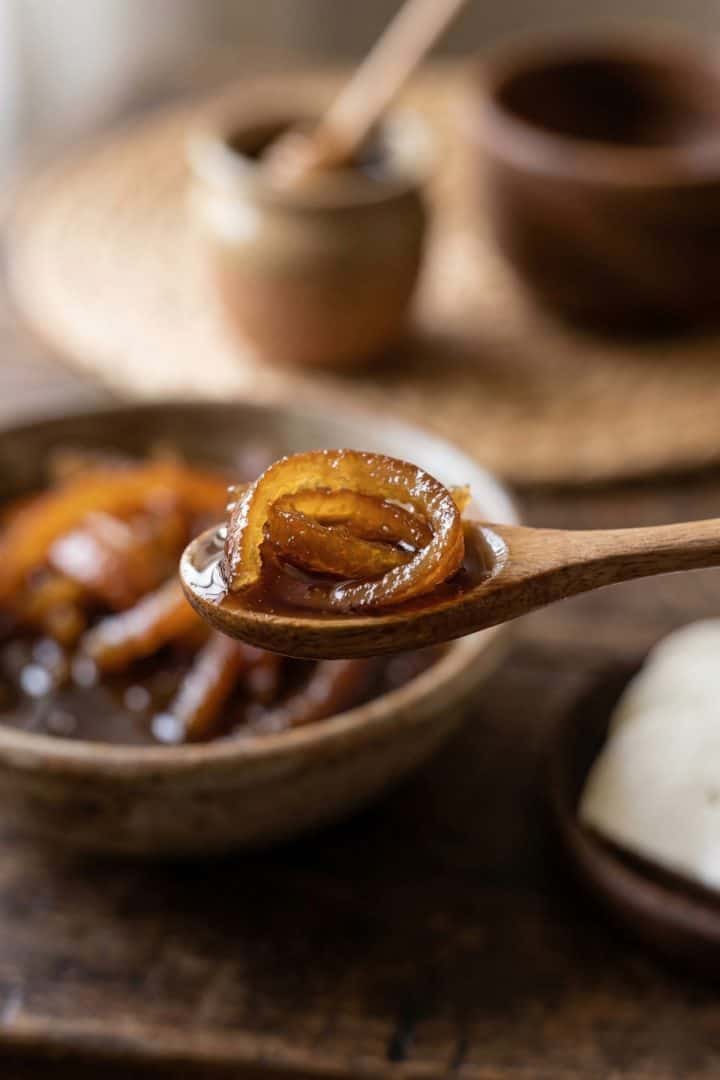
- Heat until the sugar dissolves and the mixture begins to simmer. Add the prepared peels; if desired, roll them into spirals and secure with half a wooden toothpick.
- Cook over medium-low heat for about 1 hour, stirring occasionally, until the syrup thickens and the peels become glossy and translucent.
- Remove from heat, let cool slightly, and transfer to sterilized glass jars.
Hint: Once the water reaches a full boil, discard it and replace with fresh water. Repeat 4-7 times. Do not skip this step-it removes bitterness.
Storage & Freezing
Storage: Store in an airtight container in the refrigerator for up to 2 weeks.
Freezing: Not recommended.
Camila's Tips & Variations
- Prevent bitterness: Make sure all the colored zest is completely removed before boiling.
- Peels too bitter: Increase the number of boiling cycles with fresh water until the bitterness is reduced.
- Peels too firm: Do not skip the baking soda step; it helps soften the texture.
- Syrup not thickening: Continue simmering over low heat until the syrup reduces and thickens.
- Uneven texture: Cut the peels evenly, so they cook at the same rate.
- Flavor too strong: Reduce the amount of cloves or cinnamon for a milder taste.
- Not sweet enough: Taste halfway through cooking and add more sugar or cane syrup as needed, being careful not to burn yourself.
- For 1 kg Batch: Use 1 kg white sour orange peel (apepú pith), 600 g sugar, and 400 ml cane syrup (miel de caña), or use 1 liter of cane syrup only. Follow the same procedure.
Frequently Asked Questions
Why is only the white pith used?
The pith absorbs the syrup and becomes tender; the zest is too bitter, and the pulp breaks down.
How do I know when the bitterness is gone?
Taste a small piece after boiling; if still bitter, repeat the boiling process with fresh water.
Can I skip soaking and just boil?
No. Soaking helps reduce bitterness evenly before boiling, improving final flavor.
Why do I need to boil the peels 4-7 times?
Boiling the peels multiple times removes their natural bitterness; each boil releases more bitterness into the water. Repeating the process ensures a balanced flavor without a harsh taste.
You may also like


Recipe
Kosereva
Equipment
- Glass jars
Ingredients
- 700 g sour orange peel (also known as apepú)
- 400 ml cane syrup (miel de caña)
- 200 g light brown sugar or granulated sugar
- 1 whole cloves or small cinnamon stick (optional)
- 1 teaspoon baking soda
- water , as needed
Instructions
- Wash the sour oranges thoroughly. Peel them, removing the outer colored zest and the inner pulp. Keep only the thick white pith, as this is the part used for Kosereva.
- Cut the pith into segments (casquitos), making sure no pulp remains. Place the segments in a pot, cover with plenty of water, and bring to a boil.
- Boil the peels, then discard the water. Repeat this process 4-7 times, always starting with fresh, cold water; this removes the bitterness.
- After the final boil, place the peels in a bowl, cover completely with water, and add 1 teaspoon of baking soda. Let them rest for about 10 minutes.
- Rinse the peels well with clean water to remove the baking soda.
- In a heavy-bottomed saucepan, combine the cane syrup (miel de caña), sugar, cinnamon, and cloves (if using) with 250 ml of water.
- Heat the mixture until the sugar begins to dissolve and the syrup starts to simmer. Add the prepared peels to the syrup; if desired, roll them into small spirals and secure each one with half a wooden toothpick.
- Cook over medium-low heat until the syrup thickens and the peels become glossy and translucent, about 1 hour. Remove from heat and let cool, then transfer to sterilized glass jars.
Notes
Nutrition
Nutrition Disclaimer: The nutritional information provided is an estimate, calculated using standard data sources. Actual values may vary based on ingredient brands, preparation methods, and portion sizes. This information is for general reference only and should not be considered a substitute for professional dietary advice.