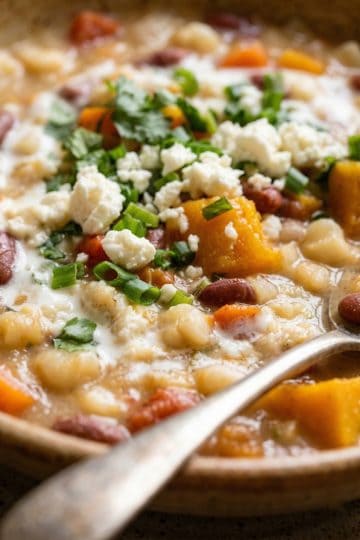
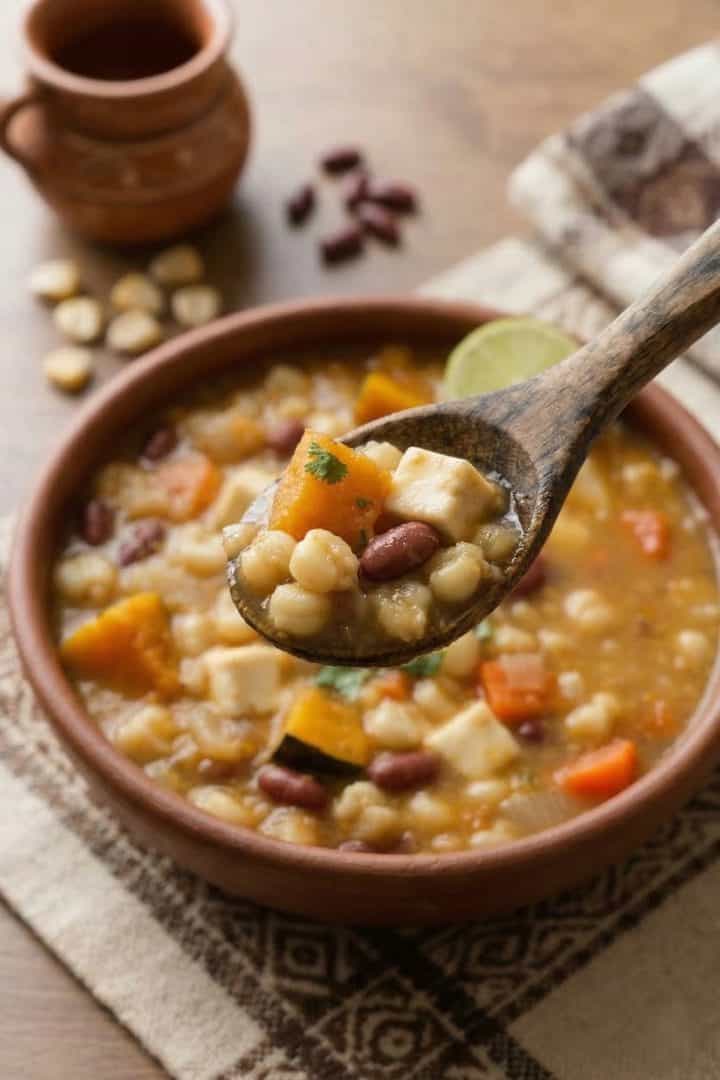
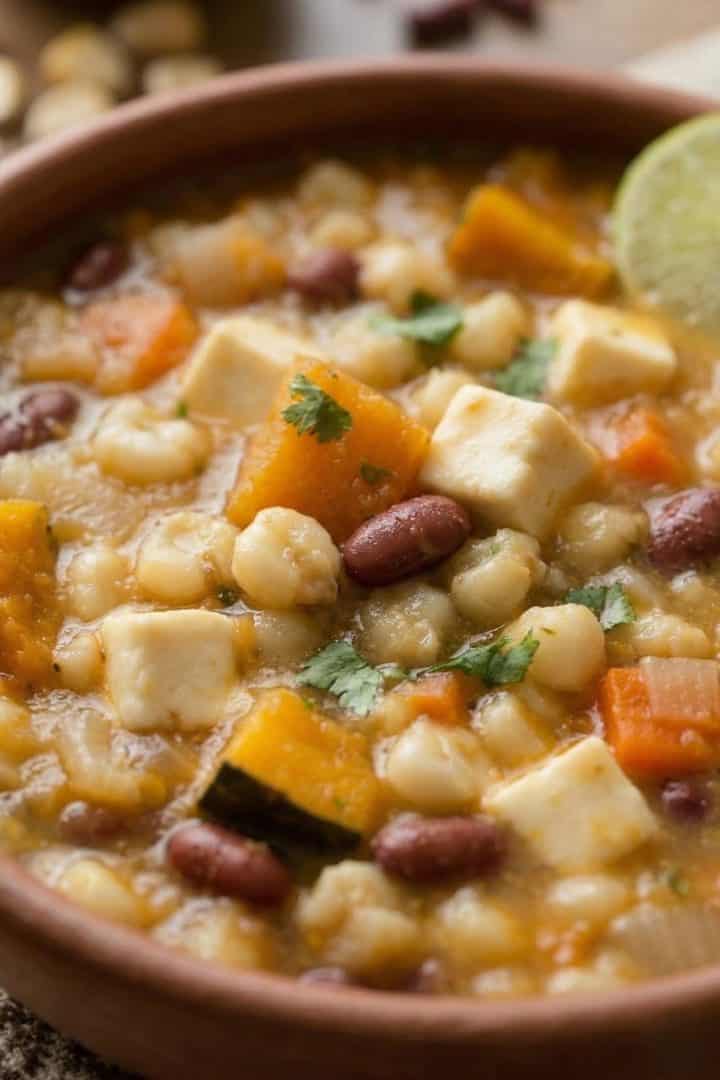
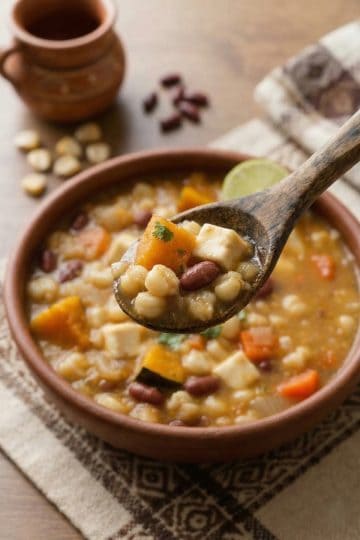
Jopará is Paraguay's classic corn and bean stew, made with locro (cracked white corn), beans, vegetables, and cheese simmered until thick and hearty.

Jump to
Traditionally prepared on October 1st, it honors the Karai Octubre custom, symbolizing abundance and protection against food scarcity.
This Jopara recipe uses soaked and pre-boiled locro and beans for faster cooking and deeper flavor, combined with squash and queso panela for a rich, hearty texture.
While queso Paraguay is traditional, I use accessible substitutes outside Paraguay to keep the flavor and consistency as close to the original as possible.
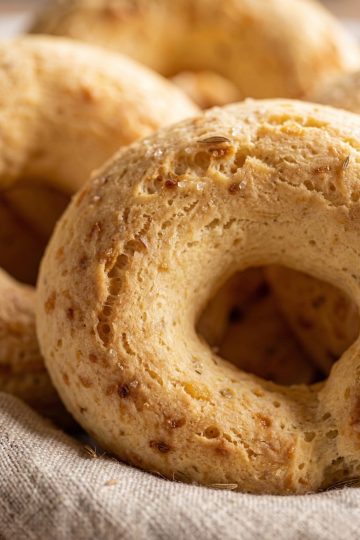
For a lighter variation, try my Jopara Morotĩ recipe, which follows the same overnight soaking method but skips the pre-boiling step. It pairs especially well with boiled yuca or Paraguayan tortillas for a complete meal.
Ingredients You'll Need
Note: Full ingredients and amounts are listed in the recipe card below.
- Cooking oil: Used for sautéing and building the base flavor. I prefer using extra virgin olive oil, but any neutral oil can be used.
- Onion: Creates the savory foundation.
- Carrots: Provide sweetness and body.
- Acorn squash (zapallo): Thickens the soup naturally as it cooks.
- Garlic: Adds depth and aroma.
- Small red beans or black-eyed peas: Add protein and body to the stew. I find that black-eyed peas taste very similar to the red beans from Paraguay, making them an excellent substitute.
- Locro (dried white corn): Main starch component; creates the hearty texture. Soaked overnight and previously boiled until just tender before adding.
- Vegetable broth: Builds the base flavor.
- Vegetable bouillon cube: I use Knorr vegetable bouillon to enhance the flavor, but you can simply season with salt if preferred.
- Cheese: Traditionally made with queso Paraguay; adds richness and mild saltiness at the end. Since it's hard to find outside Paraguay, I like using queso panela, but queso fresco or queso blanco also works well.
- Cilantro: Fresh herbal finish.
- Lime: Brightens the final flavor.
How to Make Jopara
Note: Full instructions are provided in the recipe card below.
- In a large Dutch oven, heat the oil over medium heat. Add the onions, carrots, squash, and green onions, and cook, stirring occasionally until softened, about 15 to 20 minutes. Stir in the garlic and cook until fragrant, about 30 seconds.
- Add the locro, beans, water, and black pepper to the pot. Crumble the bouillon cube into the hot liquid and stir until dissolved.
- Reduce the heat to medium-low and simmer, covered with the lid slightly ajar, for 15 to 20 minutes to allow the flavors to integrate.
- Add 1 more liter of boiling water and continue cooking for 20 to 25 minutes more, or until the beans and locro are tender and the stew is slightly thickened, stirring occasionally.
- Once ready, add the diced Paraguay cheese and cilantro, stirring until combined. Serve hot with a slice of lime.
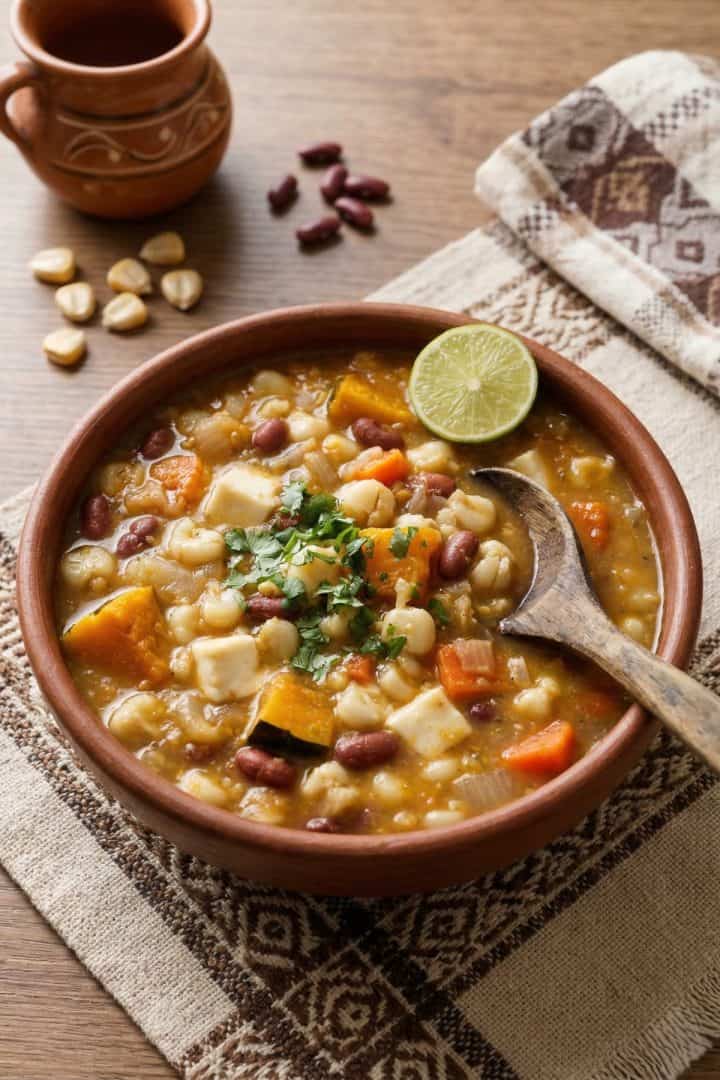
Hint: If the stew thickens before the beans are tender, add small amounts of hot water to prevent scorching and continue simmering.
Storage, Make Ahead, & Freezing
Storage: Store leftovers Jopara in an airtight container in the refrigerator for up to 3 days. Reheat gently on the stovetop or in the microwave, adding a splash of water if needed.
Make Ahead: You can soak the beans and locro up to 24 hours in advance. The fully cooked stew also tastes better the next day as flavors deepen.
Freezing: Not recommended. This stew is best enjoyed fresh.
Camila's Tips & Variations
- Beans still firm after 60 minutes: Simmer longer; older beans require extra cooking time.
- Stew too thick: Add hot water a little at a time to loosen the texture.
- Flavor tastes flat: Add a pinch more salt or a small splash of milk to balance.
- Prefer creamier texture: Use more squash and mash slightly before serving.
Frequently Asked Questions
What is the difference between Jopará and Jopara Morotĩ?
Jopará is the classic version made with locro and beans for a thicker, deeper flavor, while Jopara Morotĩ is a white variation often finished with milk or whey and traditionally enjoyed during Lent.
Do I have to soak and pre-boil the locro and beans overnight?
No, it isn't strictly necessary, but soaking and pre-boiling help them cook faster and more evenly. It also improves texture and makes the beans easier to digest.
Can I skip the bouillon cube?
Yes. Season gradually with salt instead.
Can I use canned beans and canned hominy?
Yes. Drain and rinse both before adding. Reduce the simmering time since they are already cooked, and adjust salt at the end.
You may also like
Recipe
Jopara
Ingredients
- 3 tablespoons extra virgin olive oil or any neutral-flavored oil
- 1 large onion , chopped
- 1 large garlic , minced
- 2 carrots , peeled and chopped medium
- 200 g raw acorn , peeled and cubed
- 200 g dried white hominy (locro corn), soaked overnight
- 200 g small red beans or black-eyed peas , soaked overnight
- 200 g Panela cheese , diced
- 2 cubes Vegetable Bouillon, such as Knorr
- kosher salt , as needed
- ½ black pepper , to taste
- 2 liters boiling water
- 1 bunch Cilantro , chopped
- 1 bunch green onions , chopped
- Lemon juice , for serving
Instructions
- In a large Dutch oven, heat the oil over medium heat. Add the onions, carrots, squash, and green onions, and cook, stirring occasionally until softened, about 15 to 20 minutes. Stir in the garlic and cook until fragrant, about 30 seconds.
- Add the locro, beans, water, and black pepper to the pot. Crumble the bouillon cube into the hot liquid and stir until dissolved.
- Reduce the heat to medium-low and simmer, covered with the lid slightly ajar, for 15 to 20 minutes to allow the flavors to integrate.
- Add 1 more liter of boiling water and continue cooking for 20 to 25 minutes more, or until the beans and locro are tender and the stew is slightly thickened, stirring occasionally.
- Once ready, add the diced Paraguay cheese and cilantro, stirring until combined. Serve hot with a slice of lime.
Notes
Nutrition
Nutrition Disclaimer: The nutritional information provided is an estimate, calculated using standard data sources. Actual values may vary based on ingredient brands, preparation methods, and portion sizes. This information is for general reference only and should not be considered a substitute for professional dietary advice.