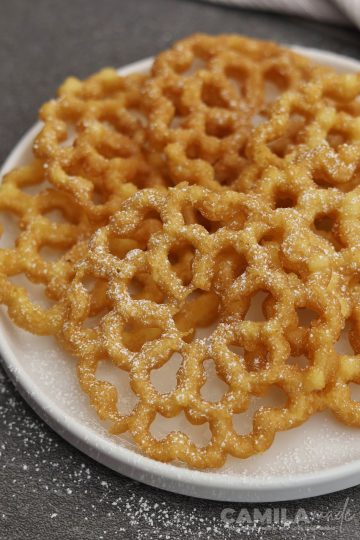
Buñuelos de viento are light, airy fritters made from a thin wheat flour batter that puffs up when fried. As they cook, steam fills the batter, creating a hollow, crisp shell-hence the name "de viento" (of air).

Jump to
Popular in Mexico and Spain, they're especially enjoyed during festive seasons like Christmas.
This buñuelos de viento recipe is Mexican-inspired and focuses on creating especially delicate, crisp buñuelos using a thin, smooth batter and a classic metal rosette mold.
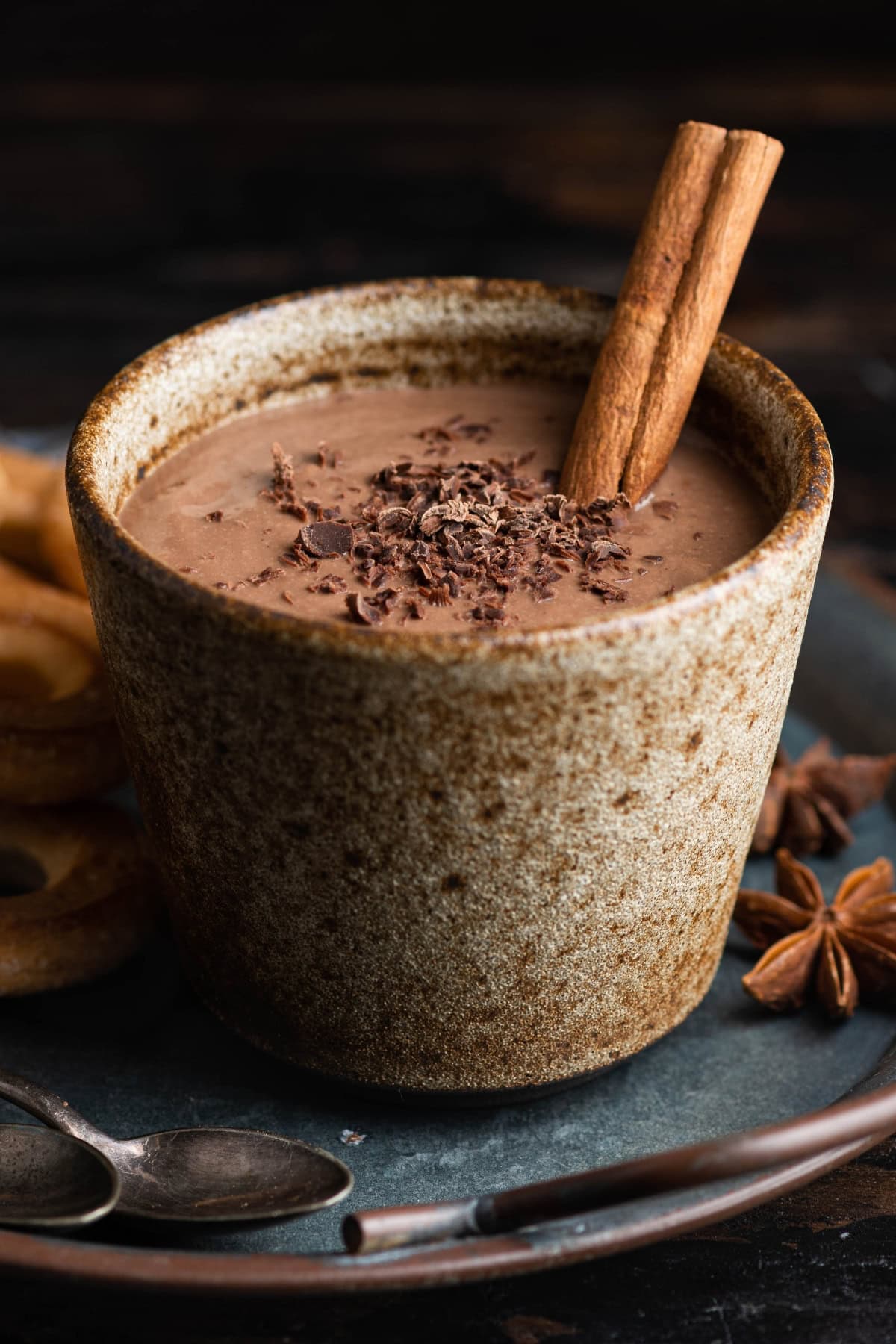
They're fried until lightly golden and can be coated in plain sugar or cinnamon sugar. They're best enjoyed warm with hot chocolate or atole.
Ingredients You'll Need
Note: See the recipe card for quantities.
- Flour: Provides structure.
- Sugar: Adds mild sweetness and helps the buñuelos brown evenly.
- Baking powder: Lightens the batter, preventing the buñuelos from becoming dense.
- Salt: Enhances the overall flavor.
- Eggs: Bind the ingredients.
- Water: Keeps the batter thin and fluid, ensuring an even coating.
- Milk: Adds tenderness and subtle richness to the batter.
- Butter: Contributes flavor and helps achieve a golden, crisp finish.
- Vanilla extract: Adds flavor.
How to Make Buñuelos de Viento
Note: Full instructions are provided in the recipe card below.
- In a large mixing bowl, whisk together the flour, sugar, salt, and baking powder. Make a well in the center.
- Whisk in the eggs, water, melted butter, and vanilla extract until incorporated.


- Gradually add the milk, whisking constantly and dissolving any lumps before adding more.
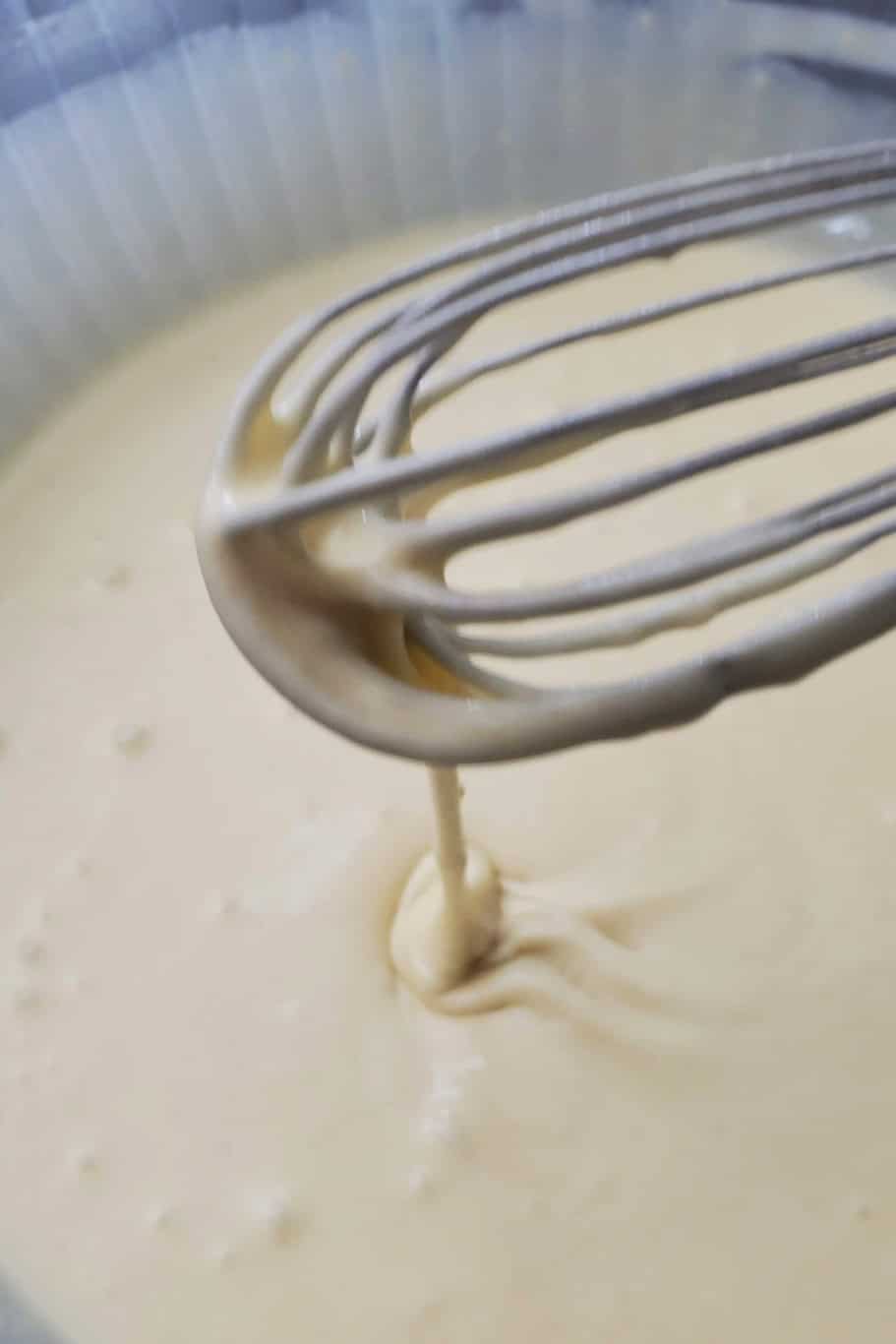
- Continue mixing until all the milk is incorporated and the batter is very smooth and fluid; it should be thin, similar to crêpe or pancake batter. Let the batter rest for 30 minutes.

- Heat about 2 cups of oil in a large Dutch oven or high-sided skillet over high heat, then lower the heat to medium to reach 350°F (175°C). The oil should be deep enough to fully submerge the mold. Line a baking sheet with paper towels for draining the buñuelos.
- First, dip a metal buñuelos mold with a handle into the hot oil and hold for 10 to 15 seconds. Gently shake off excess oil. Carefully dip the hot mold into the batter, making sure you only go up three-quarters of the way-never to the top. It should sizzle! Immerse the batter-covered mold in the hot oil and hold.
- After about 10 seconds, gently shake it back and forth to release the buñuelo into the oil. Fry for 2 minutes or until golden brown, then flip gently with tongs.
- Fry for another minute or until evenly brown on both sides. With tongs, carefully remove the buñuelo from the oil, holding it above the oil to drain any excess, then transfer it to the prepared baking sheet to drain. Repeat with the remaining batter.
- While still warm, coat the buñuelos with sugar or a cinnamon-sugar mixture. Serve warm.

Hint: Make sure the mold is very hot before dipping it into the batter, and never dip it all the way to the top. If the mold isn't hot enough-or if the batter covers the top-the buñuelo will stick and won't release properly in the oil.
Storage, Make Ahead, & Freezing
Storage: Store buñuelos at room temperature in an airtight container for up to 2 days. They are best enjoyed the same day for maximum crispness.
Make Ahead: The batter can be prepared up to 24 hours in advance and stored covered in the refrigerator. Stir well before using.
Freezing: Freezing is not recommended.
Camila's Tips & Variations
- Mold temperature: Always heat the mold in the oil for a few seconds before dipping it into the batter. A hot mold helps the buñuelo release easily.
- Batter consistency: The batter should be smooth and thin, similar to crepe or pancake batter. If it thickens while resting, stir gently before frying.
- Oil temperature: Keep the oil at 350°F (175°C). Oil that is too hot will brown the buñuelos too quickly, while oil that is too cool will prevent them from crisping properly.
- Flavor variations: You can coat the buñuelos in plain sugar, cinnamon sugar, or a mixture of cinnamon, sugar, and nutmeg.
- For extra flavor: Add 1½ teaspoons ground cinnamon, ½ teaspoon ground star anise, and the zest of 1 orange to the batter.
- Serving idea: Buñuelos are best coated in sugar while still warm and served with hot chocolate or atole.
Frequently Asked Questions
Why shouldn't I dip the mold all the way into the batter?
Because the batter should only reach the edges of the mold, never the top, so the buñuelo can release easily when placed in the oil.
Why do I need to heat the mold before dipping it into the batter?
The mold must be heated in the oil for a few seconds so the buñuelo releases on its own when frying.
Why are the buñuelos removed while still lightly golden?
Because the oil is very hot and the buñuelos continue cooking after being removed, they can darken too much if left longer.
Did you know?
Buñuelos exist in many forms across different cultures. In Spain, buñuelos de viento are light and airy fritters, often filled with cream. In Mexico and Central America, buñuelos are usually thin and crisp, sometimes shaped into molds or stretched dough and coated with sugar or syrup. In South America and the Caribbean, buñuelos can be softer or bread-like, commonly shaped into balls and enjoyed during holidays. Although they share the same name, each style reflects local ingredients, techniques, and traditions. Learn more about the different types of buñuelos here.
Pair with


You may also like
Recipe
Buñuelos de Viento
Equipment
- Metal buñuelos mold with handle
- Large Dutch oven or high-sided skillet
- Cooking thermometer
Ingredients
Dough
- 190 g all-purpose flour
- ¼ teaspoon kosher salt
- ½ teaspoon baking powder
- 2 tablespoon sugar
- 2 large eggs
- 60 ml water
- 2 tablespoon melted butter
- 1 teaspoon vanilla extract
- 240 ml whole milk
For frying
- 2 cups peanut oil or vegetable oil , or as needed
For serving
- Sugar , as needed
- Ground cinnamon
Instructions
- In a large mixing bowl, whisk together the flour, sugar, salt, and baking powder. Make a well in the center. Whisk in the eggs, water, melted butter, and vanilla extract until incorporated.
- Gradually add the milk, whisking constantly and dissolving any lumps before adding more. Continue mixing until all the milk is incorporated and the batter is very smooth and fluid; it should be thin, similar to crêpe or pancake batter. Let the batter rest for 30 minutes.
- Heat about 2 cups of oil in a large Dutch oven or high-sided skillet over high heat, then lower the heat to medium to reach 350°F (175°C).
- The oil should be deep enough to fully submerge the mold. Line a baking sheet with paper towels for draining the buñuelos.
- First, dip a metal buñuelos mold with a handle into the hot oil and hold for 10 to 15 seconds. Gently shake off excess oil.
- Carefully dip the hot mold into the batter, making sure you only go up three-quarters of the way-never to the top. It should sizzle! Immerse the batter-covered mold in the hot oil and hold.
- After about 10 seconds, gently shake it back and forth to release the buñuelo into the oil. Fry for 2 minutes or until golden brown, then flip gently with tongs.
- Fry for another minute or until evenly brown on both sides. With tongs, carefully remove the buñuelo from the oil, holding it above the oil to drain any excess, then transfer it to the prepared baking sheet to drain. Repeat with the remaining batter.
- While still warm, coat the buñuelos with sugar or a cinnamon-sugar mixture. Serve warm.
Notes
Nutrition
Nutrition Disclaimer: The nutritional information provided is an estimate, calculated using standard data sources. Actual values may vary based on ingredient brands, preparation methods, and portion sizes. This information is for general reference only and should not be considered a substitute for professional dietary advice.