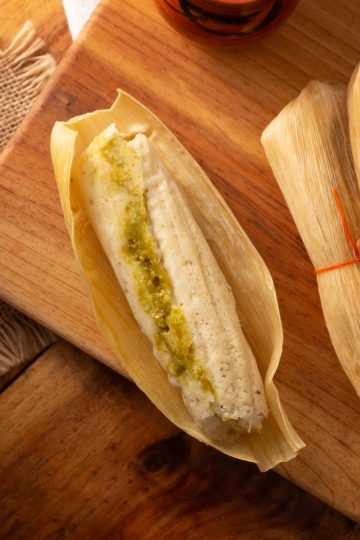
Tamales Verdes (also known as Green Tamales) are a traditional Mexican dish made with corn masa wrapped in corn husks or banana leaves and steamed until tender.

Jump to
Their green color comes from a raw or cooked sauce made with cilantro, tomatillos, and green chiles like serrano, jalapeño, or poblano. Common fillings include pork, chicken, and beef.
This version is a classic tamal verde con cerdo recipe, made with a traditional yet beginner-friendly method that's perfect for anyone learning how to make green pork tamales at home.
It uses a raw green salsa (salsa verde cruda) made by blending tomatillos, serrano peppers, onion, garlic, and cilantro without cooking them first, creating a thick, flavorful sauce that won't make the masa soggy.
You can also prepare it with chicken or beef, and it's a great way to use leftover Thanksgiving turkey-just shred it and mix it with the salsa verde cruda to make delicious tamales verde de pavo. I make the masa with Maseca Tamal, which is easy to find in most supermarkets and Latino markets.
Whether you're preparing them for Día de la Candelaria, Christmas, or a weekend family meal, these green pork tamales deliver the rich, comforting homemade flavor everyone loves.
Ingredients You'll Need
Note: See the recipe card for quantities.
- Pork Shoulder: Shreds easily and stays juicy, making it ideal for tamale filling.
- Tomatillos: Provide the bright, tangy base for the green sauce and give it its classic color and flavor.
- Serrano Peppers: Add heat and depth, giving the sauce its authentic spicy profile.
- Cilantro: Adds freshness, aroma, and a vibrant green tone to the sauce.
- Masa harina for tamales: Creates the traditional tamal dough texture. I recommend using Maseca Tamal for the best results.
- Lard: Makes the masa soft, fluffy, and tender after steaming.It can be substituted with vegetable shortening or butter.
- Baking Powder: Helps the masa rise slightly, keeping the tamales tender rather than dense.
- Salt: Enhances the flavor.
- Corn husks: Used to wrap the tamales and help them hold their shape during steaming.
How to Make Tamales Verdes
Note: Full instructions are provided in the recipe card below
- Rinse the dried corn husks under running water. Transfer them to a bowl of hot water and weigh them down so they stay submerged. Let them soak while you prepare the sauce, meat, and masa.
- Place the pork in a large pot and cover it with enough water to fully submerge the meat. Add the onion, garlic, and salt to the pot to season the pork as it cooks.
- Turn the heat to high and bring the water to a boil. Once it begins to boil, skim off any foam that rises to the surface to keep the broth clear.
- After skimming, reduce the heat to medium-low to let the pork simmer gently. Cover the pot partially with a lid and cook the pork for 1 hour and 40 minutes to 2 hours, or until very tender. Check occasionally to make sure the pork remains covered with water, adding more hot water if necessary.
- When the pork is soft enough to shred easily with a fork, turn off the heat and let the meat cool completely in its cooking broth; this helps the pork stay juicy and flavorful. Shred the meat and strain the broth-reserve 6 cups of it for the masa.
- While the meat is cooling, prepare the green sauce. Everything is blended raw. Cut the serrano peppers, tomatillos, onion, garlic, and cilantro into pieces so they fit in the blender.
- Place everything in the blender without adding any water. Add salt and blend, leaving some texture instead of blending it completely smooth. Once blended, strain the sauce and use only the pulp; this prevents the tamales from getting soggy - that is the secret.
- Hydrate ½ kg of tamal flour with 3 cups of pork broth to obtain about 1 kg of prepared masa. Beat the lard with a hand mixer until fluffy.
- Add the prepared masa, salt, baking powder, and enough pork broth to adjust the consistency. Mix for about 30 minutes, adding all the remaining broth, until the masa is very soft and easy to spread. Test the masa by dropping a small piece into cold water-if it floats, it's ready.
- Pat dry a soaked corn husk. Spread about ⅓ cup of masa on the smooth side of the husk, extending the masa close to the edges. Add a generous portion of shredded pork, and then spoon some strained green sauce on top.
- To seal the tamal, bring the two edges of masa together, fold the husk over, press to tighten, then fold the bottom tip upward. Optionally tie the tamal with a thin strip of husk to keep it from opening during cooking.
- Fill the bottom of a steamer (tamalera) with 1 to 2 inches of water and add two coins. (When the water is boiling, the coins will rattle; if the sound stops, the water level is low and needs more hot water.) Line the bottom of the steamer with corn husks, then arrange the tamales upright. Continue filling the steamer until all the tamales are inside.
- Cover the tamales de cerdo with more corn husks and then with a clean kitchen towel. Place the lid on and cook over the stove for at least one hour, starting from the moment the water begins to boil. After 1 hour and 15 minutes, check a tamal. A tamal is ready when it releases easily from the husk. Let the tamales rest for a few minutes. Serve warm.

Hint: For the best texture, make sure your masa is light, fluffy, and well-aerated before assembling the tamales verdes. Properly whipped lard is key-the lard should look like a soft meringue.
Storage, Make Ahead, & Freezing
Storage: Keep cooked tamales refrigerated in an airtight container for 3-4 days. Reheat in a steamer or microwave until warmed through.
Make Ahead: Both the masa and the red pork filling can be prepared 1 day in advance. Store them separately in the refrigerator and assemble the tamales de cerdo when ready to steam.
Freezing: Tamales verdes freeze well. Place cooled, cooked tamales in a freezer-safe bag and freeze for up to 3 months. Reheat straight from frozen by steaming for 20-25 minutes or microwaving with a damp paper towel.
Camila's Tips & Variations
- Best chiles for tamales verdes: For a flavorful salsa verde, use tomatillos with a mix of fresh green chiles like jalapeño or serrano for heat, plus roasted poblano, Anaheim, or Hatch chiles for depth of flavor and color.
- Blend Chiles: Make sure to blend the chiles until completely smooth, as this sauce will not be strained.
- Do not rush the sauce: Cook the red sauce long enough to remove the raw onion/garlic taste.
- Add a touch of sugar: A small amount helps balance the acidity and bitterness of the dried chiles.
- Add lemon juice: Add 1 tablespoon of fresh lemon juice or distilled white vinegar to brighten the sauce and balance the flavors as it cooks.
- Clean the Corn Husks: Rinse the dried corn husks well under running water several times, as they usually come dusty.
- Corn Husk: Make sure the husks are fully softened by keeping them completely submerged in hot water. An easy trick is to place something heavy on top-like the pestle of a molcajete or a small bowl-so they stay underwater the whole time.
- Whip the lard well: Properly whipped lard should look light and airy, almost like a soft meringue. This is the key to soft, fluffy tamales.I recommend using a hand mixer.
- Check for Salt: Taste the masa - it should be slightly salty because the salt fades during steaming.
- Test the masa: Drop a small piece into cold water. If it floats, the masa is ready. If it sinks, beat it a little longer with more broth.
- Leave a Border: Leave a small border of uncovered masa on one side - this helps keep the tamal from spilling as it expands during steaming.
- Use pork, chicken, or beef: While this recipe uses pork for authentic tamal rojo con cerdo flavor, the same method works well with shredded chicken or beef.
- Control the spice level: Remove seeds from the morita chiles for a milder sauce or leave them in for extra heat.
- Steam with coins: Add two coins to the bottom of the steamer-when they rattle, there's still enough water.
- Freeze-friendly: Make extra! Tamales freeze perfectly and reheat well for quick meals.

Frequently Asked Questions
Can I use chicken instead of pork?
Yes. Simply replace the pork with cooked, shredded chicken. The rest of the recipe stays the same.
Why do I strain the green salsa?
Straining removes excess liquid. Using only the pulp keeps the masa from becoming soggy during steaming.
How do I know the masa is ready?
Do the float test: drop a small ball of masa into cold water - if it floats, it's properly whipped and ready.
Why does the masa taste less salty after steaming?
During steaming, some of the salt in the masa dissolves into the steam and into the moisture inside the tamal, causing the final tamal to taste less salty than the raw dough. This is why the masa must be seasoned slightly saltier before steaming - the flavor balances out once the tamales are fully cooked.
❤️Love this tamal verde de puerco recipe?
Check out our Tamales Rojos con Puerco recipe, a flavorful variation of these green pork tamales.
Pair with
You may also like



Recipe
Tamales Verdes
Equipment
- Spoon or ladle:
- Large steamer (tamalera)
- Clean kitchen towel
Ingredients
PORK
- 2½ L water
- 1½ kg (about 3¼ lb ) boneless pork shoulder, fat trimmed and cut into 2½-inch pieces
- 1 medium yellow onion , cut into quarters
- 4 garlic cloves
- 1½ teaspoon kosher salt
CORN HUSKS
- Dried corn husks (as needed)
GREEN SAUCE
- 8 serrano peppers
- ¾ kg (about 1 lb 10 oz) tomatillos, husks, and stems removed, rinsed well, and quartered
- 1 medium yellow onion, peeled and quartered
- 3 garlic cloves, peeled and roughly chopped
- 1 bunch cilantro
- 1¾ teaspoon kosher salt , as needed
MASA
- ½ kg (4 cups) masa harina for tamales (instant corn flour) such as Maseca Tamal
- 5 cups pork broth , divided
- 400 g vegetable shortening or lard
- 1 tablespoon baking powder
- 1¼ tablespoon kosher salt
Instructions
- Rinse the dried corn husks under running water. Transfer them to a bowl of hot water and weigh them down so they stay submerged. Let them soak while you prepare the sauce, meat, and masa.
- Place the pork in a large pot and cover it with enough water to fully submerge the meat. Add the onion, garlic, and salt to the pot to season the pork as it cooks.
- Turn the heat to high and bring the water to a boil. Once it begins to boil, skim off any foam that rises to the surface to keep the broth clear.
- After skimming, reduce the heat to medium-low to let the pork simmer gently. Cover the pot partially with a lid and cook the pork for 1 hour and 40 minutes to 2 hours, or until very tender.
- Check occasionally to make sure the pork remains covered with water, adding more hot water if necessary. When the pork is soft enough to shred easily with a fork, turn off the heat and let the meat cool completely in its cooking broth.
- This helps the pork stay juicy and flavorful. Shred the meat and strain the broth-reserve 6 cups of it for the masa.
- While the meat is cooling, prepare the green sauce. Everything is blended raw. Cut the serrano peppers, tomatillos, onion, garlic, and cilantro into pieces so they fit in the blender.
- Place everything in the blender without adding any water. Add salt and blend, leaving some texture instead of blending it completely smooth.
- Once blended, strain the sauce and use only the pulp; this prevents the tamales from getting soggy - that is the secret.
- Once blended, strain the sauce and use only the pulp; this prevents the tamales from getting soggy - that is the secret.
- Hydrate ½ kg of tamal flour with 3 cups of pork broth to obtain about 1 kg of prepared masa. Beat the lard with a hand mixer until fluffy.
- Add the prepared masa, salt, baking powder, and enough pork broth to adjust the consistency. Mix for about 30 minutes, adding all the remaining broth, until the masa is very soft and easy to spread. Test the masa by dropping a small piece into cold water-if it floats, it's ready.
- Pat dry a soaked corn husk. Spread about ⅓ cup of masa on the smooth side of the husk, extending the masa close to the edges. Add a generous portion of shredded pork, and then spoon some strained green sauce on top.
- To seal the tamal, bring the two edges of masa together, fold the husk over, press to tighten, then fold the bottom tip upward. Optionally tie the tamal with a thin strip of husk to keep it from opening during cooking.
- Fill the bottom of a steamer (tamalera) with 1 to 2 inches of water and add two coins. (When the water is boiling, the coins will rattle; if the sound stops, the water level is low and needs more hot water.)
- Line the bottom of the steamer with corn husks, then arrange the tamales upright. Continue filling the steamer until all the tamales are inside.
- Cover the tamales with more corn husks and then with a clean kitchen towel. Place the lid on and cook over the stove for at least one hour, starting from the moment the water begins to boil.
- After 1 hour and 15 minutes, check a tamal. A tamal is ready when it releases easily from the husk. Let the tamales rest for a few minutes. Serve warm.
Notes
Nutrition
Nutrition Disclaimer: The nutritional information provided is an estimate, calculated using standard data sources. Actual values may vary based on ingredient brands, preparation methods, and portion sizes. This information is for general reference only and should not be considered a substitute for professional dietary advice.