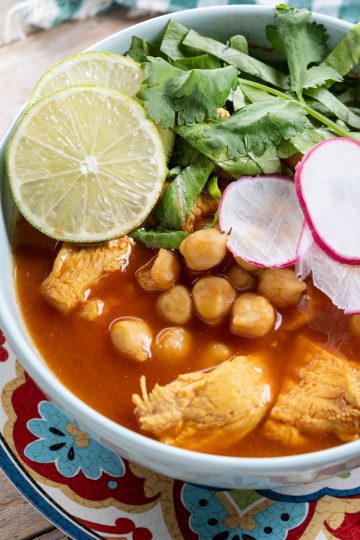
Pozole de Pollo (Chicken Pozole) is a traditional Mexican stew made with tender chicken, hominy, and a seasoned broth, prepared as Pozole Rojo (red pozole) or Pozole Verde (green pozole).

Jump to
It's served with toppings like cabbage, radishes, onion, cilantro, and lime, making it a hearty, flavorful dish perfect for family dinners, holidays, or cold-weather meals.
This Mexican-inspired Pozole Rojo de Pollo recipe keeps the steps easy while still giving you bold, authentic flavor.
You can use dry hominy or choose precooked hominy for a faster option.
Either way, this simple method gives you a classic pozole rojo at home-rich, cozy, and incredibly comforting, just like traditional Mexican pozole.
Ingredients You'll Need
Note: See the recipe card for quantities.
- Dry or precooked hominy: Forms the base of pozole and gives the dish its traditional chewy, "bloomed" texture.I recommend using Giant White Corn by Goya.
- Garlic, onion, bay leaves: Season the hominy as it cooks, adding depth and aroma.
- Salt & Black pepper: Enhance the overall flavor.
- Water: Needed to hydrate and cook the hominy until fully tender.
- Chicken thigh & Legs: Provides tender meat and a rich, savory flavor.
- Chicken neck or spine bones: Release collagen and marrow, creating a deeper, fuller broth.
- Dried Guajillo chiles: Add color, mild heat, and a classic pozole rojo flavor.
- Puya chiles: Bring a sharper, brighter heat.
- Onion & garlic: Create the savory foundation of the sauce.
- Oregano: Adds authentic Mexican herbal notes.
- Chile water: Intensifies the sauce and helps it blend smoothly.
- Oil: Allows the sauce to cook and deepen in flavor.
How to Make Pozole de Pollo
Note: Full instructions are provided in the recipe card below.
- In a large pot over medium-high heat, bring water to a boil. Add the dry hominy, bring to a boil for 3-4 minutes, turn off the heat, and let it soak overnight.
- Once soaked and fully hydrated, remove the little tip ("pedicelo") from each kernel so the hominy will bloom well. If using canned hominy, rinse it thoroughly until the water runs clear, then drain. From this point on, the procedure is the same.
- In a large pot of boiling water, add the hominy and make sure it is covered by about 4 inches (10 cm ) of water. If more water is needed, it must always be very hot. Add the onion and halved heads of garlic, letting them release their flavors. Cover and cook until the hominy begins to bloom.
- While the hominy cooks, place the puya chiles and the cleaned, deseeded guajillo chiles into very hot water. Let them come to a boil, turn off the heat, and soak for about 20 minutes until soft.
- Once hydrated, place the chiles into a blender with the raw onion (in pieces), raw garlic cloves, oregano, chicken bouillon or salt, and the chile cooking water. Blend. Strain the blended sauce.
- In a large saucepan, heat the oil over high heat until shimmering, then add the strained sauce. Cook over medium heat for 20 minutes, stirring occasionally to prevent sticking. Turn off the heat and set aside.
- After the hominy has been cooking for 1 hour and 45 minutes and is beginning to bloom, add salt, bay leaves, thyme, and marjoram. Add the chicken pieces to the pot. If needed, add more very hot water to keep everything covered.
- After about 1 hour, remove the chicken pieces to shred them. Take out the halved garlic and onion from the broth as well.
- Add the fried chile sauce to the pot so the pozole absorbs all its flavor. Let it cook for 30 minutes over medium-low heat so the flavors come together.
- Add the shredded chicken back into the pot. Once it heats through, the pozole is ready.
- Serve with diced onion, sliced radishes, oregano, chile piquín powder, shredded lettuce, lime juice, and tostadas.

Hint: If at any moment you need to add more water to the pozole, it must always be very hot so the cooking does not stop and the hominy continues blooming properly.
Storage, Make Ahead, & Freezing
Storage: Pozole Rojo de Pollo can be refrigerated in an airtight container for up to 3 days.
Make Ahead: Prepare the pozole 1 day in advance, refrigerate, and reheat before serving; add garnishes just before serving.
Freezing: Pozole can be frozen for up to 4 months; thaw overnight in the refrigerator and reheat gently, adding a little water or broth if needed.
Camila's Tips & Variations
- Hydrate the hominy properly: Boil the dry, hulled hominy briefly, then soak it overnight to ensure it becomes fully hydrated and blooms properly during cooking.
- Remove the pedicelo ("head") of each kernel: This small step helps the hominy open up and bloom well.
- Add only very hot water: If you need to add more liquid while cooking, it must always be very hot so the simmering doesn't stop and the hominy continues cooking evenly.
- Use a mix of chicken cuts for the best flavor: Thigh and leg, which adds richness. Neck or spine deepens the broth even more.
- Don't use store-bought chile powder: Dried ancho chiles make all the difference in color and authentic flavor.
- Fry the red chile sauce well: Cook the strained sauce in oil for about 20 minutes to enhance the flavor and prevent it from tasting raw.
- Simmer low and slow: Letting the pozole cook gently for a long time makes the pork incredibly tender and allows the flavors to develop fully.
- Remove the bones and return the meat: After the long simmer, remove the bones, shred the meat, and return it to the pot to maintain the proper texture.
- Serve with classic toppings: onion, radishes, oregano, lettuce, lime, chile piquín, and tostadas, which complete the dish as traditionally served.

Frequently Asked Questions
Can I use canned hominy instead of dried hominy?
Yes. Canned hominy is fully cooked and only needs to be rinsed and added during the last part of the cooking process.
Why does the water need to be very hot when added?
Adding hot water keeps the cooking temperature stable, so the hominy continues to bloom and the pork cooks evenly. Adding cold water can stop the simmer and slow the entire process.
What chicken cuts work best for pozole rojo?
A mix of thigh and leg meat creates the richest broth. Neck or spine deepens the broth even more.
How do I know the hominy is ready?
The kernels will "bloom" or open up visibly. They should look fluffy and expanded, not dense or hard in the center.
❤️ Love this Pozole Rojo de Pollo recipe?
Make sure to check out our Tamales Rojo de Puerco recipe for another authentic, flavor-packed Mexican classic.
You may also like



Recipe
Pozole de Pollo
Equipment
- Skillet (for frying chile sauce)
- Strainer (for sauce)
- Tongs or spoon (to remove chicken)
Ingredients
To Soak the Hominy:
- 450 g (1 lb) dried and peeled whole white or yellow hominy, preferably white or 800 g canned hominy, rinsed and drained well
- 2.5 liters Water (enough to cover by about 4 inches / 10 cm)
To Cook the Hominy
- 1 medium yellow onion , halved
- 2 heads of garlic , halved
- 4 bay leaves
- ¼ teaspoon dried thyme
- ¼ teaspoon dried marjoram
- 3 teaspoons kosher , to taste
- 6 liters water
For the Chicken:
- 2 kg (4-½ lb) chicken thighs and drumsticks Trim some of the extra skin to keep the broth from becoming too fatty
- Optional: chicken necks or back pieces (for extra flavor)
For the Red Chile Sauce
- 10 guajillo chiles , stemmed and seeded
- 6 puya chiles (keep the seeds)
- 1 medium onion
- 8 garlic cloves
- 1-½ teaspoon dried oregano
- 1 teaspoon Knorr chicken bouillon or kosher salt , adjust to taste
- 1½ cups Water from soaking the chiles
- 4 tablespoons extra-virgin oil or vegetable oil , for frying the sauce
Toppings
- Shredded lettuce
- Sliced radishes
- Diced onion
- Mexican oregano
- Chile piquín powder
- Lime wedges
- Tostadas
Instructions
- In a large pot over medium-high heat, bring water to a boil. Add the dry hominy, bring to a boil for 3-4 minutes, turn off the heat, and let it soak overnight.
- Once soaked and fully hydrated, remove the little tip ("pedicelo") from each kernel so the hominy will bloom well.
- If using canned hominy, rinse it thoroughly until the water runs clear, then drain. From this point on, the procedure is the same.
- In a large pot of boiling water, add the hominy and make sure it is covered by about 4 inches (10 cm ) of water.
- If more water is needed, it must always be very hot. Add the onion and halved heads of garlic, letting them release their flavors. Cover and cook until the hominy begins to bloom.
- While the hominy cooks, place the puya chiles and the cleaned, deseeded guajillo chiles into very hot water. Let them come to a boil, turn off the heat, and soak for about 20 minutes until soft.
- Once hydrated, place the chiles into a blender with the raw onion (in pieces), raw garlic cloves, oregano, chicken bouillon or salt, and the chile cooking water. Blend. Strain the blended sauce.
- In a large saucepan, heat the oil over high heat until shimmering, then add the strained sauce.
- Cook over medium heat for 20 minutes, stirring occasionally to prevent sticking. Turn off the heat and set aside.
- After the hominy has been cooking for 1 hour and 45 minutes and is beginning to bloom, add salt, bay leaves, thyme, and marjoram.
- Add the chicken pieces to the pot. If needed, add more very hot water to keep everything covered.
- After about 1 hour, remove the chicken pieces to shred them. Take out the halved garlic and onion from the broth as well.
- Add the fried chile sauce to the pot so the pozole absorbs all its flavor. Let it cook for 30 minutes over medium-low heat so the flavors come together.
- Add the shredded chicken back into the pot. Once it heats through, the pozole is ready.
- Serve with diced onion, sliced radishes, oregano, chile piquín powder, shredded lettuce, lime juice, and tostadas.
Notes
Nutrition
Nutrition Disclaimer: The nutritional information provided is an estimate, calculated using standard data sources. Actual values may vary based on ingredient brands, preparation methods, and portion sizes. This information is for general reference only and should not be considered a substitute for professional dietary advice.