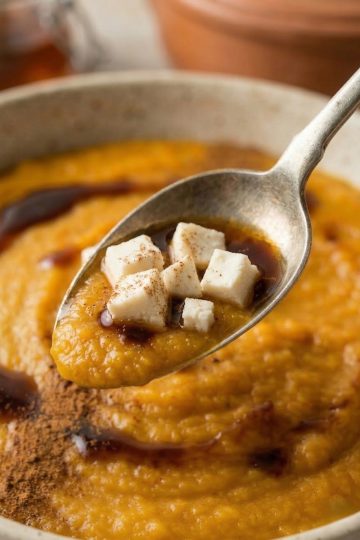
Mazamorra is a traditional Latin American dessert that has been enjoyed for centuries. It is a sweet dish with corn, milk, sugar, and cinnamon. The desert has a long history shaped by the diverse cultures that have contributed to its development.

Jump to
Mazamorra (kaguyjy): A Brief Background
Mazamorra, known in Paraguay as kaguyjy, is one of the oldest and most traditional dishes of Paraguayan cuisine. This ancestral recipe dates back to the Guaraní people, who prepared it as a nourishing and sustaining food.
Originally, kaguyjy (mazamorra) was made by first boiling maíz locro (white hominy corn) in plain water until soft, then finishing the cooking with lejía (ash water), which made the corn fully tender and gave the dish its distinctive yellowish color and flavor.
In modern kitchens, ash water is replaced with a small amount of baking soda. To enrich the flavor, some cooks also add coconut milk, heavy cream, or condensed milk, making the dish creamier and more indulgent.
Other variations feature chopped nuts such as walnuts or peanuts, raisins, or even a drizzle of liquid caramel. Over time, these adaptations gave rise to distinct versions of kaguyjy, each with its own name:
- Modern Kaguyjy - made with baking soda, cinnamon, and vanilla.
- Kaguyjy asukáre - sweetened with sugar
- Kaguyjy eírare - flavored with molasses (miel de caña)
- Kaguyjy kambýre - enriched with milk
For generations, kaguyjy was valued as both refreshing and nutritious. It was even believed to help with stomach ailments (py'a raku), colds, and other illnesses.
Historically, mazamorra was also sold as a popular street food in the afternoons, in a tradition similar to the chipera vendors.
Today, mazamorra remains a beloved Paraguayan comfort food-enjoyed either warm or chilled-and is celebrated as a dish that carries centuries of tradition and cultural identity.
Ingredients You'll Need
- Hominy corn (locro): Soaked overnight (I use Goya brand).
- Water or milk: For cooking and creaminess.
- Sugar: For sweetness.
- Cinnamon and vanilla (optional): For flavor.
How to Make Mazamorra
Note: The full instructions are provided in the recipe card below.
- Rinse the corn, then soak it overnight in plenty of water in the refrigerator.
- The next day, drain and rinse again.
- Cook in a large heavy pot with fresh water. Bring to a boil, then simmer about 1 hour, until beginning to soften.
- Add baking soda (if using) halfway through cooking. Continue simmering until tender.
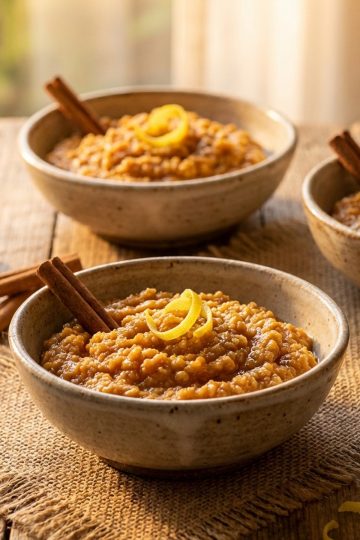
- Drain excess water. Add milk, cinnamon, sugar, and lemon peel (if using). Simmer 20 minutes, stirring often, until creamy.
- Stir in vanilla.
- Serve warm or chilled.
Storage, Make Ahead, & Freezing
- Storage: Once cooled, store Mazamorra in an airtight container in the refrigerator for up to 5 days.
- Make Ahead: Soak the hominy overnight to save time the next day when cooking.
- Freezing: Not recommended.
Camila's Tips & Variations
- Soaking: Maíz trillado (hominy) is a very hard grain and should be soaked for proper hydration, preferably overnight. If the weather is hot during soaking, keep it in the refrigerator because it ferments quickly at room temperature.
- Creamier Texture: For a richer and creamier mazamorra, use the soaking water when cooking the corn instead of discarding it.
- Sweetness: Adjust the sugar to your taste. You can also sweeten with honey, piloncillo, or brown sugar for a deeper flavor.
- Milk Options: Whole milk gives the creamiest texture, but you can substitute part of it with evaporated milk, coconut milk, or heavy cream.
- Serving Ideas: Enjoy warm or chilled. Top with ground cinnamon, raisins, or a drizzle of dulce de leche for extra indulgence.
- Flavor Boost: Add a strip of lemon, lime, or orange peel or a few cloves while cooking for a subtle aromatic twist.
- Serving Ideas: Enjoy as is, or serve with a drizzle of honey or molasses (avoid blackstrap, as it is too bitter). It's also delicious with dulce de leche.
Frequently Asked Questions
Can I use canned hominy instead of dried?
Yes, but the flavor and texture will be different. Canned hominy is already pre-cooked, so reduce the cooking time significantly and skip the overnight soaking step.
Why do you add baking soda?
Baking soda helps soften the hominy more quickly, reducing overall cooking time and giving the Mazamorra a creamier consistency.
Can I make Mazamorra ahead of time?
Absolutely! In fact, it tastes even better the next day as the flavors meld. Just store it in the refrigerator and reheat gently before serving.
Is Mazamorra served hot or cold?
Both! It can be enjoyed warm, especially in cooler months, or chilled for a refreshing treat in warmer weather.
New Recipes
You may also like
Recipe
Easy Mazamorra

Equipment
Ingredients
- 200 g white hominy corn, also known as Locro or Maiz Trillado Blanco/Morocho Partido
- 2 liters water , or as needed to cover the corn completely
- 1 liter whole milk , or more to taste
- 1 teaspoon baking soda , optional
- 2 small Cinnamon stick
- 150 g granulated sugar , adjust the amount of sugar according to individual preferences
- 1 tablespoon pure vanilla extract
- 1 strip lemon peel , optional
Instructions
- Rinse the corn thoroughly in a colander, then soak it overnight in plenty of water in the refrigerator.
- The next day, discard the soaking water and rinse the corn again.
- Place the corn in a large heavy pot with fresh water and bring to a boil. Reduce the heat and simmer for about 1 hour, or until the kernels start to soften, stirring occasionally to prevent sticking.
- When the corn is halfway cooked, add the baking soda (if using) and stir to combine. Continue cooking until the kernels are tender.
- Drain off any excess water, then add the milk, cinnamon, sugar, and lemon peel (if using). Simmer gently for about 20 minutes, stirring often, until the mixture becomes thick and creamy.
- Stir in the vanilla and mix well.
- Serve warm or chilled.
Notes
Nutrition
Nutrition Disclaimer: The nutritional information provided is an estimate, calculated using standard data sources. Actual values may vary based on ingredient brands, preparation methods, and portion sizes. This information is for general reference only and should not be considered a substitute for professional dietary advice.